



 Chat with AI
Exam 18: The History of Life

Exam 1: An Introduction to Life on Earth85 Questions
Exam 2: Atoms, Molecules, and Life90 Questions
Exam 3: Biological Molecules98 Questions
Exam 4: Cell Structure and Function90 Questions
Exam 5: Cell Membrane Structure and Function95 Questions
Exam 6: Energy Flow in the Life of a Cell90 Questions
Exam 7: Capturing Solar Energy: Photosynthesis102 Questions
Exam 8: Harvesting Energy: Glycolysis and Cellular Respiration97 Questions
Exam 9: Cellular Reproduction133 Questions
Exam 10: Meiosis: the Basis of Sexual Reproduction103 Questions
Exam 11: Patterns of Inheritance98 Questions
Exam 12: Dna: the Molecule of Heredity97 Questions
Exam 13: Gene Expression and Regulation93 Questions
Exam 14: Biotechnology91 Questions
Exam 15: Principles of Evolution97 Questions
Exam 16: How Populations Evolve109 Questions
Exam 17: The Origin of Species89 Questions
Exam 18: The History of Life125 Questions
Exam 19: Systematics: Seeking Order Amid Diversity90 Questions
Exam 20: The Diversity of Prokaryotes and Viruses97 Questions
Exam 21: The Diversity of Protists102 Questions
Exam 22: The Diversity of Plants115 Questions
Exam 23: The Diversity of Fungi107 Questions
Exam 24: Animal Diversity I: Invertebrates101 Questions
Exam 25: Animal Diversity II: Vertebrates118 Questions
Exam 26: Animal Behavior116 Questions
Exam 27: Population Growth and Regulation114 Questions
Exam 28: Community Interactions125 Questions
Exam 29: Energy Flow and Nutrient Cycling in Ecosystems122 Questions
Exam 30: Earths Diverse Ecosystems126 Questions
Exam 31: Conserving Earths Biodiversity109 Questions
Exam 32: Homeostasis and the Organization of the Animal Body95 Questions
Exam 33: Circulation89 Questions
Exam 34: Respiration92 Questions
Exam 35: Nutrition and Digestion91 Questions
Exam 36: The Urinary System99 Questions
Exam 37: Defenses Against Disease104 Questions
Exam 38: Chemical Control of the Animal Body: the Endocrine System133 Questions
Exam 39: The Nervous System118 Questions
Exam 40: The Senses94 Questions
Exam 41: Action and Support: the Muscles and Skeleton90 Questions
Exam 42: Animal Reproduction120 Questions
Exam 43: Animal Development122 Questions
Exam 44: Plant Anatomy and Nutrient Transport95 Questions
Exam 45: Plant Reproduction and Development90 Questions
Exam 46: Plant Responses to the Environment87 Questions
Select questions type


The scientific name for Neanderthals is

Free
(Multiple Choice)
4.8/5  (83)
(83) Correct Answer: Verified
E
Reptiles evolved scaly body coverings as a means for
Free
(Multiple Choice)
4.9/5 (79)
(79) Correct Answer:Verified
VerifiedC
Pollen likely evolved in response to plants moving to drier land.
(True/False)
5.0/5 (88)
(88) Probably the greatest advantage for the original multicellular organisms was their ability to
(Multiple Choice)
4.8/5 (88)
(88) Current theories hold that hominin species migrated out of Africa
(Multiple Choice)
4.7/5 (83)
(83) 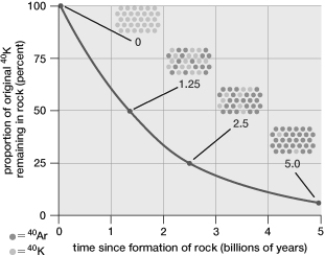 -Scientists find several sets of fossil remains in a cave. The skeletons appear have been buried with stone tools and carved jewelry of ivory and bone. The artifacts are dated to 90,000 years old. The skeletons are anatomically similar to modern humans. Based on this information, the skeletons most likely are all
 (Multiple Choice)
4.8/5 (94)
(94) Which of the following processes involves behaviors that are acquired by learning and can be modified and passed on from one generation to the next?
(Multiple Choice)
4.8/5 (87)
(87) Living organisms can spontaneously generate from nonliving matter.
(True/False)
4.8/5 (74)
(74) Eggs and scales are features that enabled reptiles to dominate land during the Permian period.
(True/False)
4.8/5 (84)
(84) may have evolved from aerobic bacteria that were engulfed by predatory prokaryotic cells.
(Short Answer)
4.8/5 (77)
(77) The endosymbiotic hypothesis accounts for the origin of which cell structure?
(Multiple Choice)
4.9/5 (74)
(74) By examining fossil evidence, paleontologists believe that mammals evolved from ancestors of modern
(Multiple Choice)
4.8/5 (80)
(80) Which of the following species do paleoanthropologists believe may be the most direct ancestor to Homo sapiens?
(Multiple Choice)
4.9/5 (92)
(92) Multicellularity enables organisms to overcome cellular limits and
(Multiple Choice)
4.8/5 (73)
(73) Exoskeletons provided an evolutionary advantage to organisms by
(Multiple Choice)
4.8/5 (89)
(89) 
Filters
- Essay(0)
- Multiple Choice(0)
- Short Answer(0)
- True False(0)
- Matching(0)