



 Chat with AI
Exam 32: Homeostasis and the Organization of the Animal Body

Exam 1: An Introduction to Life on Earth85 Questions
Exam 2: Atoms, Molecules, and Life90 Questions
Exam 3: Biological Molecules98 Questions
Exam 4: Cell Structure and Function90 Questions
Exam 5: Cell Membrane Structure and Function95 Questions
Exam 6: Energy Flow in the Life of a Cell90 Questions
Exam 7: Capturing Solar Energy: Photosynthesis102 Questions
Exam 8: Harvesting Energy: Glycolysis and Cellular Respiration97 Questions
Exam 9: Cellular Reproduction133 Questions
Exam 10: Meiosis: the Basis of Sexual Reproduction103 Questions
Exam 11: Patterns of Inheritance98 Questions
Exam 12: Dna: the Molecule of Heredity97 Questions
Exam 13: Gene Expression and Regulation93 Questions
Exam 14: Biotechnology91 Questions
Exam 15: Principles of Evolution97 Questions
Exam 16: How Populations Evolve109 Questions
Exam 17: The Origin of Species89 Questions
Exam 18: The History of Life125 Questions
Exam 19: Systematics: Seeking Order Amid Diversity90 Questions
Exam 20: The Diversity of Prokaryotes and Viruses97 Questions
Exam 21: The Diversity of Protists102 Questions
Exam 22: The Diversity of Plants115 Questions
Exam 23: The Diversity of Fungi107 Questions
Exam 24: Animal Diversity I: Invertebrates101 Questions
Exam 25: Animal Diversity II: Vertebrates118 Questions
Exam 26: Animal Behavior116 Questions
Exam 27: Population Growth and Regulation114 Questions
Exam 28: Community Interactions125 Questions
Exam 29: Energy Flow and Nutrient Cycling in Ecosystems122 Questions
Exam 30: Earths Diverse Ecosystems126 Questions
Exam 31: Conserving Earths Biodiversity109 Questions
Exam 32: Homeostasis and the Organization of the Animal Body95 Questions
Exam 33: Circulation89 Questions
Exam 34: Respiration92 Questions
Exam 35: Nutrition and Digestion91 Questions
Exam 36: The Urinary System99 Questions
Exam 37: Defenses Against Disease104 Questions
Exam 38: Chemical Control of the Animal Body: the Endocrine System133 Questions
Exam 39: The Nervous System118 Questions
Exam 40: The Senses94 Questions
Exam 41: Action and Support: the Muscles and Skeleton90 Questions
Exam 42: Animal Reproduction120 Questions
Exam 43: Animal Development122 Questions
Exam 44: Plant Anatomy and Nutrient Transport95 Questions
Exam 45: Plant Reproduction and Development90 Questions
Exam 46: Plant Responses to the Environment87 Questions
Select questions type


Which tissues are found in a sample of skin?

Free
(Essay)
4.8/5  (82)
(82) Correct Answer: Verified
Skin is a complex organ that contains epithelium, smooth muscle, nerve tissue, and several types of connective tissues.
An endotherm uses feedback loops to maintain homeostasis.
Free
(Short Answer)
4.8/5 (70)
(70) Correct Answer:Verified
Verifiednegative
The integumentary system plays a role in temperature regulation.
Free
(True/False)
4.7/5 (86)
(86) Correct Answer:Verified
VerifiedTrue
epithelium is several cell layers thick and is specialized to withstand wear and tear.
(Short Answer)
4.7/5 (74)
(74) Because of the freezing temperatures of the deep ocean, all deep- sea fish must be endotherms.
(True/False)
4.9/5 (93)
(93) Cells that store lipids (fats) for long- term energy are found in _ tissue.
(Short Answer)
4.9/5 (94)
(94) Regardless of the temperature of the environment they find themselves in, endotherms maintain a nearly consistent _ .
(Short Answer)
4.7/5 (71)
(71) Hormones are secreted by exocrine glands directly into a body cavity or onto a body surface, rather than being transported by the blood.
(True/False)
4.8/5 (65)
(65) When the body's response to swelling caused by an insect bite is to release histamine, which causes more swelling and releases more histamine, the organism is using a feedback loop.
(Short Answer)
4.9/5 (87)
(87) Connective tissues are made up of cells surrounded by an extracellular matrix, the consistency of which can vary from a liquid to a solid.
(True/False)
5.0/5 (73)
(73) The ability to maintain an internal environment within specific ranges is referred to as .
(Short Answer)
4.8/5 (84)
(84) Large amounts of extracellular material are characteristic of
(Multiple Choice)
4.9/5 (89)
(89) Compare the mechanisms that endotherms and ectotherms use to regulate body temperature.
(Essay)
4.9/5 (68)
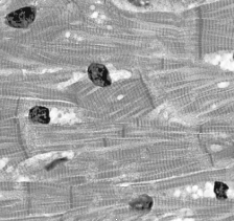
(68) 
In the description of homeostasis, the term dynamic constancy refers to
(Multiple Choice)
4.8/5 (81)
(81) Similar cells that perform a particular function are known as
(Multiple Choice)
4.8/5 (64)
(64) In addition to the nervous system, which vertebrate organ system controls physiological processes in animals?
(Multiple Choice)
4.9/5 (101)
(101) 
Filters
- Essay(0)
- Multiple Choice(0)
- Short Answer(0)
- True False(0)
- Matching(0)