



 Chat with AI
Exam 24: The Adaptive Immune Response

Exam 1: Microbial Life: Origin and Discovery69 Questions
Exam 2: Observing the Microbial Cell69 Questions
Exam 3: Cell Structure and Function72 Questions
Exam 4: Bacterial Culture, Growth, and Development70 Questions
Exam 5: Environmental Influences and Control of Microbial Growth70 Questions
Exam 6: Viruses70 Questions
Exam 7: Genomes and Chromosomes70 Questions
Exam 8: Transcription, Translation, and Bioinformatics76 Questions
Exam 9: Gene Transfer, Mutations, and Genome Evolution72 Questions
Exam 10: Molecular Regulation73 Questions
Exam 11: Viral Molecular Biology70 Questions
Exam 12: Biotechniques and Synthetic Biology72 Questions
Exam 13: Energetics and Catabolism77 Questions
Exam 14: Electron Flow in Organotrophy, Lithotrophy, and Phototrophy70 Questions
Exam 15: Biosynthesis70 Questions
Exam 16: Food and Industrial Microbiology73 Questions
Exam 17: Origins and Evolution70 Questions
Exam 18: Bacterial Diversity71 Questions
Exam 19: Archaeal Diversity70 Questions
Exam 20: Eukaryotic Diversity70 Questions
Exam 21: Microbial Ecology70 Questions
Exam 22: Microbes in Global Elemental Cycles70 Questions
Exam 23: Human Microbiota and Innate Immunity70 Questions
Exam 24: The Adaptive Immune Response70 Questions
Exam 25: Microbial Pathogenesis70 Questions
Exam 26: Microbial Diseases69 Questions
Exam 27: Antimicrobial Therapy72 Questions
Exam 28: Clinical Microbiology and Epidemiology75 Questions
Select questions type


Why are antihistamines good for allergic rhinitis but not for atopic asthma?
(Essay)
4.8/5  (88)
(88) Which of the following could be categorized as an example of humoral immunity?
(Multiple Choice)
4.9/5 (78)
(78) How can a person who has taken penicillin for a childhood ear infection later develop an allergy to penicillin when prescribed that drug again?
(Essay)
4.8/5 (80)
(80) The inflammatory antibody of someone undergoing an allergic reaction to cat dander would be found primarily
(Multiple Choice)
4.9/5 (77)
(77) Which of the following would be considered an aspect of the adaptive immune response?
(Multiple Choice)
4.9/5 (76)
(76) The five classes of antibodies (IgG, IgA, IgM, IgE, and IgD) that can be produced during an immune response are based on differences in ________ chain regions.
(Multiple Choice)
4.8/5 (79)
(79) If a person was unable to undergo negative selection during T-cell education, what is T-cell education, and why would this be a severe immune problem?
(Essay)
4.9/5 (80)
(80) Capping of B-cell receptors on the surface of an antigen-exposed B cell immediately causes
(Multiple Choice)
4.8/5 (73)
(73) RAG1 and RAG2 are enzymes that control gene splicing on B-cell antibody genes. Which order are segments worked on in the creation of the heavy-chain gene segment?
(Multiple Choice)
5.0/5 (79)
(79) Laboratory isolation of an anti-Streptococcus antibody was found to bind to ten Streptococcus pyogenes at one time. The antibody isolated was
(Multiple Choice)
4.7/5 (76)
(76) Some patients suffering from bare lymphocyte syndrome (BLS), a rare immunodeficiency, have a genetic mutation in their TAP1/TAP2 genes causing the production of a defective TAP transporter. Describe what effect this has on antigen processing and in what cells.
(Essay)
4.7/5 (89)
(89) Complement molecule, C1 complex, will bind to an IgG antibody at the
(Multiple Choice)
4.8/5 (75)
(75) There are ________ polypeptide chains in the typical antibody.
(Multiple Choice)
4.8/5 (81)
(81) The secondary signal needed for TH0 helper cells to differentiate into either TH1 cells or TH₂ cells is the cross-link between ________ (on TH0 helper cells) and ________ (on APC cell).
(Multiple Choice)
5.0/5 (75)
(75) X-linked hyper IgM syndrome (XHIM) is an immunodeficiency disorder caused by mutations of the gene encoding CD154. Why is this disease characterized by recurrent infections (starting in childhood) and elevated serum levels of IgM?
(Essay)
4.9/5 (83)
(83) A baby will receive ________ class of antibodies from his or her mother before birth through the umbilical cord, and then ________ class of antibodies through the breast milk after birth.
(Multiple Choice)
4.9/5 (85)
(85) 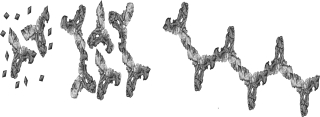
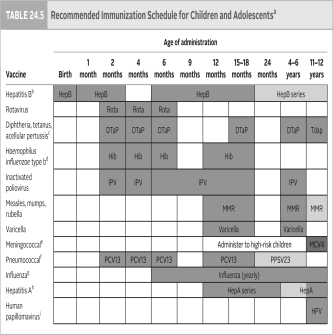
Using the information presented in the table below, discuss why most vaccines are given between birth and 24 months.
(Essay)
4.8/5 (81)
(81) 
Filters
- Essay(0)
- Multiple Choice(0)
- Short Answer(0)
- True False(0)
- Matching(0)