



 Chat with AI
Exam 6: Viruses

Exam 1: Microbial Life: Origin and Discovery69 Questions
Exam 2: Observing the Microbial Cell69 Questions
Exam 3: Cell Structure and Function72 Questions
Exam 4: Bacterial Culture, Growth, and Development70 Questions
Exam 5: Environmental Influences and Control of Microbial Growth70 Questions
Exam 6: Viruses70 Questions
Exam 7: Genomes and Chromosomes70 Questions
Exam 8: Transcription, Translation, and Bioinformatics76 Questions
Exam 9: Gene Transfer, Mutations, and Genome Evolution72 Questions
Exam 10: Molecular Regulation73 Questions
Exam 11: Viral Molecular Biology70 Questions
Exam 12: Biotechniques and Synthetic Biology72 Questions
Exam 13: Energetics and Catabolism77 Questions
Exam 14: Electron Flow in Organotrophy, Lithotrophy, and Phototrophy70 Questions
Exam 15: Biosynthesis70 Questions
Exam 16: Food and Industrial Microbiology73 Questions
Exam 17: Origins and Evolution70 Questions
Exam 18: Bacterial Diversity71 Questions
Exam 19: Archaeal Diversity70 Questions
Exam 20: Eukaryotic Diversity70 Questions
Exam 21: Microbial Ecology70 Questions
Exam 22: Microbes in Global Elemental Cycles70 Questions
Exam 23: Human Microbiota and Innate Immunity70 Questions
Exam 24: The Adaptive Immune Response70 Questions
Exam 25: Microbial Pathogenesis70 Questions
Exam 26: Microbial Diseases69 Questions
Exam 27: Antimicrobial Therapy72 Questions
Exam 28: Clinical Microbiology and Epidemiology75 Questions
Select questions type


The primary factor determining the life cycle of an animal virus is the physical form of the
(Multiple Choice)
4.9/5  (98)
(98) Identify the outer structure shown in the figure below. What is it composed of and how does it differ from the bacterial version?
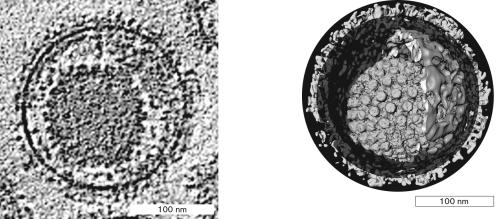
(Essay)
4.8/5 (66)
(66) The proteins found in animals and plants that can recognize general signs of viral infections are
(Multiple Choice)
4.8/5 (82)
(82) The number of virus particles released at lysis is referred to as
(Multiple Choice)
4.8/5 (72)
(72) All of the following criteria are used to classify viruses according to the International Committee on Taxonomy of Viruses EXCEPT
(Multiple Choice)
4.9/5 (92)
(92) Tissue cultures are more feasible than whole animals for viral growth because they
(Multiple Choice)
4.9/5 (86)
(86) Which infectious agent is identified by the nucleic acid genome being the entire infectious particle?
(Multiple Choice)
4.9/5 (80)
(80) Which of the following are genes of common ancestry in two genomes that share the same function?
(Multiple Choice)
4.7/5 (76)
(76) Some viruses require an RNA-dependent RNA polymerase. What does that mean? What would you call the host cell RNA polymerase (RNA pol)? What would you call reverse transcriptase (RTase)?
(Essay)
4.9/5 (65)
(65) 
Filters
- Essay(0)
- Multiple Choice(0)
- Short Answer(0)
- True False(0)
- Matching(0)