



 Chat with AI
Exam 13: Crisis and Renaissance, 1340-1492

Exam 1: Early Western Civilization, 400,000-1000 B.C.E65 Questions
Exam 2: Near East Empires and the Reemergence of Civilization in Greece, 1000-500 B.C.E64 Questions
Exam 3: The Greek Golden Age, C 500-C 400 B.C.E65 Questions
Exam 4: From the Classical to the Hellenistic World, 400-30 B.C.E65 Questions
Exam 5: The Rise of Rome and Its Republic, 753-44 B.C.E64 Questions
Exam 6: The Creation of the Roman Empire, 44 B.C.E-284 C.E65 Questions
Exam 7: The Transformation of the Roman Empire, 284-600 C.E64 Questions
Exam 8: The Heirs of Rome: Islam, Byzantium, and Europe, 600-75065 Questions
Exam 9: From Centralization to Fragmentation, 750-105065 Questions
Exam 10: Commercial Quickening and Religious Reform, 1050-115065 Questions
Exam 11: The Flowering of the Middle Ages, 1150-121565 Questions
Exam 12: The Medieval Synthesis and Its Cracks, 1215-134065 Questions
Exam 13: Crisis and Renaissance, 1340-149265 Questions
Exam 14: Global Encounters and the Shock of the Reformation, 1492-156065 Questions
Exam 15: Wars of Religion and the Clash of Worldviews, 1560-164865 Questions
Exam 16: Absolutism, Constitutionalism, and the Search for Order, 1640-170065 Questions
Exam 17: The Atlantic System and Its Consequences, 1700-175065 Questions
Exam 18: The Promise of Enlightenment, 1750-178965 Questions
Exam 19: The Cataclysm of Revolution, 1789-179965 Questions
Exam 20: Napoleon and the Revolutionary Legacy, 1800-183065 Questions
Exam 21: Industrialization and Social Ferment, 1830-185064 Questions
Exam 22: Politics and Culture of the Nation-State, 1850-187065 Questions
Exam 23: Empire, Industry, and Everyday Life, 1870-189065 Questions
Exam 24: Modernity and the Road to War, 1890-191465 Questions
Exam 25: World War I and Its Aftermath, 1914-192965 Questions
Exam 26: The Great Depression and World War II, 1929-194565 Questions
Exam 27: The Cold War and the Remaking of Europe, 1945-1960s64 Questions
Exam 28: Postindustrial Society and the End of the Cold War Order, 1960s-198965 Questions
Exam 29: A New Globalism, 1989 to the Present65 Questions
Select questions type


Which group of invaders marked the end of the Byzantine Empire with their conquest of Constantinople in 1453?

Free
(Multiple Choice)
4.9/5  (87)
(87) Correct Answer: Verified
B
What alliance brought together many cities in northern Germany and the Baltic for the purposes of trade and defense?
Free
(Multiple Choice)
4.8/5 (86)
(86) Correct Answer:Verified
VerifiedD
What triggered the Great Schism in 1378?
Free
(Multiple Choice)
4.8/5 (90)
(90) Correct Answer:Verified
VerifiedB
By the end of the fourteenth century, Lithuania, whose rulers were the last in Europe to remain unconverted to Christianity, had
(Multiple Choice)
4.7/5 (94)
(94) Which of the following is regarded as a significant innovation in Renaissance art?
(Multiple Choice)
4.8/5 (69)
(69) According to this map, the plague only reached England by the
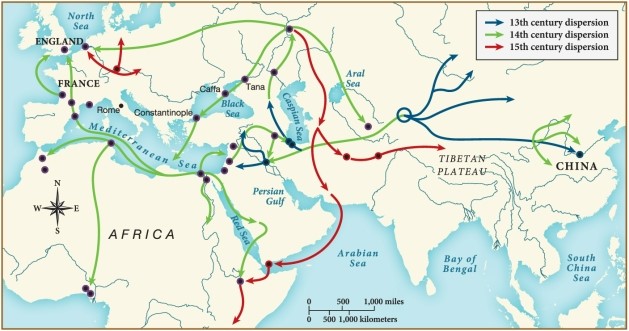
(Multiple Choice)
4.9/5 (78)
(78) What term was used for the European Christian boys who were forced to convert to Islam and made up the core of the Ottoman army?
(Multiple Choice)
4.9/5 (69)
(69) Which of the following statements is supported by this series of maps?
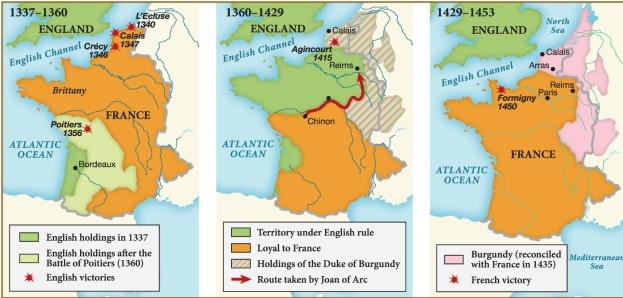
(Multiple Choice)
4.9/5 (95)
(95) According to this map, most of the important Hanseatic towns and trading partners were
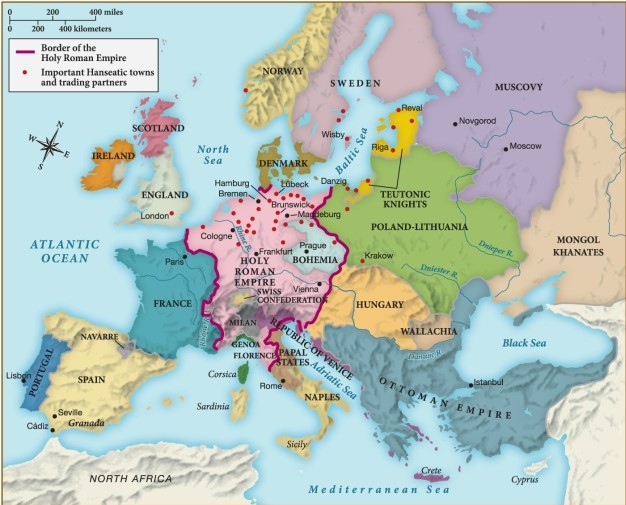
(Multiple Choice)
4.9/5 (99)
(99) Why did Jan Hus's ideas gain such a large number of followers in Bohemia?
(Multiple Choice)
4.8/5 (86)
(86) Under pressure from Holy Roman Emperor Sigismund to resolve the Great Schism, Pope John XXIII convened a church council at Constance in 1414, which elected who as a new pope?
(Multiple Choice)
4.8/5 (83)
(83) The uprising of French peasants against the nobility in 1358 was known as
(Multiple Choice)
4.7/5 (82)
(82) Explain the impact that the plague had on the European population demographically, religiously, and economically.
(Essay)
4.9/5 (63)
(63) Who was Giovanni Pico della Mirandola, and how did his Oration on the Dignity of Man embody the optimism of Renaissance philosophy?
(Essay)
4.8/5 (71)
(71) Who was Joan of Arc, and how did she influence the outcome of the Hundred Years' War?
(Essay)
4.9/5 (83)
(83) One important element of the French king's campaign to consolidate and strengthen the monarchy was Gallicanism, which was characterized by which of the following?
(Multiple Choice)
4.7/5 (69)
(69) 
Filters
- Essay(0)
- Multiple Choice(0)
- Short Answer(0)
- True False(0)
- Matching(0)