



 Chat with AI
Exam 10: The Muscular System

Exam 1: The Human Body: an Orientation100 Questions
Exam 2: Chemistry Comes Alive120 Questions
Exam 3: Cells: the Living Units119 Questions
Exam 4: Tissue: the Living Fabric97 Questions
Exam 5: The Integumentary System107 Questions
Exam 6: Bones and Skeletal Tissues94 Questions
Exam 7: The Skeleton102 Questions
Exam 8: Joints105 Questions
Exam 9: Muscles and Muscle Tissue109 Questions
Exam 10: The Muscular System109 Questions
Exam 11: Fundamentals of the Nervous System and Nervous Tissue95 Questions
Exam 12: The Central Nervous System132 Questions
Exam 13: The Peripheral Nervous System and Reflex Activity97 Questions
Exam 14: The Autonomic Nervous System96 Questions
Exam 15: The Special Senses127 Questions
Exam 16: The Endocrine System119 Questions
Exam 17: Blood99 Questions
Exam 18: The Cardiovascular System: the Heart94 Questions
Exam 19: The Cardiovascular System: Blood Vessels107 Questions
Exam 20: The Lymphatic System and Lymphoid Organs and Tissues95 Questions
Exam 21: The Immune System: Innate and Adaptive Body Defensives118 Questions
Exam 22: The Respiratory System120 Questions
Exam 23: The Digestive System145 Questions
Exam 24: Nutrition, Metabolism, and Body Temperature Regulation114 Questions
Exam 25: The Urinary System116 Questions
Exam 26: Fluid, Electrolyte, and Acid-Base Balance94 Questions
Exam 27: The Reproductive System126 Questions
Exam 28: Pregnancy and Human Development97 Questions
Exam 29: Heredity90 Questions
Select questions type


How does an antagonist differ from a prime mover? How is it the same?
(Essay)
4.8/5  (85)
(85) 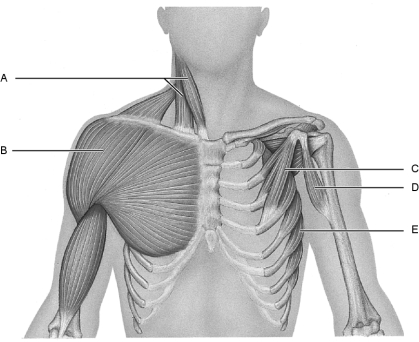 Figure 10.2Using Figure 10.2, match the following:
-The quadriceps femoris is composed of three "vastus" muscles and the .
Figure 10.2Using Figure 10.2, match the following:
-The quadriceps femoris is composed of three "vastus" muscles and the . (Short Answer)
4.8/5 (81)
(81) What is a muscle that provides the major force for producing a specific movement called?
(Multiple Choice)
4.8/5 (81)
(81) 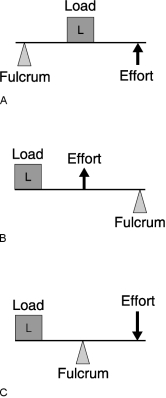 Figure 10.1Using Figure 10.1, match the following:
-Humerus-ulna joint.
Figure 10.1Using Figure 10.1, match the following:
-Humerus-ulna joint. (Short Answer)
4.9/5 (80)
(80) A nursing infant develops a powerful sucking muscle that adults also use for whistling. What is this muscle called?
(Multiple Choice)
4.9/5 (79)
(79) Which of the following muscles serves as a common intramuscular injection site, particularly in infants?
(Multiple Choice)
4.7/5 (91)
(91) A nurse can facilitate respiratory functioning by encouraging deep breathing exercises such as diaphragmatic breathing. Explain diaphragmatic breathing.
(Essay)
4.8/5 (86)
(86) The muscles of facial expression insert into skin or other muscles, not bones.
(True/False)
4.8/5 (84)
(84) Although all skeletal muscles have different shapes, the fascicle arrangement of each muscle is exactly the same.
(True/False)
4.7/5 (74)
(74) Which of the following is not a muscle primarily involved in the breathing process?
(Multiple Choice)
5.0/5 (81)
(81) Electromyography is the recording and interpretation of graphic records of the electrical activity of contracting muscles.
(True/False)
4.8/5 (77)
(77) Muscle spasms of the back often are due to the erector spinae contraction.
(True/False)
4.7/5 (86)
(86) 
Filters
- Essay(0)
- Multiple Choice(0)
- Short Answer(0)
- True False(0)
- Matching(0)