



 Chat with AI
Exam 7: Carbohydrates and Glycobiology

Exam 1: The Foundations of Biochemistry109 Questions
Exam 2: Water87 Questions
Exam 3: Amino Acids, Peptides, and Proteins112 Questions
Exam 4: The Three-Dimensional Structure of Proteins100 Questions
Exam 5: Protein Function101 Questions
Exam 6: Enzymes106 Questions
Exam 7: Carbohydrates and Glycobiology109 Questions
Exam 8: Nucleotides and Nucleic Acids98 Questions
Exam 9: DNA-Based Information Technologies102 Questions
Exam 10: Lipids102 Questions
Exam 11: Biological Membranes and Transport105 Questions
Exam 12: Biosignaling98 Questions
Exam 13: Bioenergetics and Biochemical Reaction Types105 Questions
Exam 14: Glycolysis, Gluconeogenesis, and the Pentose Phosphate Pathway112 Questions
Exam 15: Principles of Metabolic Regulation101 Questions
Exam 16: The Citric Acid Cycle105 Questions
Exam 17: Fatty Acid Catabolism97 Questions
Exam 18: Amino Acid Oxidation and the Production of Urea98 Questions
Exam 19: Oxidative Phosphorylation and Photophosphorylation96 Questions
Exam 20: Carbohydrate Biosynthesis in Plants and Bacteria94 Questions
Exam 21: Lipid Biosynthesis100 Questions
Exam 22: Biosynthesis of Amino Acids, Nucleotides, and Related Molecules98 Questions
Exam 23: Hormonal Regulation and Integration of Mammalian Metabolism100 Questions
Exam 24: Genes and Chromosomes99 Questions
Exam 25: DNA Metabolism101 Questions
Exam 26: RNA Metabolism101 Questions
Exam 27: Protein Metabolism99 Questions
Exam 28: Regulation of Gene Expression99 Questions
Select questions type


Why is methyl iodide used in the classical method of exhaustive methylation to determine the positions of glycosidic bonds in a linear polysaccharide?
(Multiple Choice)
4.8/5  (80)
(80) Define each in 20 words or fewer:
(a) anomeric carbon
(b) enantiomers
(c) furanose
(d) pyranose
(e) glycoside
(f) epimers
(g) aldose
(h) ketose
(Short Answer)
4.8/5 (81)
(81) Which factor is NOT a part of determining the complete structure of an oligosaccharide or polysaccharide?
(Multiple Choice)
5.0/5 (91)
(91) Which sequence is the CORRECT one for leukocyte extravasion in the inflammatory response?
(Multiple Choice)
4.7/5 (89)
(89) It is useful to analyze hemoglobin glycation to determine a(n):
(Multiple Choice)
4.8/5 (92)
(92) Which statement is NOT true regarding phosphorylated sugar?
(Multiple Choice)
4.9/5 (89)
(89) When drawing a Haworth perspective formula from a Fisher projection, which statement is TRUE regarding anomers?
(Multiple Choice)
4.9/5 (91)
(91) In the following structure: 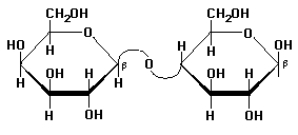 (a) How many of the monosaccharide units are furanoses and how may are pyranoses? (b) What is the linkage between the two monosaccharide units? (c) Is this a reducing sugar?
Explain.
(a) How many of the monosaccharide units are furanoses and how may are pyranoses? (b) What is the linkage between the two monosaccharide units? (c) Is this a reducing sugar?
Explain. (Not Answered)
This question doesn't have any answer yet
Hemoglobin glycation is a process where _____ is _____ attached to hemoglobin.
(Multiple Choice)
4.8/5 (81)
(81) In a(n) _____ the carbonyl group is at the end of the carbon chain, but in a(n) _____ the carbonyl group can be at any other position.
(Multiple Choice)
4.8/5 (76)
(76) Why is it surprising that the side chains of tryptophan residues in lectins can interact with sugars?
(Multiple Choice)
4.8/5 (78)
(78) Describe the structure of the repeating basic unit of (a) amylose and (b) cellulose.
(Essay)
4.8/5 (87)
(87) 
Filters
- Essay(0)
- Multiple Choice(0)
- Short Answer(0)
- True False(0)
- Matching(0)