



 Chat with AI
Exam 28: Circulation and Gas Exchange

Exam 1: The Nature of Science and the Characteristics of Life80 Questions
Exam 2: The Chemistry of Life93 Questions
Exam 3: Cell Structure and Internal Compartments89 Questions
Exam 4: Cell Membranes, Transport, and Communication89 Questions
Exam 5: Energy, Metabolism, and Enzymes85 Questions
Exam 6: Photosynthesis and Cellular Respiration89 Questions
Exam 7: Cell Division84 Questions
Exam 8: Cancer and Human Health86 Questions
Exam 9: Patterns of Inheritance86 Questions
Exam 10: Chromosomes and Human Genetics77 Questions
Exam 11: DNA and Genes83 Questions
Exam 12: From Gene to Protein88 Questions
Exam 13: DNA Technology96 Questions
Exam 14: How Evolution Works72 Questions
Exam 15: The Origin of Species76 Questions
Exam 16: The Evolution of Biodiversity102 Questions
Exam 17: Biological Diversity, Bacteria, and Archaea80 Questions
Exam 18: Protista, Plantae, and Fungi83 Questions
Exam 19: Animalia80 Questions
Exam 20: The Biosphere88 Questions
Exam 21: Growth of Populations70 Questions
Exam 22: Animal Behavior82 Questions
Exam 23: Ecological Communities105 Questions
Exam 24: Ecosystems74 Questions
Exam 25: Global Change73 Questions
Exam 26: Internal Organization and Homeostasis75 Questions
Exam 27: Nutrition and Digestion81 Questions
Exam 28: Circulation and Gas Exchange77 Questions
Exam 29: Animal Hormones79 Questions
Exam 30: Nervous and Sensory Systems76 Questions
Exam 31: Skeletons,Muscles,and Movement77 Questions
Exam 32: The Immune System80 Questions
Exam 33: Reproduction and Development86 Questions
Exam 34: Plant Structure, Nutrition, and Transport80 Questions
Exam 35: Plant Growth and Reproduction81 Questions
Select questions type


Patients with the respiratory disease emphysema lose the elasticity of their alveoli;their efforts to exhale can collapse the bronchioles and cause the alveoli to rupture.How might this disease affect the carbon dioxide content of their blood?

Free
(Multiple Choice)
4.9/5  (84)
(84) Correct Answer: Verified
D
Examine the table below.
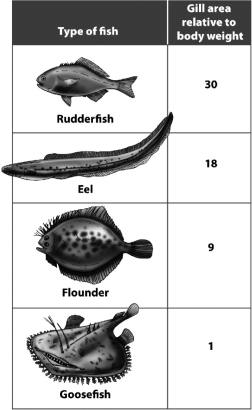 Because swimming requires large amounts of ATP and ATP synthesis requires oxygen,which fish is most likely to be the fastest swimmer?
Free
(Multiple Choice)
4.9/5 (81)
(81) Correct Answer:Verified
VerifiedA
The figure below illustrates the inhalation step of gas exchange in humans.
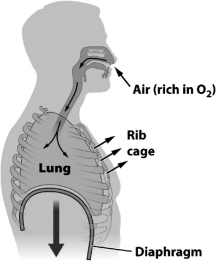 In this figure,which depicts inhalation,the diaphragm and the muscles of the rib cage are ________.
Free
(Short Answer)
4.9/5 (72)
(72) Correct Answer:Verified
Verifiedcontracted
Gases diffuse from an area of ________ concentration to an area of ________ concentration.
(Short Answer)
4.9/5 (74)
(74) Although often drawn symmetrically,the wall of the right ventricle is actually much thinner than that of the left and is able to generate only about one-quarter of the pressure.Why might this still be physiologically acceptable?
(Multiple Choice)
4.8/5 (85)
(85) Inhaled air reaches the lungs after passing through a paired set of organs,the
(Multiple Choice)
4.8/5 (81)
(81) If an individual has viral bronchitis,it would be accurate to refer to the condition as an upper-respiratory tract infection.
(True/False)
4.9/5 (76)
(76) The thickening of the arterial walls over time elevates blood pressure and helps move the blood more efficiently throughout the body.
(True/False)
4.9/5 (69)
(69) Lance Armstrong and a significant group of world-class cyclists have been stripped of their medals and banned from international competition for using the synthetic hormone ________ to enhance their performances.
(Short Answer)
4.9/5 (62)
(62) Oxygen molecules are symmetrically formed and nonpolar,so they dissolve poorly in water;the concentration of oxygen in the air is much greater.
(True/False)
4.7/5 (79)
(79) A typical human blood pressure is 120/80.Since the heart is NOT pumping during diastole,how is it possible that the diastolic pressure is as high as 80 rather than falling to 0?
(Multiple Choice)
4.9/5 (78)
(78) Oxygen molecules are polar and dissolve so poorly in blood plasma that there is NOT enough oxygen to meet the metabolic demands of a vertebrate.However,red blood cells contain ________,which greatly increases the oxygen content of blood.
(Multiple Choice)
4.8/5 (74)
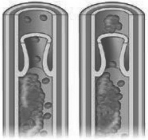
(74) The figures shows a fragment of a clot separating and moving downstream in the venous system.When the clot encounters a vessel with a diameter smaller than itself it will become lodged and the flow of blood will be blocked.Where is this most likely to happen?
(Multiple Choice)
4.9/5 (80)
(80) If skin were the gas exchange surface for humans,it would have sufficient surface area to support our need for oxygen.
(True/False)
4.7/5 (91)
(91) Why do larger animals depend on an internal transport system (like the circulatory system in mammals)to distribute oxygen when small organisms get along fine without one?
(Multiple Choice)
4.7/5 (71)
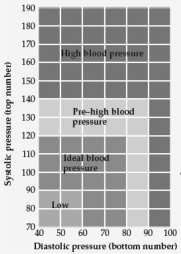
(71) What status would you assign to an individual whose resting blood pressure was consistently 137/78?
(Multiple Choice)
4.9/5 (82)
(82) A patient with a low platelet count might be easily fatigued but would have a normal risk for bleeding.
(True/False)
4.7/5 (83)
(83) 
Filters
- Essay(0)
- Multiple Choice(0)
- Short Answer(0)
- True False(0)
- Matching(0)