



 Chat with AI
Exam 19: Archaeal Diversity

Exam 1: Microbial Life: Origin and Discovery69 Questions
Exam 2: Observing the Microbial Cell69 Questions
Exam 3: Cell Structure and Function72 Questions
Exam 4: Bacterial Culture, Growth, and Development70 Questions
Exam 5: Environmental Influences and Control of Microbial Growth70 Questions
Exam 6: Viruses70 Questions
Exam 7: Genomes and Chromosomes70 Questions
Exam 8: Transcription, Translation, and Bioinformatics76 Questions
Exam 9: Gene Transfer, Mutations, and Genome Evolution72 Questions
Exam 10: Molecular Regulation73 Questions
Exam 11: Viral Molecular Biology70 Questions
Exam 12: Biotechniques and Synthetic Biology72 Questions
Exam 13: Energetics and Catabolism77 Questions
Exam 14: Electron Flow in Organotrophy, Lithotrophy, and Phototrophy70 Questions
Exam 15: Biosynthesis70 Questions
Exam 16: Food and Industrial Microbiology73 Questions
Exam 17: Origins and Evolution70 Questions
Exam 18: Bacterial Diversity71 Questions
Exam 19: Archaeal Diversity70 Questions
Exam 20: Eukaryotic Diversity70 Questions
Exam 21: Microbial Ecology70 Questions
Exam 22: Microbes in Global Elemental Cycles70 Questions
Exam 23: Human Microbiota and Innate Immunity70 Questions
Exam 24: The Adaptive Immune Response70 Questions
Exam 25: Microbial Pathogenesis70 Questions
Exam 26: Microbial Diseases69 Questions
Exam 27: Antimicrobial Therapy72 Questions
Exam 28: Clinical Microbiology and Epidemiology75 Questions
Select questions type


Which of the following influences the fermentation efficiency of the gut flora?
(Multiple Choice)
4.8/5  (74)
(74) Commercial evaporation pools for salt production benefit from the presence of red ________, whose light absorption accelerates heating and evaporation.
(Multiple Choice)
4.8/5 (92)
(92) Which of the following coenzymes is NOT specific for methanogenesis?
(Multiple Choice)
4.7/5 (84)
(84) Discuss the genome and morphology of known archaeal viruses. Why are their genomes all similar in structure?
(Essay)
4.9/5 (78)
(78) Which of the following is a glycerol diphytanyl diether containing a six-membered cyclic ring?
(Multiple Choice)
4.8/5 (80)
(80) Describe some of the unique metabolic pathways found in archaea but not bacteria or eukarya.
(Essay)
4.7/5 (83)
(83) The exceptionally small cell in the image shown below is an obligate symbiont to another archaeon and a member of the genus 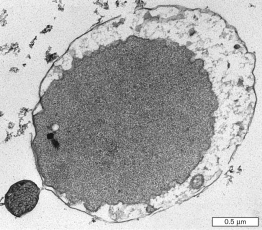
(Multiple Choice)
4.8/5 (63)
(63) The Haloarchaea, extreme ________, are the only form of life to grow in concentrated brine.
(Multiple Choice)
4.8/5 (79)
(79) In the haloarchaea, the red pigment bacterioruberin protects cells from damage by
(Multiple Choice)
4.9/5 (78)
(78) Archaeoglobus fulgidus conserves energy by sulfate respiration, which drives a unique acetyl-CoA degradation pathway involving the reversal of
(Multiple Choice)
4.8/5 (80)
(80) The Sulfolobales includes species that respire by oxidizing
(Multiple Choice)
4.8/5 (69)
(69) Which of the following is an extreme acidophile found anchored to deposits of pyrite ore in mines?
(Multiple Choice)
4.9/5 (77)
(77) All types of methanogenesis are poisoned by ________ and therefore require extreme ________.
(Multiple Choice)
4.8/5 (92)
(92) What are methane gas hydrates and where are they found? Discuss the idea of benthic mining.
(Essay)
4.9/5 (79)
(79) What is the Ancient Archaeal Group and what is known about these organisms?
(Essay)
4.8/5 (88)
(88) Where are methanogens found in nature? What are some of the problems they can cause in these habitats?
(Essay)
4.9/5 (61)
(61) Why has Sulfolobus been studied so much more extensively than many archaea, and what is known about it?
(Essay)
4.8/5 (81)
(81) 
Filters
- Essay(0)
- Multiple Choice(0)
- Short Answer(0)
- True False(0)
- Matching(0)