



 Chat with AI
Exam 9: Gene Transfer, Mutations, and Genome Evolution

Exam 1: Microbial Life: Origin and Discovery69 Questions
Exam 2: Observing the Microbial Cell69 Questions
Exam 3: Cell Structure and Function72 Questions
Exam 4: Bacterial Culture, Growth, and Development70 Questions
Exam 5: Environmental Influences and Control of Microbial Growth70 Questions
Exam 6: Viruses70 Questions
Exam 7: Genomes and Chromosomes70 Questions
Exam 8: Transcription, Translation, and Bioinformatics76 Questions
Exam 9: Gene Transfer, Mutations, and Genome Evolution72 Questions
Exam 10: Molecular Regulation73 Questions
Exam 11: Viral Molecular Biology70 Questions
Exam 12: Biotechniques and Synthetic Biology72 Questions
Exam 13: Energetics and Catabolism77 Questions
Exam 14: Electron Flow in Organotrophy, Lithotrophy, and Phototrophy70 Questions
Exam 15: Biosynthesis70 Questions
Exam 16: Food and Industrial Microbiology73 Questions
Exam 17: Origins and Evolution70 Questions
Exam 18: Bacterial Diversity71 Questions
Exam 19: Archaeal Diversity70 Questions
Exam 20: Eukaryotic Diversity70 Questions
Exam 21: Microbial Ecology70 Questions
Exam 22: Microbes in Global Elemental Cycles70 Questions
Exam 23: Human Microbiota and Innate Immunity70 Questions
Exam 24: The Adaptive Immune Response70 Questions
Exam 25: Microbial Pathogenesis70 Questions
Exam 26: Microbial Diseases69 Questions
Exam 27: Antimicrobial Therapy72 Questions
Exam 28: Clinical Microbiology and Epidemiology75 Questions
Select questions type


The reaction of cytosine, shown below, happens ________ and causes ________. 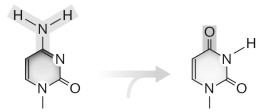
(Multiple Choice)
4.8/5  (86)
(86) Site-specific recombination is RecA independent and requires very short regions of homology between donor and target DNA. Describe an example in either E. coli or Salmonella.
(Essay)
4.9/5 (83)
(83) Approximately what percentage of the genome of E. coli O157:H7, which has been responsible for several outbreaks of food-borne disease, has been acquired from other species?
(Multiple Choice)
4.9/5 (78)
(78) During generalized recombination, ________ proteins catalyze branch migration at crossovers called ________.
(Multiple Choice)
4.7/5 (80)
(80) The experiment outlined below is a/an ________ test. The role of the rat liver homogenate is to ________. 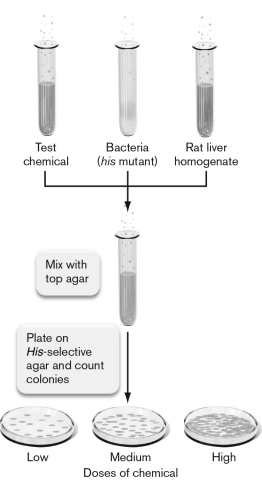
(Multiple Choice)
4.9/5 (85)
(85) What is transcription-coupled repair and why is it important for the cell?
(Essay)
4.8/5 (81)
(81) Many infectious bacteria have regions of DNA coding for virulence factors. These regions are called
(Multiple Choice)
4.9/5 (76)
(76) Newly replicated, and consequently ________, DNA sequences are invisible to a restriction enzyme.
(Multiple Choice)
4.8/5 (88)
(88) During conjugation, DNA pol ________ is used for replication beginning at ________.
(Multiple Choice)
4.7/5 (65)
(65) In the figure shown below, the cause of the appearance of these bacterial colonies is ________ and is caused by ________. 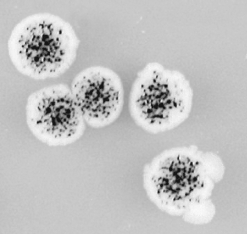
(Multiple Choice)
4.7/5 (84)
(84) In the figure shown below, the role of the -Me groups on the second sequence is that the methyl groups 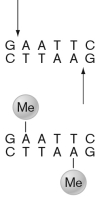
(Multiple Choice)
4.8/5 (90)
(90) The figure shown below diagrams a variety of genomic islands. What characteristics do these islands in the diagram share? 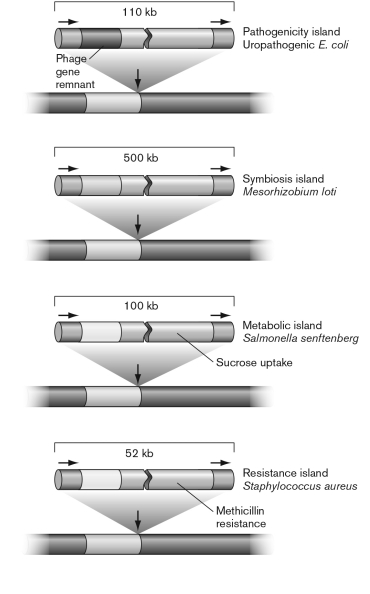
(Multiple Choice)
4.8/5 (89)
(89) 
Filters
- Essay(0)
- Multiple Choice(0)
- Short Answer(0)
- True False(0)
- Matching(0)