



 Chat with AI
Exam 37: Oceania Before 1980

Exam 1: Art in the Stone Age50 Questions
Exam 2: Ancient Mesopotamia and Persia50 Questions
Exam 3: Egypt From Narmer to Cleopatra50 Questions
Exam 4: The Prehistoric Aegean50 Questions
Exam 5: Ancient Greece50 Questions
Exam 6: The Etruscans50 Questions
Exam 7: The Roman Empire50 Questions
Exam 8: Late Antiquity50 Questions
Exam 9: Byzantium50 Questions
Exam 10: The Islamic World50 Questions
Exam 11: Early Medieval Europe50 Questions
Exam 12: Romanesque Europe50 Questions
Exam 13: Gothic Europe North of the Alps50 Questions
Exam 14: Late Medieval Italy50 Questions
Exam 15: South and Southeast Asia Before 120050 Questions
Exam 16: China and Korea to 127950 Questions
Exam 17: Japan Before 133350 Questions
Exam 18: Native American Cultures Before 130049 Questions
Exam 19: Africa Before 180050 Questions
Exam 20: Late Medieval and Early Renaissance Northern Europe50 Questions
Exam 21: The Renaissance in Quattrocento Italy50 Questions
Exam 22: Renaissance and Mannerism in Cinquecento Italy50 Questions
Exam 23: High Renaissance and Mannerism in Northern Europe and Spain50 Questions
Exam 24: The Baroque in Italy and Spain50 Questions
Exam 25: The Baroque in Northern Europe50 Questions
Exam 26: Rococo to Neoclassicism: the 18th Century in Europe and America50 Questions
Exam 27: Romanticism, Realism, Photography: Europe and America, 1800 to 187050 Questions
Exam 28: Impressionism, Post-Impressionism, Symbolism: Europe and America, 1870 to 190050 Questions
Exam 29: Modernism in Europe, 1900 to 194550 Questions
Exam 30: Modernism in the United States and Mexico, 1900 to 194550 Questions
Exam 31: Modernism and Postmodernism in Europe and America, 1945 to 198050 Questions
Exam 32: Contemporary Art Worldwide50 Questions
Exam 33: South and Southeast Asia, 1200 to 198050 Questions
Exam 34: China and Korea, 1279 to 198050 Questions
Exam 35: Japan, 1333 to 198050 Questions
Exam 36: Native American Cultures, 1300 to 198050 Questions
Exam 37: Oceania Before 198050 Questions
Exam 38: Africa, 1800 to 198050 Questions
Select questions type


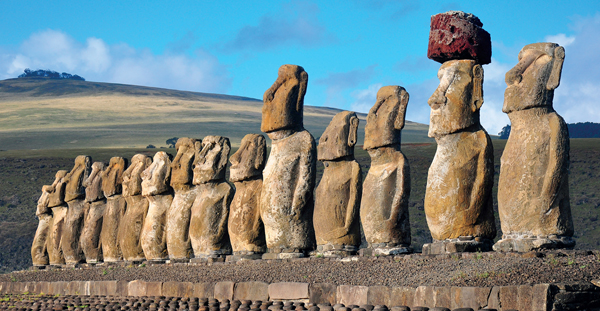 How many moai figures have been documented on the island of Rapa Nui?
Free
(Multiple Choice)
4.8/5  (85)
(85) Correct Answer: Verified
D
The artworks of the Abelam people are focused on which aspect of human life?
Free
(Multiple Choice)
4.9/5 (80)
(80) Correct Answer:Verified
VerifiedB
The overall form of the ceremonial men's house of the Iatmul in Papua New Guinea is meant to reference which of the following?
Free
(Multiple Choice)
4.9/5 (89)
(89) Correct Answer:Verified
VerifiedC
In the stratified societies of Polynesia, which artistic genre served to indicate rank and status?
(Multiple Choice)
4.9/5 (82)
(82) Figure carvings on a Maori meetinghouse represent which of the following?
(Multiple Choice)
5.0/5 (63)
(63) European colonization of the Pacific Islands reached its zenith during which century?
(Multiple Choice)
4.8/5 (88)
(88) The last island(s) of Oceania to be settled (pre-European contact) were which of the following?
(Multiple Choice)
4.9/5 (75)
(75) The abstract patterns found on the men's ceremonial houses of Belau refer to which of the following?
(Multiple Choice)
4.7/5 (71)
(71)
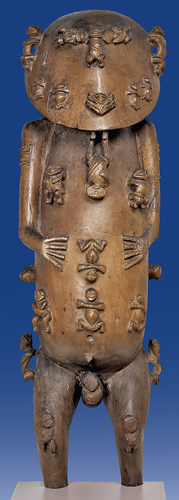 What is the meaning of the relief decorations covering the body of this Rurutu figure of the god A'a?
 (Multiple Choice)
4.8/5 (89)
(89) Which of the following describes the function of tatanua masks in malanggan mortuary ceremonies?
(Multiple Choice)
4.9/5 (86)
(86)
 What is represented by the seven figures projecting from beneath the head of the Rarotonga staff god?
 (Multiple Choice)
4.8/5 (82)
(82)
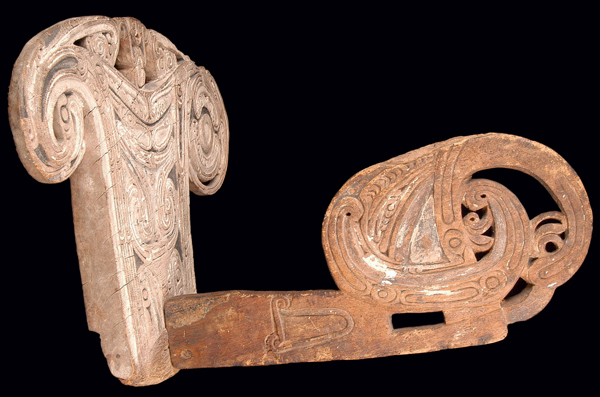 Trobriand Islanders participating in kula exchanges used the illustrated object for what purpose?
 (Multiple Choice)
5.0/5 (73)
(73) 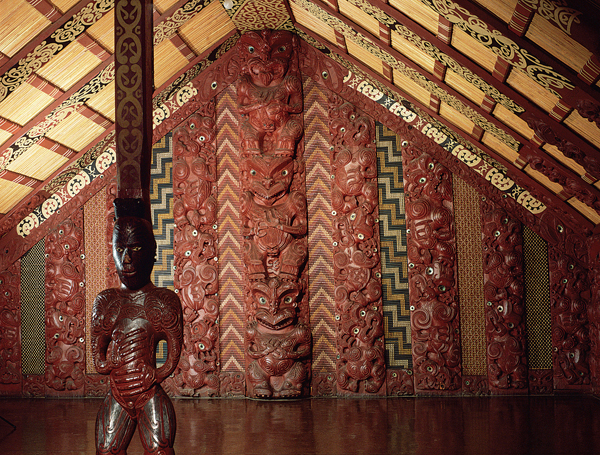 Which Oceanic people built this structure?
The Asmat see the human body as a tree in which the feet are the roots, the arms are the branches, and the head is what?
(Multiple Choice)
4.9/5 (94)
(94) The Trobriand Islanders' great skill in carving is most evident in which art form?
(Multiple Choice)
4.8/5 (76)
(76)
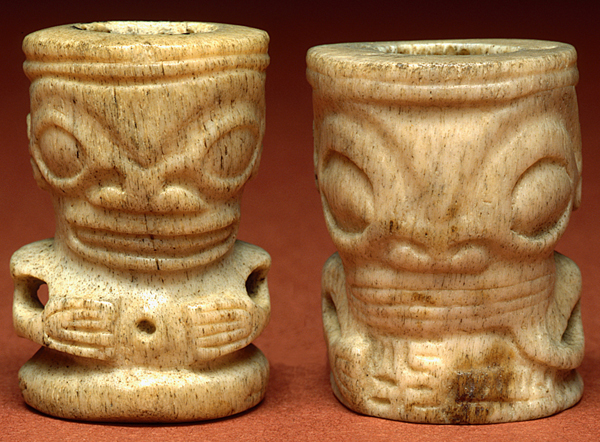 In the Marquesas Islands, what was the function of ivi p'o such as the ones illustrated?
 (Multiple Choice)
4.8/5 (84)
(84) The concept of the Dreamings is associated with the indigenous peoples of which area?
(Multiple Choice)
4.9/5 (80)
(80) The helmet masks made of wood, fiber, and rattan that are worn in the malanggan rites to represent deceased people are referred to by what term?
(Multiple Choice)
4.8/5 (77)
(77)
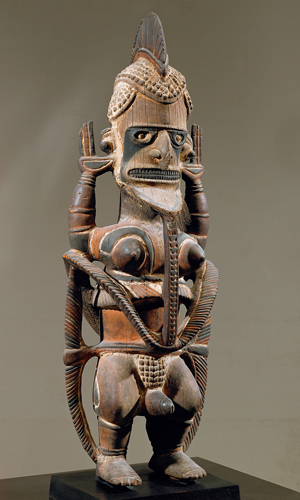 This uli statue from New Ireland was used in a malanggan ceremony that had what as its focus?
 (Multiple Choice)
4.8/5 (72)
(72) 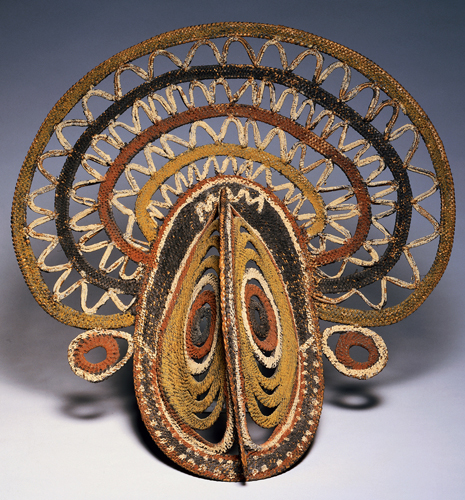 Who would have worn this Abelam mask?

Filters
- Essay(0)
- Multiple Choice(0)
- Short Answer(0)
- True False(0)
- Matching(0)