



 Chat with AI
Exam 7: The Roman Empire

Exam 1: Art in the Stone Age50 Questions
Exam 2: Ancient Mesopotamia and Persia50 Questions
Exam 3: Egypt From Narmer to Cleopatra50 Questions
Exam 4: The Prehistoric Aegean50 Questions
Exam 5: Ancient Greece50 Questions
Exam 6: The Etruscans50 Questions
Exam 7: The Roman Empire50 Questions
Exam 8: Late Antiquity50 Questions
Exam 9: Byzantium50 Questions
Exam 10: The Islamic World50 Questions
Exam 11: Early Medieval Europe50 Questions
Exam 12: Romanesque Europe50 Questions
Exam 13: Gothic Europe North of the Alps50 Questions
Exam 14: Late Medieval Italy50 Questions
Exam 15: South and Southeast Asia Before 120050 Questions
Exam 16: China and Korea to 127950 Questions
Exam 17: Japan Before 133350 Questions
Exam 18: Native American Cultures Before 130049 Questions
Exam 19: Africa Before 180050 Questions
Exam 20: Late Medieval and Early Renaissance Northern Europe50 Questions
Exam 21: The Renaissance in Quattrocento Italy50 Questions
Exam 22: Renaissance and Mannerism in Cinquecento Italy50 Questions
Exam 23: High Renaissance and Mannerism in Northern Europe and Spain50 Questions
Exam 24: The Baroque in Italy and Spain50 Questions
Exam 25: The Baroque in Northern Europe50 Questions
Exam 26: Rococo to Neoclassicism: the 18th Century in Europe and America50 Questions
Exam 27: Romanticism, Realism, Photography: Europe and America, 1800 to 187050 Questions
Exam 28: Impressionism, Post-Impressionism, Symbolism: Europe and America, 1870 to 190050 Questions
Exam 29: Modernism in Europe, 1900 to 194550 Questions
Exam 30: Modernism in the United States and Mexico, 1900 to 194550 Questions
Exam 31: Modernism and Postmodernism in Europe and America, 1945 to 198050 Questions
Exam 32: Contemporary Art Worldwide50 Questions
Exam 33: South and Southeast Asia, 1200 to 198050 Questions
Exam 34: China and Korea, 1279 to 198050 Questions
Exam 35: Japan, 1333 to 198050 Questions
Exam 36: Native American Cultures, 1300 to 198050 Questions
Exam 37: Oceania Before 198050 Questions
Exam 38: Africa, 1800 to 198050 Questions
Select questions type


Which Roman temple design during the Republican period reflected the colossal design of the Greek Hellenistic style?

Free
(Multiple Choice)
4.9/5  (88)
(88) Correct Answer: Verified
C
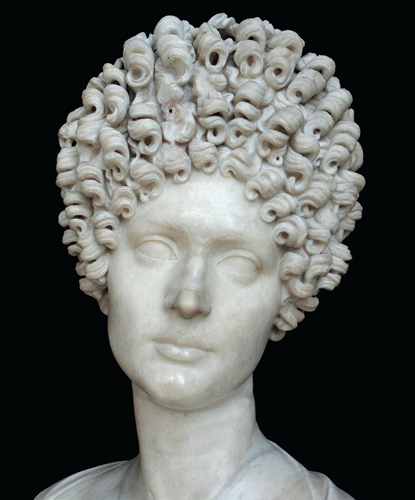 What technique was used to create the hairstyle of this portrait?
Free
(Multiple Choice)
4.7/5 (79)
(79) Correct Answer:Verified
VerifiedD
What is the primary function of architectural coffering?
Free
(Multiple Choice)
4.7/5 (71)
(71) Correct Answer:Verified
VerifiedB
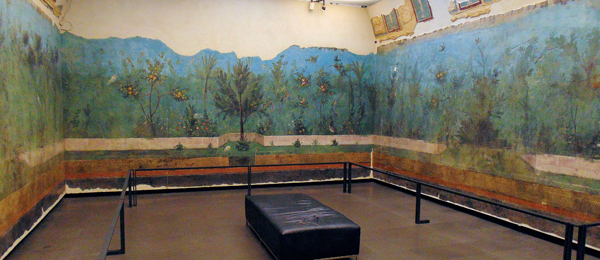 What is the find context of this garden fresco?
Which emperor was responsible for the construction of the Pantheon in Rome?
(Multiple Choice)
4.8/5 (79)
(79) In contrast to Greek temples, what was the usual architectural scheme of Roman temples?
(Multiple Choice)
4.8/5 (69)
(69) 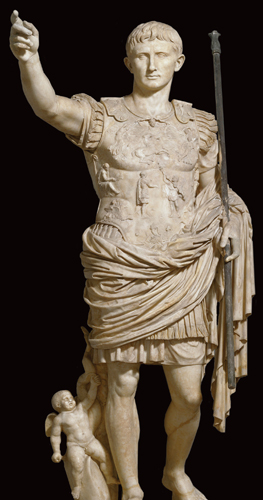 What important Roman figure is portrayed here?
What accounts for the increasing presence of sarcophagi in Roman art after the time of Augustus?
(Multiple Choice)
4.9/5 (92)
(92) The exterior of the Colosseum combined the Greek post-and-lintel structure of columns and entablature with what Roman form?
(Multiple Choice)
4.9/5 (81)
(81) Which of the following was NOT built by Augustus in his program to make the monuments of Rome the equal of those of Periclean Athens?
(Multiple Choice)
4.9/5 (78)
(78) What earlier monument is a model for the procession of the imperial family on the Ara Pacis Augustae?
(Multiple Choice)
4.8/5 (71)
(71) Why did many freed slaves order portrait reliefs for their tombs?
(Multiple Choice)
4.9/5 (89)
(89) The Sanctuary of Fortuna Primigenia relied on which structural component?
(Multiple Choice)
4.8/5 (86)
(86) What influence is apparent in the lifelike verism of Roman Republican portraits?
(Multiple Choice)
4.8/5 (66)
(66) What Roman building type was the home of the vast majority of citizens of Rome?
(Multiple Choice)
4.9/5 (84)
(84) The figures from the frieze of the Villa of Mysteries are thought to be taking part in an initiation into the cult of which divine figure?
(Multiple Choice)
4.9/5 (72)
(72)
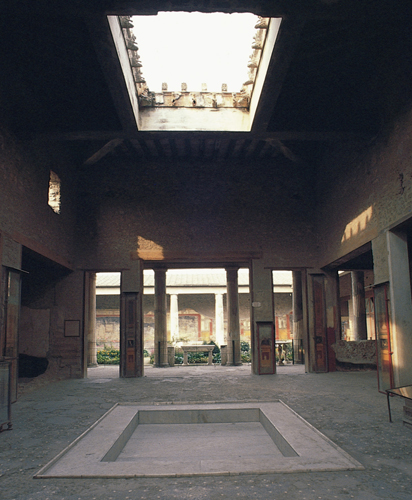 Which component of a Roman house plan is the focus of this image?
 (Multiple Choice)
4.9/5 (81)
(81) 
Filters
- Essay(0)
- Multiple Choice(0)
- Short Answer(0)
- True False(0)
- Matching(0)