



 Chat with AI
Exam 20: Late Medieval and Early Renaissance Northern Europe

Exam 1: Art in the Stone Age50 Questions
Exam 2: Ancient Mesopotamia and Persia50 Questions
Exam 3: Egypt From Narmer to Cleopatra50 Questions
Exam 4: The Prehistoric Aegean50 Questions
Exam 5: Ancient Greece50 Questions
Exam 6: The Etruscans50 Questions
Exam 7: The Roman Empire50 Questions
Exam 8: Late Antiquity50 Questions
Exam 9: Byzantium50 Questions
Exam 10: The Islamic World50 Questions
Exam 11: Early Medieval Europe50 Questions
Exam 12: Romanesque Europe50 Questions
Exam 13: Gothic Europe North of the Alps50 Questions
Exam 14: Late Medieval Italy50 Questions
Exam 15: South and Southeast Asia Before 120050 Questions
Exam 16: China and Korea to 127950 Questions
Exam 17: Japan Before 133350 Questions
Exam 18: Native American Cultures Before 130049 Questions
Exam 19: Africa Before 180050 Questions
Exam 20: Late Medieval and Early Renaissance Northern Europe50 Questions
Exam 21: The Renaissance in Quattrocento Italy50 Questions
Exam 22: Renaissance and Mannerism in Cinquecento Italy50 Questions
Exam 23: High Renaissance and Mannerism in Northern Europe and Spain50 Questions
Exam 24: The Baroque in Italy and Spain50 Questions
Exam 25: The Baroque in Northern Europe50 Questions
Exam 26: Rococo to Neoclassicism: the 18th Century in Europe and America50 Questions
Exam 27: Romanticism, Realism, Photography: Europe and America, 1800 to 187050 Questions
Exam 28: Impressionism, Post-Impressionism, Symbolism: Europe and America, 1870 to 190050 Questions
Exam 29: Modernism in Europe, 1900 to 194550 Questions
Exam 30: Modernism in the United States and Mexico, 1900 to 194550 Questions
Exam 31: Modernism and Postmodernism in Europe and America, 1945 to 198050 Questions
Exam 32: Contemporary Art Worldwide50 Questions
Exam 33: South and Southeast Asia, 1200 to 198050 Questions
Exam 34: China and Korea, 1279 to 198050 Questions
Exam 35: Japan, 1333 to 198050 Questions
Exam 36: Native American Cultures, 1300 to 198050 Questions
Exam 37: Oceania Before 198050 Questions
Exam 38: Africa, 1800 to 198050 Questions
Select questions type


The Hundred Years' War primarily involved which two kingdoms?

Free
(Multiple Choice)
4.8/5  (61)
(61) Correct Answer: Verified
D
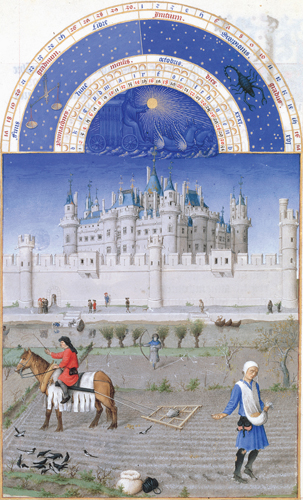 The activities of which month appear on this page from Les Très Riches Heures ?
Free
(Multiple Choice)
4.8/5 (91)
(91) Correct Answer:Verified
VerifiedC
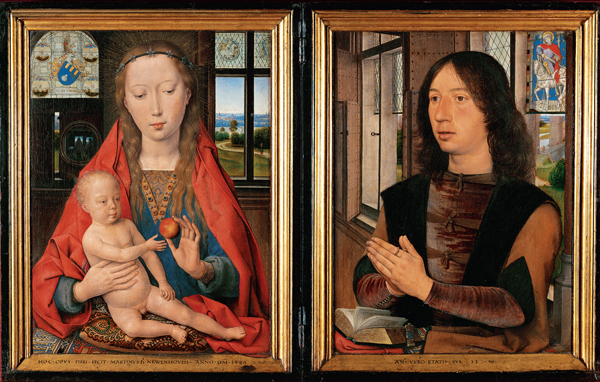 These two paintings adorn which type of object?
Free
(Multiple Choice)
4.7/5 (88)
(88) Correct Answer:Verified
VerifiedB
Hugo van der Goes revived medieval pictorial devices by including what component?
(Multiple Choice)
4.8/5 (85)
(85) Who was the likely patron of Rogier van der Weyden's Saint Luke Drawing the Virgin ?
(Multiple Choice)
4.8/5 (69)
(69) 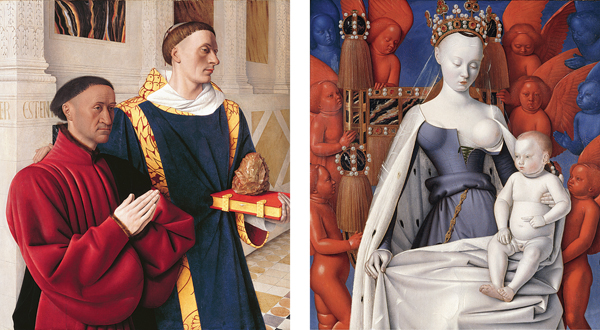 What is the title of this work by Jean Fouquet?
In Riemenschneider's Assumption of the Virgin , the artist successfully incorporated which of the following elements?
(Multiple Choice)
4.9/5 (91)
(91) To enhance the meaning of the main event portrayed, the Portinari Altarpiece includes subsidiary scenes in the background, such as which of the following?
(Multiple Choice)
4.8/5 (88)
(88) In the calendar pages of Les Très Riches Heures du Duc de Berry , scenes of courtly life alternate with what?
(Multiple Choice)
4.9/5 (67)
(67) In the 15th century, the dukes of Burgundy wielded power over which of the following counties?
(Multiple Choice)
4.9/5 (87)
(87) Which of the following artists specialized in images of the Madonna and Child?
(Multiple Choice)
4.8/5 (82)
(82) Triptychs and altarpieces are able to be distinguished by which characteristic?
(Multiple Choice)
5.0/5 (99)
(99) A great achievement of Les Très Riches Heures was that it made manuscripts more closely resemble which art form?
(Multiple Choice)
4.7/5 (79)
(79) The Nuremberg Chronicle , a tribute to the new craft of the printed illustrated book, had what as its topic?
(Multiple Choice)
4.9/5 (98)
(98) 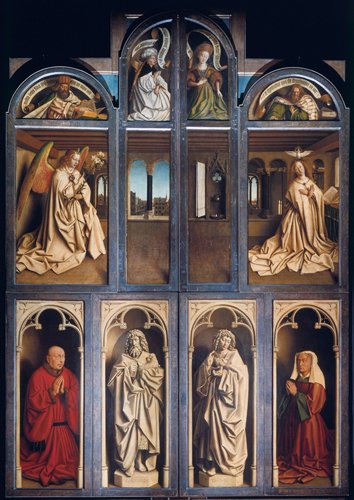 Who painted the Ghent Altarpiece ?
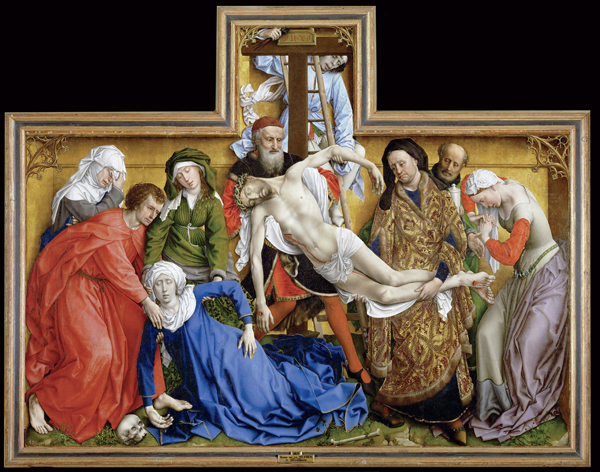 What has Rogier van der Weyden painted this panel to resemble?
 (Multiple Choice)
5.0/5 (87)
(87) Who were the most powerful northern European rulers during much of the 15th century?
(Multiple Choice)
4.8/5 (78)
(78) 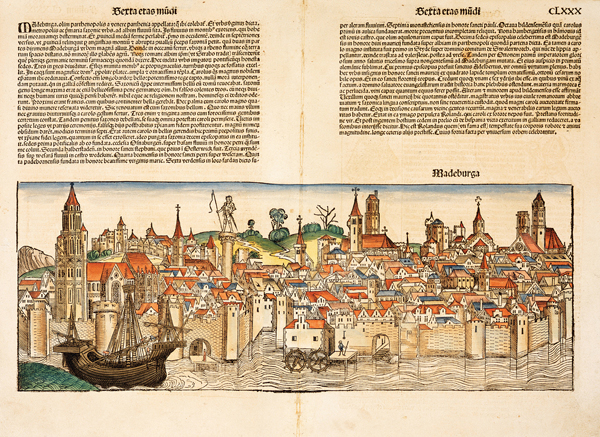 What method was used to create this image?

Filters
- Essay(0)
- Multiple Choice(0)
- Short Answer(0)
- True False(0)
- Matching(0)