



 Chat with AI
Exam 23: High Renaissance and Mannerism in Northern Europe and Spain

Exam 1: Art in the Stone Age50 Questions
Exam 2: Ancient Mesopotamia and Persia50 Questions
Exam 3: Egypt From Narmer to Cleopatra50 Questions
Exam 4: The Prehistoric Aegean50 Questions
Exam 5: Ancient Greece50 Questions
Exam 6: The Etruscans50 Questions
Exam 7: The Roman Empire50 Questions
Exam 8: Late Antiquity50 Questions
Exam 9: Byzantium50 Questions
Exam 10: The Islamic World50 Questions
Exam 11: Early Medieval Europe50 Questions
Exam 12: Romanesque Europe50 Questions
Exam 13: Gothic Europe North of the Alps50 Questions
Exam 14: Late Medieval Italy50 Questions
Exam 15: South and Southeast Asia Before 120050 Questions
Exam 16: China and Korea to 127950 Questions
Exam 17: Japan Before 133350 Questions
Exam 18: Native American Cultures Before 130049 Questions
Exam 19: Africa Before 180050 Questions
Exam 20: Late Medieval and Early Renaissance Northern Europe50 Questions
Exam 21: The Renaissance in Quattrocento Italy50 Questions
Exam 22: Renaissance and Mannerism in Cinquecento Italy50 Questions
Exam 23: High Renaissance and Mannerism in Northern Europe and Spain50 Questions
Exam 24: The Baroque in Italy and Spain50 Questions
Exam 25: The Baroque in Northern Europe50 Questions
Exam 26: Rococo to Neoclassicism: the 18th Century in Europe and America50 Questions
Exam 27: Romanticism, Realism, Photography: Europe and America, 1800 to 187050 Questions
Exam 28: Impressionism, Post-Impressionism, Symbolism: Europe and America, 1870 to 190050 Questions
Exam 29: Modernism in Europe, 1900 to 194550 Questions
Exam 30: Modernism in the United States and Mexico, 1900 to 194550 Questions
Exam 31: Modernism and Postmodernism in Europe and America, 1945 to 198050 Questions
Exam 32: Contemporary Art Worldwide50 Questions
Exam 33: South and Southeast Asia, 1200 to 198050 Questions
Exam 34: China and Korea, 1279 to 198050 Questions
Exam 35: Japan, 1333 to 198050 Questions
Exam 36: Native American Cultures, 1300 to 198050 Questions
Exam 37: Oceania Before 198050 Questions
Exam 38: Africa, 1800 to 198050 Questions
Select questions type


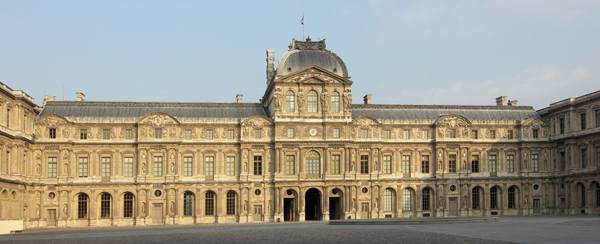 Which component of the Cour Carrée of the Louvre can be considered a northern European feature rather than a reflection of Italian Renaissance architectural models?
Free
(Multiple Choice)
4.8/5  (75)
(75) Correct Answer: Verified
B
El Escorial is in which present-day country?
Free
(Multiple Choice)
4.7/5 (77)
(77) Correct Answer:Verified
VerifiedB
Albrecht Altdorfer's landscape painting Battle of Issus is a reference to what contemporary conflict?
Free
(Multiple Choice)
4.8/5 (91)
(91) Correct Answer:Verified
VerifiedD
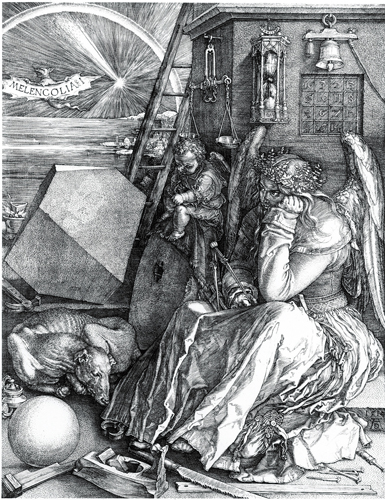 In what medium did Dürer create his Melancholia I ?
Which European monarch was a patron of sculpture and the decorative arts, a passionate collector of paintings, and a builder on a grand scale, as well as declaring Protestantism illegal within his realm?
(Multiple Choice)
4.9/5 (72)
(72) Which monarch made a concerted effort to elevate his country's cultural profile by inviting esteemed Italian artists to his court?
(Multiple Choice)
4.8/5 (85)
(85)
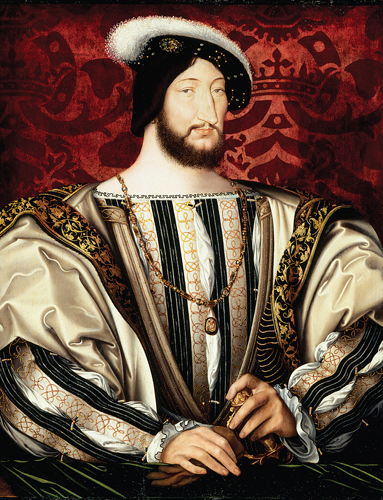 Which artist created this tempera-and-oil portrait of Francis I?
 (Multiple Choice)
4.9/5 (93)
(93) In northern Europe of this period, the expansion in genre painting-landscapes, portraits, still lifes-was accompanied by what new element?
(Multiple Choice)
4.8/5 (82)
(82)
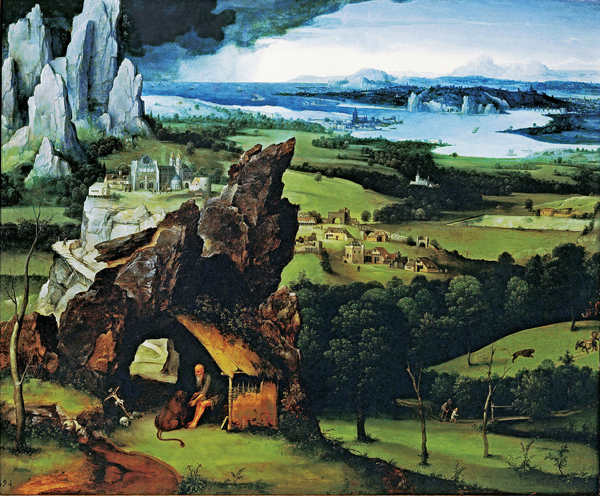 Which saint's story does Joachim Patinir subordinate to a wide and detailed landscape depiction in this painting?
 (Multiple Choice)
4.8/5 (85)
(85) In Money-Changer and His Wife by Quentin Massys, what is the viewer warned against as being a distraction from religious life?
(Multiple Choice)
5.0/5 (61)
(61) During which conflict did bands of Calvinists destroy artworks in Catholic churches in the Netherlands?
(Multiple Choice)
4.8/5 (71)
(71) Which of the following historical figures is NOT considered a Christian humanist?
(Multiple Choice)
4.9/5 (74)
(74) What construction material was used for the El Escorial complex?
(Multiple Choice)
4.8/5 (74)
(74) In Dürer's Melencolia I , what element is interpreted as an optimistic note suggesting that the artist can overcome depression?
(Multiple Choice)
4.8/5 (94)
(94) Which New Testament scene does Pieter Aertsen depict in the background of Butcher's Stall ?
(Multiple Choice)
4.8/5 (80)
(80)
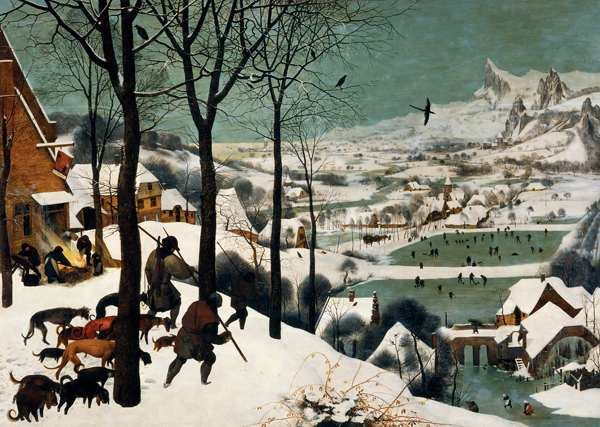 What is the title of this painting by Pieter Bruegel the Elder?
 (Multiple Choice)
4.8/5 (77)
(77)
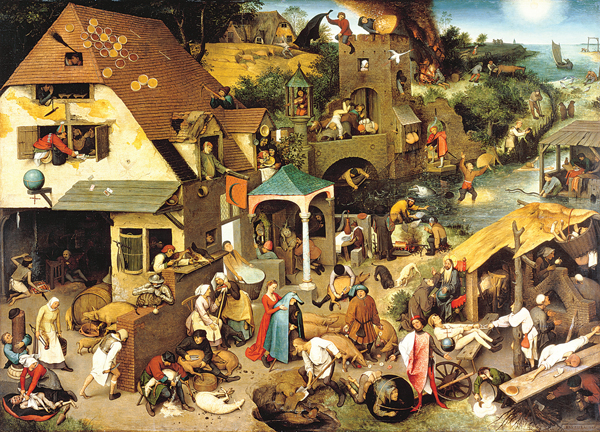 From what body of knowledge did Pieter Bruegel the Elder draw the many vignettes in this painting?
 (Multiple Choice)
4.9/5 (79)
(79)
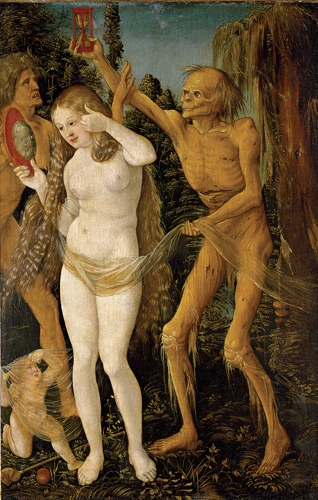 Baldung's oil painting Three Ages of Woman and Death is a commentary on both the inevitability of death and what?
 (Multiple Choice)
4.7/5 (79)
(79) Which artist does Albrecht Dürer describe as a good landscape painter?
(Multiple Choice)
4.8/5 (78)
(78) 
Filters
- Essay(0)
- Multiple Choice(0)
- Short Answer(0)
- True False(0)
- Matching(0)