



 Chat with AI
Exam 10: The Islamic World

Exam 1: Art in the Stone Age50 Questions
Exam 2: Ancient Mesopotamia and Persia50 Questions
Exam 3: Egypt From Narmer to Cleopatra50 Questions
Exam 4: The Prehistoric Aegean50 Questions
Exam 5: Ancient Greece50 Questions
Exam 6: The Etruscans50 Questions
Exam 7: The Roman Empire50 Questions
Exam 8: Late Antiquity50 Questions
Exam 9: Byzantium50 Questions
Exam 10: The Islamic World50 Questions
Exam 11: Early Medieval Europe50 Questions
Exam 12: Romanesque Europe50 Questions
Exam 13: Gothic Europe North of the Alps50 Questions
Exam 14: Late Medieval Italy50 Questions
Exam 15: South and Southeast Asia Before 120050 Questions
Exam 16: China and Korea to 127950 Questions
Exam 17: Japan Before 133350 Questions
Exam 18: Native American Cultures Before 130049 Questions
Exam 19: Africa Before 180050 Questions
Exam 20: Late Medieval and Early Renaissance Northern Europe50 Questions
Exam 21: The Renaissance in Quattrocento Italy50 Questions
Exam 22: Renaissance and Mannerism in Cinquecento Italy50 Questions
Exam 23: High Renaissance and Mannerism in Northern Europe and Spain50 Questions
Exam 24: The Baroque in Italy and Spain50 Questions
Exam 25: The Baroque in Northern Europe50 Questions
Exam 26: Rococo to Neoclassicism: the 18th Century in Europe and America50 Questions
Exam 27: Romanticism, Realism, Photography: Europe and America, 1800 to 187050 Questions
Exam 28: Impressionism, Post-Impressionism, Symbolism: Europe and America, 1870 to 190050 Questions
Exam 29: Modernism in Europe, 1900 to 194550 Questions
Exam 30: Modernism in the United States and Mexico, 1900 to 194550 Questions
Exam 31: Modernism and Postmodernism in Europe and America, 1945 to 198050 Questions
Exam 32: Contemporary Art Worldwide50 Questions
Exam 33: South and Southeast Asia, 1200 to 198050 Questions
Exam 34: China and Korea, 1279 to 198050 Questions
Exam 35: Japan, 1333 to 198050 Questions
Exam 36: Native American Cultures, 1300 to 198050 Questions
Exam 37: Oceania Before 198050 Questions
Exam 38: Africa, 1800 to 198050 Questions
Select questions type


An ancient Arab proverb proclaims, "Purity of writing, is purity of soul," and describes which of the following?

Free
(Multiple Choice)
4.8/5  (70)
(70) Correct Answer: Verified
C
Which religion does NOT have strong ties to the site enclosed by the Dome of the Rock?
Free
(Multiple Choice)
4.9/5 (81)
(81) Correct Answer:Verified
VerifiedB
What is the likely origin of the mihrab, the semicircular niche set in the qibla wall?
Free
(Multiple Choice)
4.8/5 (87)
(87) Correct Answer:Verified
VerifiedC
The practice of which craft was considered a holy task and required arduous training?
(Multiple Choice)
5.0/5 (88)
(88) What is the translation of the word used to designate the major Islamic dynasty in Egypt, mamluk ?
(Multiple Choice)
4.8/5 (75)
(75) Who was the most renowned Persian painter of the Timurid dynasty?
(Multiple Choice)
4.9/5 (91)
(91) Which earlier structure was used as a source of architectural pieces to build the Mezquita of Córdoba?
(Multiple Choice)
4.8/5 (81)
(81) Which culture did NOT contribute to the design and decoration of the Great Mosque of Damascus?
(Multiple Choice)
4.9/5 (64)
(64) In which country is the four-iwan mosque the standard type?
(Multiple Choice)
5.0/5 (70)
(70) Which of the following was an achievement of the Abbasid dynasty based in Baghdad?
(Multiple Choice)
4.8/5 (72)
(72) 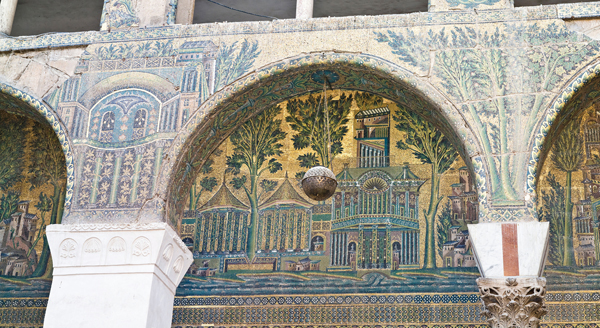 What is the location of these mosaics?
What is the vault in the Hall of the Abencerrajes meant to symbolize?
(Multiple Choice)
4.8/5 (77)
(77)
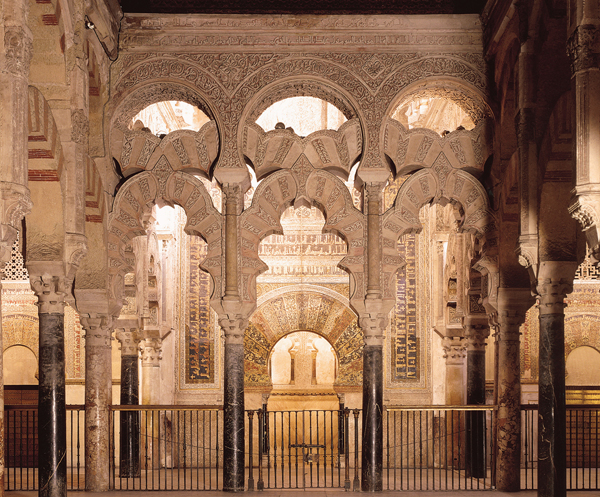 What monument contains this example of Islamic experimentation with multilobed arches?
 (Multiple Choice)
4.9/5 (75)
(75) Which of the following is built over the place from which Muhammad began his miraculous journey to heaven?
(Multiple Choice)
4.9/5 (69)
(69)
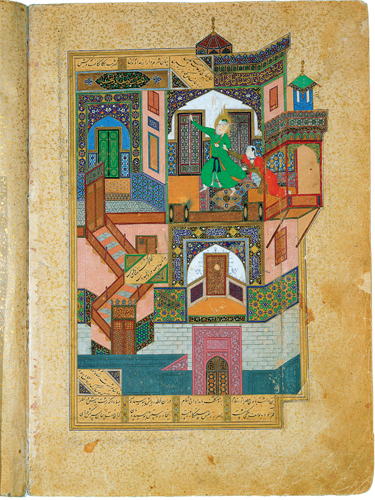 An artist produced this manuscript painting for which Islamic dynasty?
 (Multiple Choice)
4.8/5 (77)
(77) What forms the decoration of the mausoleum of the Samanids?
(Multiple Choice)
4.9/5 (80)
(80) 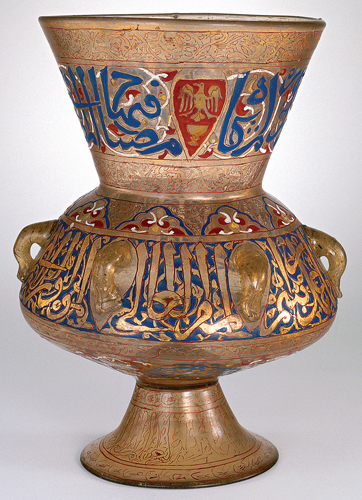 What is the function of this object?

Filters
- Essay(0)
- Multiple Choice(0)
- Short Answer(0)
- True False(0)
- Matching(0)