



 Chat with AI
Exam 10: The Islamic World

Exam 1: Art in the Stone Age50 Questions
Exam 2: Ancient Mesopotamia and Persia50 Questions
Exam 3: Egypt From Narmer to Cleopatra50 Questions
Exam 4: The Prehistoric Aegean50 Questions
Exam 5: Ancient Greece50 Questions
Exam 6: The Etruscans50 Questions
Exam 7: The Roman Empire50 Questions
Exam 8: Late Antiquity50 Questions
Exam 9: Byzantium50 Questions
Exam 10: The Islamic World50 Questions
Exam 11: Early Medieval Europe50 Questions
Exam 12: Romanesque Europe50 Questions
Exam 13: Gothic Europe North of the Alps50 Questions
Exam 14: Late Medieval Italy50 Questions
Exam 15: South and Southeast Asia Before 120050 Questions
Exam 16: China and Korea to 127950 Questions
Exam 17: Japan Before 133350 Questions
Exam 18: Native American Cultures Before 130049 Questions
Exam 19: Africa Before 180050 Questions
Exam 20: Late Medieval and Early Renaissance Northern Europe50 Questions
Exam 21: The Renaissance in Quattrocento Italy50 Questions
Exam 22: Renaissance and Mannerism in Cinquecento Italy50 Questions
Exam 23: High Renaissance and Mannerism in Northern Europe and Spain50 Questions
Exam 24: The Baroque in Italy and Spain50 Questions
Exam 25: The Baroque in Northern Europe50 Questions
Exam 26: Rococo to Neoclassicism: the 18th Century in Europe and America50 Questions
Exam 27: Romanticism, Realism, Photography: Europe and America, 1800 to 187050 Questions
Exam 28: Impressionism, Post-Impressionism, Symbolism: Europe and America, 1870 to 190050 Questions
Exam 29: Modernism in Europe, 1900 to 194550 Questions
Exam 30: Modernism in the United States and Mexico, 1900 to 194550 Questions
Exam 31: Modernism and Postmodernism in Europe and America, 1945 to 198050 Questions
Exam 32: Contemporary Art Worldwide50 Questions
Exam 33: South and Southeast Asia, 1200 to 198050 Questions
Exam 34: China and Korea, 1279 to 198050 Questions
Exam 35: Japan, 1333 to 198050 Questions
Exam 36: Native American Cultures, 1300 to 198050 Questions
Exam 37: Oceania Before 198050 Questions
Exam 38: Africa, 1800 to 198050 Questions
Select questions type


Which of the following elements of the Palace of the Lions is unusual in Islamic art?
(Multiple Choice)
4.8/5  (78)
(78) 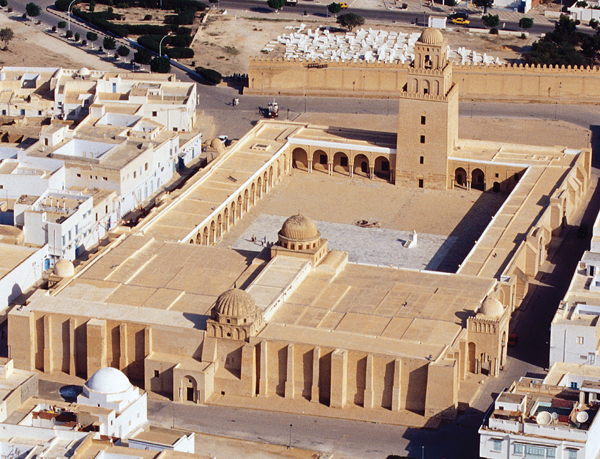 In what city is this mosque located?
Which Islamic dynasties are responsible for the Islamic buildings of Córdoba and Grenada?
(Multiple Choice)
4.9/5 (82)
(82) What was the function of the madrasa in the large complex built in Cairo by Sultan Hasan?
(Multiple Choice)
4.9/5 (70)
(70) 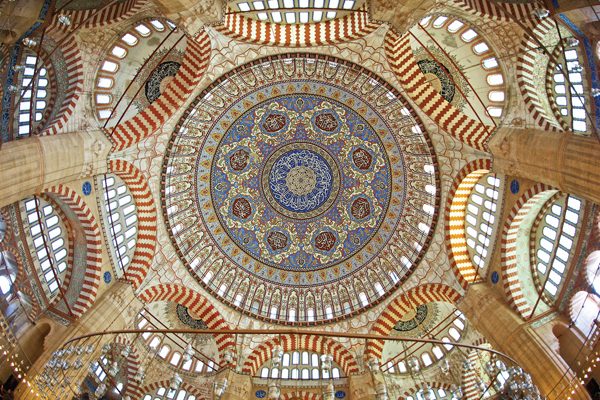 Where is the mosque pictured in this image located?
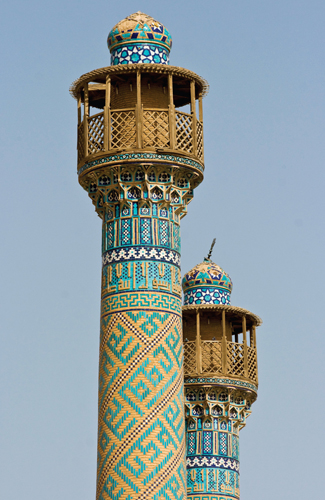 What type of tilework covers this minaret of the Friday Mosque at Isfahan?
 (Multiple Choice)
4.7/5 (74)
(74) What was the reason for the height of the Malwiya minaret in Samarra, which was too tall to be climbed to call Muslims to prayer?
(Multiple Choice)
4.9/5 (89)
(89) Which of the following pairs are the major Muslim dynasties of what is now Turkey?
(Multiple Choice)
4.8/5 (80)
(80) The Saminid mausoleum from Bukhara can be said to be which of the following structure types?
(Multiple Choice)
4.8/5 (77)
(77) Which decorative forms did the architects experiment with in the Córdoba maqsura?
(Multiple Choice)
4.8/5 (91)
(91) Which structure is considered the greatest achievement of the Ottoman court architect Suleyman the Magnificent?
(Multiple Choice)
4.8/5 (93)
(93) What forms the structural foundation of the Great Mosque of Damascus?
(Multiple Choice)
4.8/5 (76)
(76)
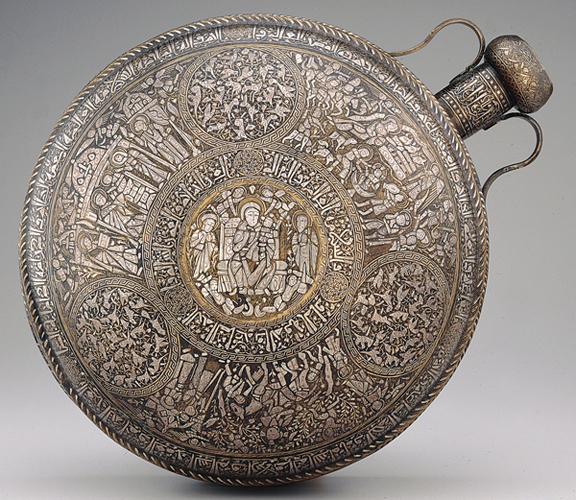 In which order do the narrative scenes appear on this brass vessel?
 (Multiple Choice)
4.9/5 (77)
(77) Which region presented the strongest resistance to the initial spread of Islam?
(Multiple Choice)
4.9/5 (91)
(91) What activity is it the primary function of Islamic religious architecture to support?
(Multiple Choice)
4.9/5 (86)
(86) What event does the Hijra, which marks the beginning of Islam, commemorate?
(Multiple Choice)
4.8/5 (77)
(77) Which of the following rarely appeared in Islamic domestic and sacred spaces?
(Multiple Choice)
4.8/5 (82)
(82) The design and decoration of Islamic Korans have the closest parallels in which art form?
(Multiple Choice)
4.8/5 (75)
(75) 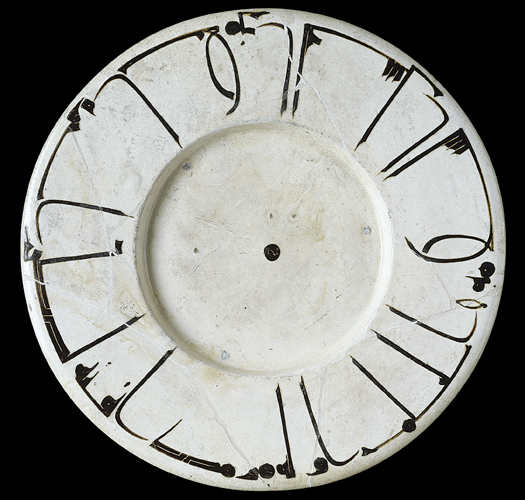 What is the function of this object?

Filters
- Essay(0)
- Multiple Choice(0)
- Short Answer(0)
- True False(0)
- Matching(0)