



 Chat with AI
Exam 34: China and Korea, 1279 to 1980

Exam 1: Art in the Stone Age50 Questions
Exam 2: Ancient Mesopotamia and Persia50 Questions
Exam 3: Egypt From Narmer to Cleopatra50 Questions
Exam 4: The Prehistoric Aegean50 Questions
Exam 5: Ancient Greece50 Questions
Exam 6: The Etruscans50 Questions
Exam 7: The Roman Empire50 Questions
Exam 8: Late Antiquity50 Questions
Exam 9: Byzantium50 Questions
Exam 10: The Islamic World50 Questions
Exam 11: Early Medieval Europe50 Questions
Exam 12: Romanesque Europe50 Questions
Exam 13: Gothic Europe North of the Alps50 Questions
Exam 14: Late Medieval Italy50 Questions
Exam 15: South and Southeast Asia Before 120050 Questions
Exam 16: China and Korea to 127950 Questions
Exam 17: Japan Before 133350 Questions
Exam 18: Native American Cultures Before 130049 Questions
Exam 19: Africa Before 180050 Questions
Exam 20: Late Medieval and Early Renaissance Northern Europe50 Questions
Exam 21: The Renaissance in Quattrocento Italy50 Questions
Exam 22: Renaissance and Mannerism in Cinquecento Italy50 Questions
Exam 23: High Renaissance and Mannerism in Northern Europe and Spain50 Questions
Exam 24: The Baroque in Italy and Spain50 Questions
Exam 25: The Baroque in Northern Europe50 Questions
Exam 26: Rococo to Neoclassicism: the 18th Century in Europe and America50 Questions
Exam 27: Romanticism, Realism, Photography: Europe and America, 1800 to 187050 Questions
Exam 28: Impressionism, Post-Impressionism, Symbolism: Europe and America, 1870 to 190050 Questions
Exam 29: Modernism in Europe, 1900 to 194550 Questions
Exam 30: Modernism in the United States and Mexico, 1900 to 194550 Questions
Exam 31: Modernism and Postmodernism in Europe and America, 1945 to 198050 Questions
Exam 32: Contemporary Art Worldwide50 Questions
Exam 33: South and Southeast Asia, 1200 to 198050 Questions
Exam 34: China and Korea, 1279 to 198050 Questions
Exam 35: Japan, 1333 to 198050 Questions
Exam 36: Native American Cultures, 1300 to 198050 Questions
Exam 37: Oceania Before 198050 Questions
Exam 38: Africa, 1800 to 198050 Questions
Select questions type


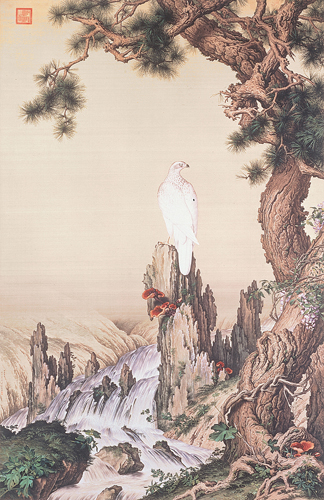 What was the occupation of the artist of Auspicious Objects ?
 (Multiple Choice)
4.7/5  (84)
(84) 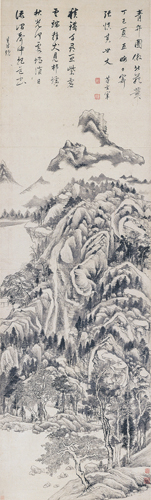 Who was the artist of this Ming dynasty hanging scroll?
With which of the following groups of people did Zhu Yuanzhong, who established the Ming dynasty, share kinship?
(Multiple Choice)
4.9/5 (71)
(71)
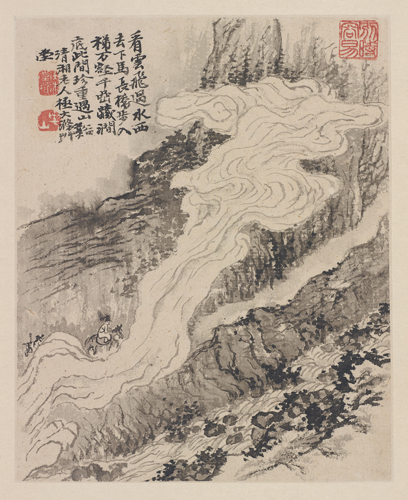 During what dynasty did Shitao paint Reminiscences of Nanjing ?
 (Multiple Choice)
4.8/5 (77)
(77) Which of the following is the best description of literati painting?
(Multiple Choice)
5.0/5 (80)
(80) What materials were used to construct the Joseon dynasty Namdaemun?
(Multiple Choice)
4.8/5 (71)
(71) Which Ming court painter specialized in the depiction of historical exemplars, as did Yan Liben's much earlier Thirteen Emperors (Tang dynasty)?
(Multiple Choice)
4.9/5 (76)
(76) Which of the following is true of Guan Yu, a famed general of the Wei dynasty and the fictional hero of the novel The Romance of the Three Kingdoms ?
(Multiple Choice)
4.7/5 (92)
(92)
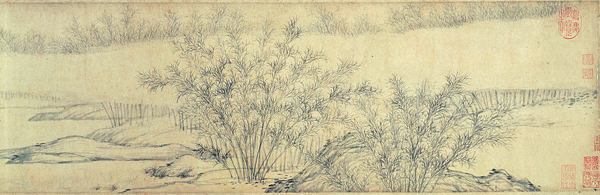 How does the artist Guan Daosheng achieve the effect of mist in her painting Bamboo Groves in Mist and Rain ?
 (Multiple Choice)
4.8/5 (69)
(69) Why did many of the Chinese loyal to the former emperor refuse to serve the new emperor during the Yuan period?
(Multiple Choice)
4.9/5 (67)
(67) 
Filters
- Essay(0)
- Multiple Choice(0)
- Short Answer(0)
- True False(0)
- Matching(0)