



 Chat with AI
Exam 34: China and Korea, 1279 to 1980

Exam 1: Art in the Stone Age50 Questions
Exam 2: Ancient Mesopotamia and Persia50 Questions
Exam 3: Egypt From Narmer to Cleopatra50 Questions
Exam 4: The Prehistoric Aegean50 Questions
Exam 5: Ancient Greece50 Questions
Exam 6: The Etruscans50 Questions
Exam 7: The Roman Empire50 Questions
Exam 8: Late Antiquity50 Questions
Exam 9: Byzantium50 Questions
Exam 10: The Islamic World50 Questions
Exam 11: Early Medieval Europe50 Questions
Exam 12: Romanesque Europe50 Questions
Exam 13: Gothic Europe North of the Alps50 Questions
Exam 14: Late Medieval Italy50 Questions
Exam 15: South and Southeast Asia Before 120050 Questions
Exam 16: China and Korea to 127950 Questions
Exam 17: Japan Before 133350 Questions
Exam 18: Native American Cultures Before 130049 Questions
Exam 19: Africa Before 180050 Questions
Exam 20: Late Medieval and Early Renaissance Northern Europe50 Questions
Exam 21: The Renaissance in Quattrocento Italy50 Questions
Exam 22: Renaissance and Mannerism in Cinquecento Italy50 Questions
Exam 23: High Renaissance and Mannerism in Northern Europe and Spain50 Questions
Exam 24: The Baroque in Italy and Spain50 Questions
Exam 25: The Baroque in Northern Europe50 Questions
Exam 26: Rococo to Neoclassicism: the 18th Century in Europe and America50 Questions
Exam 27: Romanticism, Realism, Photography: Europe and America, 1800 to 187050 Questions
Exam 28: Impressionism, Post-Impressionism, Symbolism: Europe and America, 1870 to 190050 Questions
Exam 29: Modernism in Europe, 1900 to 194550 Questions
Exam 30: Modernism in the United States and Mexico, 1900 to 194550 Questions
Exam 31: Modernism and Postmodernism in Europe and America, 1945 to 198050 Questions
Exam 32: Contemporary Art Worldwide50 Questions
Exam 33: South and Southeast Asia, 1200 to 198050 Questions
Exam 34: China and Korea, 1279 to 198050 Questions
Exam 35: Japan, 1333 to 198050 Questions
Exam 36: Native American Cultures, 1300 to 198050 Questions
Exam 37: Oceania Before 198050 Questions
Exam 38: Africa, 1800 to 198050 Questions
Select questions type


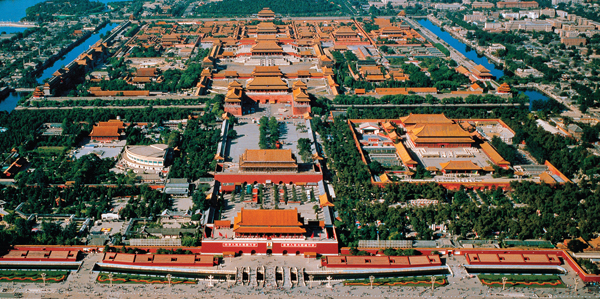 What modern city encompasses the Ming dynasty Forbidden City?
 (Multiple Choice)
4.9/5  (98)
(98) Which of the following dynasties designed the core of the imperial palace in the Forbidden City?
(Multiple Choice)
4.9/5 (90)
(90) In his painting Geumgangsan Mountains , the Korean Joseon dynasty artist Jeong Seon evoked an actual scene, and this pictorial approach is referred to as what?
(Multiple Choice)
4.8/5 (70)
(70) A painting style that was freer and more expressive belonged to which of the following schools?
(Multiple Choice)
4.9/5 (78)
(78) Which of the following is the preferred medium for East Asian literati?
(Multiple Choice)
4.8/5 (93)
(93) China is credited with the invention of which of the following pottery types?
(Multiple Choice)
4.8/5 (92)
(92) During the Qing dynasty, what European group was invited to the imperial court?
(Multiple Choice)
4.8/5 (91)
(91) What was considered the most prestigious artistic subject during the Ming dynasty?
(Multiple Choice)
4.7/5 (77)
(77) The phoenix may represent the yin, the principle characterizing which of the following?
(Multiple Choice)
4.9/5 (87)
(87) Which of the following would define the style of artist Shen Zhou, who painted Lofty Mount Lu and indicated the size of the mountain by sketching a small figure at the bottom?
(Multiple Choice)
4.8/5 (74)
(74) How does the painter focus attention on his human subjects in his painting Guan Yu Captures General Pang De ?
(Multiple Choice)
4.8/5 (80)
(80)
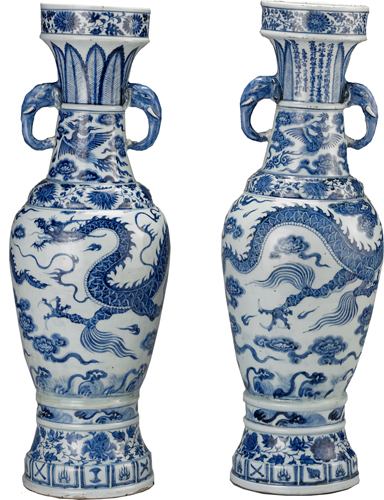 What title has been given to these early examples of cobalt-blue porcelain?
 (Multiple Choice)
4.9/5 (76)
(76)
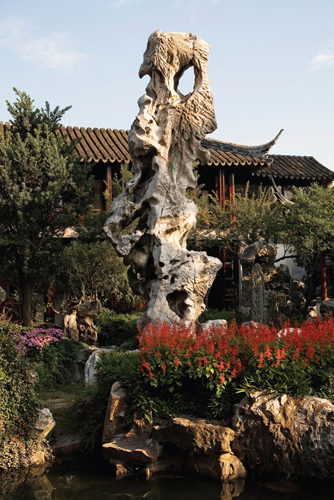 Where in Suzhou is this rock formation, known as the Guanyun (Cloud Crowned) Peak?
 (Multiple Choice)
4.8/5 (65)
(65)
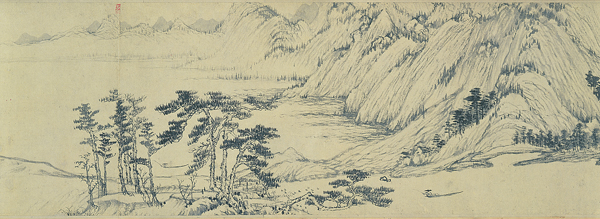 In what dynasty was this painting by Huang Gongwang produced?
 (Multiple Choice)
4.8/5 (82)
(82) Marco Polo's travels in China took place during which dynasty?
(Multiple Choice)
4.9/5 (73)
(73) The last native Chinese dynasty was which of the following?
(Multiple Choice)
4.9/5 (85)
(85) What is the format of Shitao's series of paintings titled Reminiscences of Nanjing ?
(Multiple Choice)
4.8/5 (75)
(75)
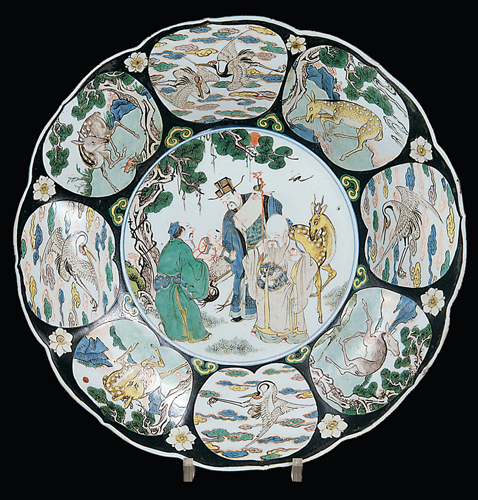 How were the various colors-red, green, black, brown, yellow, and blue-applied to this Qing dynasty plate?
 (Multiple Choice)
4.8/5 (73)
(73) Which of the following artists attached an explanatory inscription to his scroll indicating the sequence of its creation?
(Multiple Choice)
4.8/5 (74)
(74) 
Filters
- Essay(0)
- Multiple Choice(0)
- Short Answer(0)
- True False(0)
- Matching(0)