



 Chat with AI
Exam 31: Modernism and Postmodernism in Europe and America, 1945 to 1980

Exam 1: Art in the Stone Age50 Questions
Exam 2: Ancient Mesopotamia and Persia50 Questions
Exam 3: Egypt From Narmer to Cleopatra50 Questions
Exam 4: The Prehistoric Aegean50 Questions
Exam 5: Ancient Greece50 Questions
Exam 6: The Etruscans50 Questions
Exam 7: The Roman Empire50 Questions
Exam 8: Late Antiquity50 Questions
Exam 9: Byzantium50 Questions
Exam 10: The Islamic World50 Questions
Exam 11: Early Medieval Europe50 Questions
Exam 12: Romanesque Europe50 Questions
Exam 13: Gothic Europe North of the Alps50 Questions
Exam 14: Late Medieval Italy50 Questions
Exam 15: South and Southeast Asia Before 120050 Questions
Exam 16: China and Korea to 127950 Questions
Exam 17: Japan Before 133350 Questions
Exam 18: Native American Cultures Before 130049 Questions
Exam 19: Africa Before 180050 Questions
Exam 20: Late Medieval and Early Renaissance Northern Europe50 Questions
Exam 21: The Renaissance in Quattrocento Italy50 Questions
Exam 22: Renaissance and Mannerism in Cinquecento Italy50 Questions
Exam 23: High Renaissance and Mannerism in Northern Europe and Spain50 Questions
Exam 24: The Baroque in Italy and Spain50 Questions
Exam 25: The Baroque in Northern Europe50 Questions
Exam 26: Rococo to Neoclassicism: the 18th Century in Europe and America50 Questions
Exam 27: Romanticism, Realism, Photography: Europe and America, 1800 to 187050 Questions
Exam 28: Impressionism, Post-Impressionism, Symbolism: Europe and America, 1870 to 190050 Questions
Exam 29: Modernism in Europe, 1900 to 194550 Questions
Exam 30: Modernism in the United States and Mexico, 1900 to 194550 Questions
Exam 31: Modernism and Postmodernism in Europe and America, 1945 to 198050 Questions
Exam 32: Contemporary Art Worldwide50 Questions
Exam 33: South and Southeast Asia, 1200 to 198050 Questions
Exam 34: China and Korea, 1279 to 198050 Questions
Exam 35: Japan, 1333 to 198050 Questions
Exam 36: Native American Cultures, 1300 to 198050 Questions
Exam 37: Oceania Before 198050 Questions
Exam 38: Africa, 1800 to 198050 Questions
Select questions type


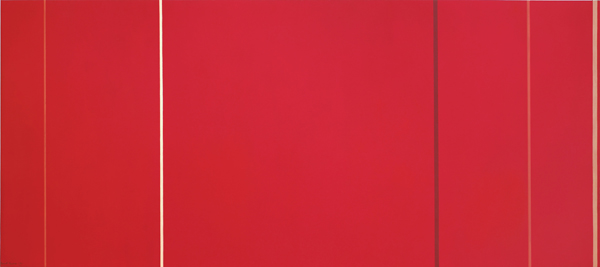 By what term did Barnett Newman refer to the narrow lines that run vertically through the color fields of his paintings?
 (Multiple Choice)
4.9/5  (78)
(78) Which of the following best describes the function of Performance Art?
(Multiple Choice)
4.8/5 (91)
(91) Jean-Paul Sartre saw the sculptures of which artist as embodying his philosophical theory of existentialism, which asserts the absurdity of human existence?
(Multiple Choice)
4.8/5 (87)
(87)
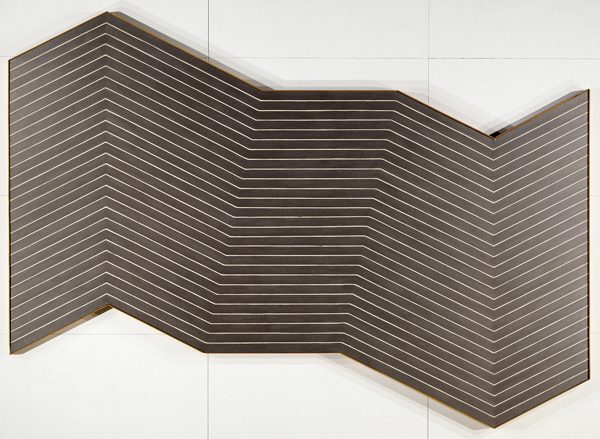 Who famously said of this artwork, "What you see is what you see"?
 (Multiple Choice)
4.9/5 (77)
(77)
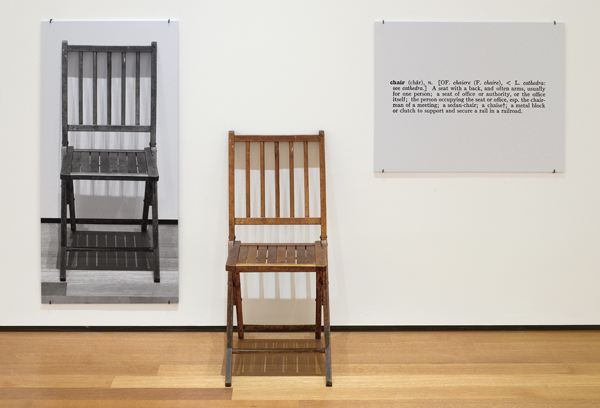 Joseph Kosuth's One and Three Chairs is an example of which art movement?
 (Multiple Choice)
4.8/5 (102)
(102) 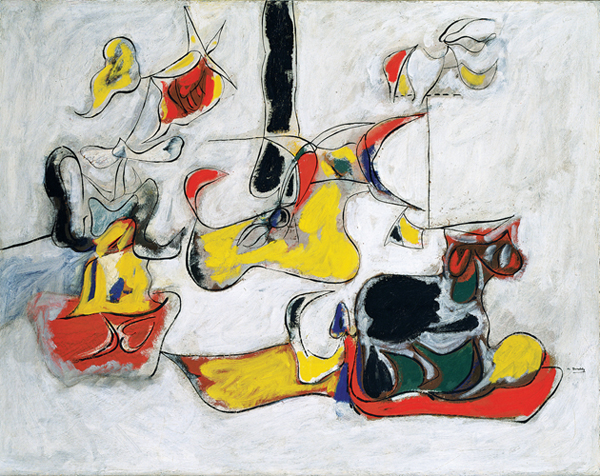 What title did Arshile Gorky give to this work?
In his writing on postmodern architecture, Venturi emphasized which two concepts?
(Multiple Choice)
4.9/5 (83)
(83) As evident in Ellsworth Kelly's painting Red Green Blue , which of the following is NOT one of the elements he considered essential to painting?
(Multiple Choice)
4.8/5 (91)
(91) What painting technique did Jean Dubuffet employ in Vie Inquieté ( Uneasy Life )?
(Multiple Choice)
4.8/5 (82)
(82) Francis Bacon's paintings detailing the horrors and brutality of war often feature which class of object?
(Multiple Choice)
4.8/5 (88)
(88) 
Filters
- Essay(0)
- Multiple Choice(0)
- Short Answer(0)
- True False(0)
- Matching(0)