



 Chat with AI
Exam 52: Animal Behavior

Exam 1: A View of Life72 Questions
Exam 2: Atoms and Molecules: the Chemical Basis of Life75 Questions
Exam 3: The Chemistry of Life: Organic Compounds75 Questions
Exam 4: Organization of the Cell76 Questions
Exam 5: Biological Membranes73 Questions
Exam 6: Cell Communication73 Questions
Exam 7: Energy and Metabolism73 Questions
Exam 8: How Cells Make Atp: Energy-Releasing Pathways75 Questions
Exam 9: Photosynthesis: Capturing Light Energy79 Questions
Exam 10: Chromosomes, Mitosis, and Meiosis78 Questions
Exam 11: The Basic Principles of Heredity87 Questions
Exam 12: DNA: The Carrier of Genetic Information83 Questions
Exam 13: Gene Expression92 Questions
Exam 14: Gene Regulation86 Questions
Exam 15: DNA Technology and Genomics98 Questions
Exam 16: Human Genetics and the Human Genome82 Questions
Exam 17: Developmental Genetics90 Questions
Exam 18: Introduction to Darwinian Evolution66 Questions
Exam 19: Evolutionary Change in Populations72 Questions
Exam 20: Speciation and Macroevolution72 Questions
Exam 21: The Origin and Evolutionary History of Life71 Questions
Exam 22: The Evolution of Primates73 Questions
Exam 23: Understanding Diversity: Systematics70 Questions
Exam 24: Viruses and Subviral Agents55 Questions
Exam 25: Bacteria and Archaea63 Questions
Exam 26: Protists76 Questions
Exam 27: Seedless Plants76 Questions
Exam 28: Seed Plants76 Questions
Exam 29: The Fungi78 Questions
Exam 30: An Introduction to Animal Diversity71 Questions
Exam 31: Sponges, Cnidarians, Ctenophores, and Protostomes114 Questions
Exam 32: The Deuterostomes79 Questions
Exam 33: Plant Structure, Growth, and Development94 Questions
Exam 34: Leaf Structure and Function90 Questions
Exam 35: Stem Structure and Transport91 Questions
Exam 36: Roots and Mineral Nutrition105 Questions
Exam 37: Reproduction in Flowering Plants107 Questions
Exam 38: Plant Developmental Responses to External and Internal Signals113 Questions
Exam 39: Animal Structure and Function: an Introduction106 Questions
Exam 40: Protection, Support, and Movement75 Questions
Exam 41: Neural Signaling76 Questions
Exam 42: Neural Regulation81 Questions
Exam 43: Sensory Systems83 Questions
Exam 44: Internal Transport119 Questions
Exam 45: The Immune System: Internal Defense93 Questions
Exam 46: Gas Exchange123 Questions
Exam 47: Processing Food and Nutrition127 Questions
Exam 48: Osmoregulation and Disposal of Metabolic Wastes111 Questions
Exam 49: Endocrine Regulation87 Questions
Exam 50: Reproduction121 Questions
Exam 51: Animal Development117 Questions
Exam 52: Animal Behavior91 Questions
Exam 53: Introduction to Ecology: Population Ecology99 Questions
Exam 54: Community Ecology91 Questions
Exam 55: Ecosystems and the Biosphere101 Questions
Exam 56: Ecology and the Geography of Life99 Questions
Exam 57: Biological Diversity and Conservation Biology82 Questions
Select questions type


Mothers with small children often do not seem to hear their noisy children. This is an example of:
(Multiple Choice)
4.7/5  (79)
(79) Match the behavior type with its description.
Premises:
Learning to ignore a repeated, irrelevant stimulus
Responses:
Problem solving
Operant conditioning
Classical conditioning
Correct Answer: Verified
Premises:
Responses:
(Matching)
4.9/5 (73)
(73) Figure 52-3
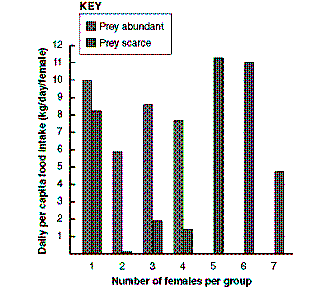
Which of the following is an INCORRECT statement regarding optimal foraging?
Which of the following is an INCORRECT statement regarding optimal foraging? (Multiple Choice)
4.8/5 (82)
(82) Changes in behavior that result from environmental experiences are called:
(Multiple Choice)
4.7/5 (86)
(86) A squirrel is born and raised in captivity. Once released into the wild, it immediately begins to bury nuts. This is an example of:
(Multiple Choice)
4.9/5 (81)
(81) Figure 52-1
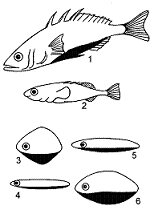
Which model in the accompanying figure would elicit an attack response from another male stickleback?
Which model in the accompanying figure would elicit an attack response from another male stickleback? (Multiple Choice)
4.9/5 (83)
(83) In the mammalian biological clock, the "master clock" is located in the pineal gland.
(True/False)
4.9/5 (80)
(80) Which of the following has the strongest influence on the ability of a male white-crowned sparrow to sing at all?
(Multiple Choice)
4.9/5 (78)
(78) Loggerhead sea turtles use which of the following to travel across the Atlantic Ocean, mate, and lay their eggs?
(Multiple Choice)
4.9/5 (85)
(85) Figure 52-2
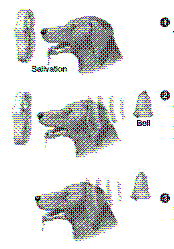
The sequence in the accompanying figure illustrates:
The sequence in the accompanying figure illustrates: (Multiple Choice)
4.8/5 (74)
(74) Which of the following animals are NOT sensitive to Earth's magnetic field and do NOT use it as a guide?
(Multiple Choice)
4.9/5 (86)
(86) Mammals detect pheromones with specialized cells in which of the following organs?
(Multiple Choice)
4.8/5 (84)
(84) Figure 52-2
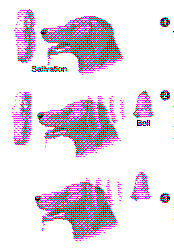
Refer to the accompanying figure. In this sequence of events, the bell is serving as:
Refer to the accompanying figure. In this sequence of events, the bell is serving as: (Multiple Choice)
4.8/5 (70)
(70) Match the behavior type with its description.
Premises:
Adapting prior knowledge and experience to a current need
Responses:
Imprinting
Classical conditioning
Habituation
Correct Answer:Verified
VerifiedPremises:
Responses:
(Matching)
4.7/5 (69)
(69) Figure 52-3
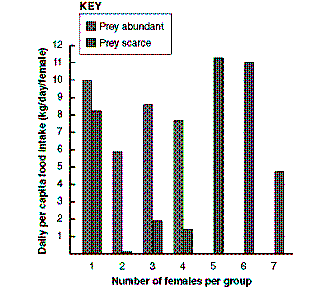
Which statement accurately reflects the data in the accompanying figure?
Which statement accurately reflects the data in the accompanying figure? (Multiple Choice)
4.9/5 (71)
(71) 
Filters
- Essay(0)
- Multiple Choice(0)
- Short Answer(0)
- True False(0)
- Matching(0)