



 Chat with AI
Exam 37: Reproduction in Flowering Plants

Exam 1: A View of Life72 Questions
Exam 2: Atoms and Molecules: the Chemical Basis of Life75 Questions
Exam 3: The Chemistry of Life: Organic Compounds75 Questions
Exam 4: Organization of the Cell76 Questions
Exam 5: Biological Membranes73 Questions
Exam 6: Cell Communication73 Questions
Exam 7: Energy and Metabolism73 Questions
Exam 8: How Cells Make Atp: Energy-Releasing Pathways75 Questions
Exam 9: Photosynthesis: Capturing Light Energy79 Questions
Exam 10: Chromosomes, Mitosis, and Meiosis78 Questions
Exam 11: The Basic Principles of Heredity87 Questions
Exam 12: DNA: The Carrier of Genetic Information83 Questions
Exam 13: Gene Expression92 Questions
Exam 14: Gene Regulation86 Questions
Exam 15: DNA Technology and Genomics98 Questions
Exam 16: Human Genetics and the Human Genome82 Questions
Exam 17: Developmental Genetics90 Questions
Exam 18: Introduction to Darwinian Evolution66 Questions
Exam 19: Evolutionary Change in Populations72 Questions
Exam 20: Speciation and Macroevolution72 Questions
Exam 21: The Origin and Evolutionary History of Life71 Questions
Exam 22: The Evolution of Primates73 Questions
Exam 23: Understanding Diversity: Systematics70 Questions
Exam 24: Viruses and Subviral Agents55 Questions
Exam 25: Bacteria and Archaea63 Questions
Exam 26: Protists76 Questions
Exam 27: Seedless Plants76 Questions
Exam 28: Seed Plants76 Questions
Exam 29: The Fungi78 Questions
Exam 30: An Introduction to Animal Diversity71 Questions
Exam 31: Sponges, Cnidarians, Ctenophores, and Protostomes114 Questions
Exam 32: The Deuterostomes79 Questions
Exam 33: Plant Structure, Growth, and Development94 Questions
Exam 34: Leaf Structure and Function90 Questions
Exam 35: Stem Structure and Transport91 Questions
Exam 36: Roots and Mineral Nutrition105 Questions
Exam 37: Reproduction in Flowering Plants107 Questions
Exam 38: Plant Developmental Responses to External and Internal Signals113 Questions
Exam 39: Animal Structure and Function: an Introduction106 Questions
Exam 40: Protection, Support, and Movement75 Questions
Exam 41: Neural Signaling76 Questions
Exam 42: Neural Regulation81 Questions
Exam 43: Sensory Systems83 Questions
Exam 44: Internal Transport119 Questions
Exam 45: The Immune System: Internal Defense93 Questions
Exam 46: Gas Exchange123 Questions
Exam 47: Processing Food and Nutrition127 Questions
Exam 48: Osmoregulation and Disposal of Metabolic Wastes111 Questions
Exam 49: Endocrine Regulation87 Questions
Exam 50: Reproduction121 Questions
Exam 51: Animal Development117 Questions
Exam 52: Animal Behavior91 Questions
Exam 53: Introduction to Ecology: Population Ecology99 Questions
Exam 54: Community Ecology91 Questions
Exam 55: Ecosystems and the Biosphere101 Questions
Exam 56: Ecology and the Geography of Life99 Questions
Exam 57: Biological Diversity and Conservation Biology82 Questions
Select questions type


Figure 37-3
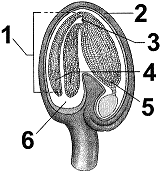 Which of the following statements concerning the structures labeled as 4 in the accompanying figure is false ?
Free
(Multiple Choice)
4.9/5  (74)
(74) Correct Answer: Verified
E
Figure 37-2
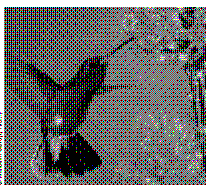 The shape of the bill on the bird in the accompanying figure is most likely the result of
Free
(Multiple Choice)
4.8/5 (77)
(77) Correct Answer:Verified
VerifiedA
Match the flower part with its description.
Premises:
The part of the pistil on which the pollen grains land
Responses:
Sepals
Petals
Carpel
Correct Answer:Verified
VerifiedPremises:
Responses:
Free
(Matching)
4.9/5 (81)
(81) Correct Answer:Verified
VerifiedDuring embryonic development in flowering plants, the basal cell develops into the
(Multiple Choice)
4.9/5 (74)
(74) Two polar nuclei in the central cell of the ovule fuse with the second sperm cell to form the first cell of the triploid ____.
(Multiple Choice)
4.7/5 (86)
(86) The prolonged low temperature exposure required for the germination of some seeds
(Multiple Choice)
4.8/5 (73)
(73) Match the fruit type with its basic description.
Premises:
Contains a single seed, does not split open at maturity, seed coat is fused to fruit wall
Responses:
Achene
Accessory
Capsule
Correct Answer:Verified
VerifiedPremises:
Responses:
(Matching)
4.8/5 (88)
(88) Figure 37-5
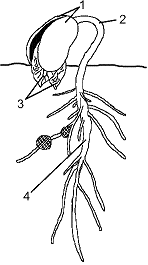 In the accompanying figure, the structure labeled as 2
 (Multiple Choice)
5.0/5 (57)
(57) Match the fruit type with its basic description.
Premises:
Develops from two or more fused carpels and splits open along two or more sutures
Responses:
Grain
Achene
Drupe
Correct Answer:Verified
VerifiedPremises:
Responses:
(Matching)
4.8/5 (82)
(82) Provide a one-sentence explanation of how each of the following structures can be used to propagate plants asexually: suckers, corms, stolons. BONUS: Provide one example of a plant that is capable of each type of reproduction identified.
(Essay)
5.0/5 (77)
(77) Match the flower part with its description.
Premises:
The thin, stalk-like portion of the stamen
Responses:
Stigma
Carpel
Petals
Correct Answer:Verified
VerifiedPremises:
Responses:
(Matching)
4.8/5 (78)
(78) Figure 37-2
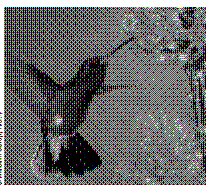 What type of floral attraction would work best on the pollinator in the accompanying figure?
 (Multiple Choice)
4.7/5 (82)
(82) The female plant structure on which a pollen tube must grow through is the
(Multiple Choice)
4.8/5 (88)
(88) Match the flower part with its description.
Premises:
Contains pollen grains
Responses:
Ovary
Receptacle
Ovule
Correct Answer:Verified
VerifiedPremises:
Responses:
(Matching)
4.8/5 (78)
(78) Which of the following is an example of a seed dispersed by water?
(Multiple Choice)
4.8/5 (77)
(77) Match the modified stem with its description.
Premises:
Short erect underground stem
Responses:
Bulb
Stolon
Tuber
Correct Answer:Verified
VerifiedPremises:
Responses:
(Matching)
4.8/5 (71)
(71) Match the flower part with its description.
Premises:
Leaf like in shape and often green
Responses:
Ovule
Stigma
Anther
Correct Answer:Verified
VerifiedPremises:
Responses:
(Matching)
4.9/5 (71)
(71) 
Filters
- Essay(0)
- Multiple Choice(0)
- Short Answer(0)
- True False(0)
- Matching(0)