



 Chat with AI
Exam 52: Animal Behavior

Exam 1: A View of Life72 Questions
Exam 2: Atoms and Molecules: the Chemical Basis of Life75 Questions
Exam 3: The Chemistry of Life: Organic Compounds75 Questions
Exam 4: Organization of the Cell76 Questions
Exam 5: Biological Membranes73 Questions
Exam 6: Cell Communication73 Questions
Exam 7: Energy and Metabolism73 Questions
Exam 8: How Cells Make Atp: Energy-Releasing Pathways75 Questions
Exam 9: Photosynthesis: Capturing Light Energy79 Questions
Exam 10: Chromosomes, Mitosis, and Meiosis78 Questions
Exam 11: The Basic Principles of Heredity87 Questions
Exam 12: DNA: The Carrier of Genetic Information83 Questions
Exam 13: Gene Expression92 Questions
Exam 14: Gene Regulation86 Questions
Exam 15: DNA Technology and Genomics98 Questions
Exam 16: Human Genetics and the Human Genome82 Questions
Exam 17: Developmental Genetics90 Questions
Exam 18: Introduction to Darwinian Evolution66 Questions
Exam 19: Evolutionary Change in Populations72 Questions
Exam 20: Speciation and Macroevolution72 Questions
Exam 21: The Origin and Evolutionary History of Life71 Questions
Exam 22: The Evolution of Primates73 Questions
Exam 23: Understanding Diversity: Systematics70 Questions
Exam 24: Viruses and Subviral Agents55 Questions
Exam 25: Bacteria and Archaea63 Questions
Exam 26: Protists76 Questions
Exam 27: Seedless Plants76 Questions
Exam 28: Seed Plants76 Questions
Exam 29: The Fungi78 Questions
Exam 30: An Introduction to Animal Diversity71 Questions
Exam 31: Sponges, Cnidarians, Ctenophores, and Protostomes114 Questions
Exam 32: The Deuterostomes79 Questions
Exam 33: Plant Structure, Growth, and Development94 Questions
Exam 34: Leaf Structure and Function90 Questions
Exam 35: Stem Structure and Transport91 Questions
Exam 36: Roots and Mineral Nutrition105 Questions
Exam 37: Reproduction in Flowering Plants107 Questions
Exam 38: Plant Developmental Responses to External and Internal Signals113 Questions
Exam 39: Animal Structure and Function: an Introduction106 Questions
Exam 40: Protection, Support, and Movement75 Questions
Exam 41: Neural Signaling76 Questions
Exam 42: Neural Regulation81 Questions
Exam 43: Sensory Systems83 Questions
Exam 44: Internal Transport119 Questions
Exam 45: The Immune System: Internal Defense93 Questions
Exam 46: Gas Exchange123 Questions
Exam 47: Processing Food and Nutrition127 Questions
Exam 48: Osmoregulation and Disposal of Metabolic Wastes111 Questions
Exam 49: Endocrine Regulation87 Questions
Exam 50: Reproduction121 Questions
Exam 51: Animal Development117 Questions
Exam 52: Animal Behavior91 Questions
Exam 53: Introduction to Ecology: Population Ecology99 Questions
Exam 54: Community Ecology91 Questions
Exam 55: Ecosystems and the Biosphere101 Questions
Exam 56: Ecology and the Geography of Life99 Questions
Exam 57: Biological Diversity and Conservation Biology82 Questions
Select questions type


Match the sexual selection/mating terms with their definitions.
Premises:
Individuals of the opposite sex choose their mates
Responses:
Pair bonds
Polyandry
Intrasexual selection
Correct Answer: Verified
Premises:
Responses:

Free
(Matching)
4.8/5  (83)
(83) Correct Answer:Verified
VerifiedAposematic coloration is also called habituation.
Free
(True/False)
4.8/5 (69)
(69) Correct Answer:Verified
VerifiedFalse
According to the research of Dutch ethologist Niko Tinbergen, which behavior of Philanthus is critical to locating the burrow?
Free
(Multiple Choice)
4.9/5 (74)
(74) Correct Answer:Verified
VerifiedA
When the food supply is far from a beehive, the scout bee will perform a waggle dance.
(True/False)
4.8/5 (79)
(79) Which vertebrate has a social structure most closely resembling social insects?
(Multiple Choice)
4.9/5 (68)
(68) Match the sexual selection/mating terms with their definitions.
Premises:
Individuals of the same sex actively compete for mates
Responses:
Pair bonds
Polygyny
Intersexual selection
Correct Answer:Verified
VerifiedPremises:
Responses:
(Matching)
4.7/5 (88)
(88) Match the behavior type with its description.
Premises:
Association between a normal body function and a new unrelated stimulus
Responses:
Problem solving
Habituation
Classical conditioning
Correct Answer:Verified
VerifiedPremises:
Responses:
(Matching)
4.8/5 (87)
(87) Discuss the concept of inclusive fitness. Include the concepts of co-efficient of relatedness and Hamilton's rule.
(Essay)
4.9/5 (84)
(84) The brief length of time when mammals and birds learn the appearance of a parent is called:
(Multiple Choice)
5.0/5 (82)
(82) You place ant traps around the house. You notice after a period of time that the ants do not enter the traps and the population size is greater than it was originally. This experience would best be explained by:
(Multiple Choice)
4.8/5 (97)
(97) Match the sexual selection/mating terms with their definitions.
Premises:
One female mating with several males
Responses:
Intrasexual selection
Intersexual selection
Pair bonds
Correct Answer:Verified
VerifiedPremises:
Responses:
(Matching)
4.9/5 (77)
(77) Figure 52-1
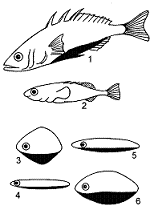
The behavioral response tested using the models in the accompanying figure is:
The behavioral response tested using the models in the accompanying figure is: (Multiple Choice)
4.8/5 (80)
(80) As the sun is setting, you notice bats coming out of a cave to begin a period of heavy activity. In the very early morning, several days later, you notice them entering the cave to sleep. Which circadian rhythm would best explain this observation?
(Multiple Choice)
4.9/5 (87)
(87) Animals, like fiddler crabs, that are busiest at dawn or dusk are known as:
(Multiple Choice)
4.9/5 (81)
(81) Identify two different types of mating systems and list the advantages and disadvantages of each.
(Essay)
4.8/5 (85)
(85) A soldier ant dies defending the ant colony from invading termites. Which term best describes this event?
(Multiple Choice)
4.9/5 (77)
(77) Which of the following terms is most closely associated with ultimate causes of behavior?
(Multiple Choice)
4.8/5 (71)
(71) 
Filters
- Essay(0)
- Multiple Choice(0)
- Short Answer(0)
- True False(0)
- Matching(0)