



 Chat with AI
Exam 3: The Chemistry of Life: Organic Compounds

Exam 1: A View of Life72 Questions
Exam 2: Atoms and Molecules: the Chemical Basis of Life75 Questions
Exam 3: The Chemistry of Life: Organic Compounds75 Questions
Exam 4: Organization of the Cell76 Questions
Exam 5: Biological Membranes73 Questions
Exam 6: Cell Communication73 Questions
Exam 7: Energy and Metabolism73 Questions
Exam 8: How Cells Make Atp: Energy-Releasing Pathways75 Questions
Exam 9: Photosynthesis: Capturing Light Energy79 Questions
Exam 10: Chromosomes, Mitosis, and Meiosis78 Questions
Exam 11: The Basic Principles of Heredity87 Questions
Exam 12: DNA: The Carrier of Genetic Information83 Questions
Exam 13: Gene Expression92 Questions
Exam 14: Gene Regulation86 Questions
Exam 15: DNA Technology and Genomics98 Questions
Exam 16: Human Genetics and the Human Genome82 Questions
Exam 17: Developmental Genetics90 Questions
Exam 18: Introduction to Darwinian Evolution66 Questions
Exam 19: Evolutionary Change in Populations72 Questions
Exam 20: Speciation and Macroevolution72 Questions
Exam 21: The Origin and Evolutionary History of Life71 Questions
Exam 22: The Evolution of Primates73 Questions
Exam 23: Understanding Diversity: Systematics70 Questions
Exam 24: Viruses and Subviral Agents55 Questions
Exam 25: Bacteria and Archaea63 Questions
Exam 26: Protists76 Questions
Exam 27: Seedless Plants76 Questions
Exam 28: Seed Plants76 Questions
Exam 29: The Fungi78 Questions
Exam 30: An Introduction to Animal Diversity71 Questions
Exam 31: Sponges, Cnidarians, Ctenophores, and Protostomes114 Questions
Exam 32: The Deuterostomes79 Questions
Exam 33: Plant Structure, Growth, and Development94 Questions
Exam 34: Leaf Structure and Function90 Questions
Exam 35: Stem Structure and Transport91 Questions
Exam 36: Roots and Mineral Nutrition105 Questions
Exam 37: Reproduction in Flowering Plants107 Questions
Exam 38: Plant Developmental Responses to External and Internal Signals113 Questions
Exam 39: Animal Structure and Function: an Introduction106 Questions
Exam 40: Protection, Support, and Movement75 Questions
Exam 41: Neural Signaling76 Questions
Exam 42: Neural Regulation81 Questions
Exam 43: Sensory Systems83 Questions
Exam 44: Internal Transport119 Questions
Exam 45: The Immune System: Internal Defense93 Questions
Exam 46: Gas Exchange123 Questions
Exam 47: Processing Food and Nutrition127 Questions
Exam 48: Osmoregulation and Disposal of Metabolic Wastes111 Questions
Exam 49: Endocrine Regulation87 Questions
Exam 50: Reproduction121 Questions
Exam 51: Animal Development117 Questions
Exam 52: Animal Behavior91 Questions
Exam 53: Introduction to Ecology: Population Ecology99 Questions
Exam 54: Community Ecology91 Questions
Exam 55: Ecosystems and the Biosphere101 Questions
Exam 56: Ecology and the Geography of Life99 Questions
Exam 57: Biological Diversity and Conservation Biology82 Questions
Select questions type


A disaccharide is composed of two monosaccharides joined by a glycosidic bond.

Free
(True/False)
4.9/5  (76)
(76) Correct Answer: Verified
True
Hemoglobin consists of 574 amino acids arranged in four polypeptide chains.
Free
(True/False)
5.0/5 (80)
(80) Correct Answer:Verified
VerifiedTrue
A steroid consists of carbon atoms arranged in four attached rings. How many carbon atoms do three of the rings contain?
Free
(Multiple Choice)
4.8/5 (61)
(61) Correct Answer:Verified
VerifiedA
Match the molecule with the appropriate word or phrase.
Premises:
contains purines and pyrimidines
Responses:
carbohydrate
protein
nucleic acid
Correct Answer:Verified
VerifiedPremises:
Responses:
(Matching)
4.8/5 (85)
(85) Figure 3-3
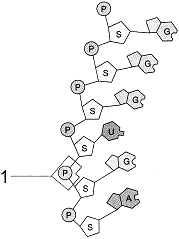 The molecular fragment, represented in the accompanying figure is:
 (Multiple Choice)
4.8/5 (82)
(82) Cystic fibrosis is a genetic disease caused by the deletion of one amino acid in the cystic fibrosis transmembrane conductance regulator (CFTR) protein. This deletion changes the shape of the protein in dramatic ways, causing serious health issues. How can the deletion of one amino acid lead to such drastic results?
(Essay)
4.9/5 (73)
(73) The carboxyl group can exist in either an ionized or nonionized form.
(True/False)
4.8/5 (89)
(89) What factors allow carbon to be ideally suitable to serve as the "backbone" for large molecules?
(Essay)
4.9/5 (74)
(74) Which functional group in cysteine residues can form bridges that help stabilize a protein's tertiary structure?
(Multiple Choice)
4.8/5 (94)
(94) Glucose and fructose are ____ because they have identical molecular formulas but their atoms are arranged differently.
(Multiple Choice)
4.8/5 (83)
(83) Condensation and hydrolysis reactions are catalyzed by the same enzymes.
(True/False)
5.0/5 (77)
(77) Fats and steroids have very different functions. However, both are structurally related and share some of the same characteristics. Briefly, describe the similarities and differences between the two molecules.
(Essay)
4.8/5 (75)
(75) Which of the following is sometime referred to as animal starch?
(Multiple Choice)
4.9/5 (78)
(78) You isolate a compound that is insoluble in water, has alternating single and double bonds and has a bright orange color. You correctly conclude that this compound is a:
(Multiple Choice)
4.9/5 (65)
(65) Match the molecule with the appropriate word or phrase.
Premises:
may contain thymine
Responses:
carbohydrate
lipid
nucleic acid
Correct Answer:Verified
VerifiedPremises:
Responses:
(Matching)
4.7/5 (72)
(72) Assume that the shaded portions of the molecule in the accompanying figure each represent different polypeptide chains. What does this represent?
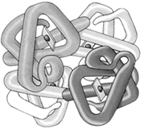
(Multiple Choice)
4.7/5 (80)
(80) Molecular chaperones mediate the folding of other protein molecules.
(True/False)
4.8/5 (85)
(85) 
Filters
- Essay(0)
- Multiple Choice(0)
- Short Answer(0)
- True False(0)
- Matching(0)