



 Chat with AI
Exam 52: Animal Behavior

Exam 1: A View of Life72 Questions
Exam 2: Atoms and Molecules: the Chemical Basis of Life75 Questions
Exam 3: The Chemistry of Life: Organic Compounds75 Questions
Exam 4: Organization of the Cell76 Questions
Exam 5: Biological Membranes73 Questions
Exam 6: Cell Communication73 Questions
Exam 7: Energy and Metabolism73 Questions
Exam 8: How Cells Make Atp: Energy-Releasing Pathways75 Questions
Exam 9: Photosynthesis: Capturing Light Energy79 Questions
Exam 10: Chromosomes, Mitosis, and Meiosis78 Questions
Exam 11: The Basic Principles of Heredity87 Questions
Exam 12: DNA: The Carrier of Genetic Information83 Questions
Exam 13: Gene Expression92 Questions
Exam 14: Gene Regulation86 Questions
Exam 15: DNA Technology and Genomics98 Questions
Exam 16: Human Genetics and the Human Genome82 Questions
Exam 17: Developmental Genetics90 Questions
Exam 18: Introduction to Darwinian Evolution66 Questions
Exam 19: Evolutionary Change in Populations72 Questions
Exam 20: Speciation and Macroevolution72 Questions
Exam 21: The Origin and Evolutionary History of Life71 Questions
Exam 22: The Evolution of Primates73 Questions
Exam 23: Understanding Diversity: Systematics70 Questions
Exam 24: Viruses and Subviral Agents55 Questions
Exam 25: Bacteria and Archaea63 Questions
Exam 26: Protists76 Questions
Exam 27: Seedless Plants76 Questions
Exam 28: Seed Plants76 Questions
Exam 29: The Fungi78 Questions
Exam 30: An Introduction to Animal Diversity71 Questions
Exam 31: Sponges, Cnidarians, Ctenophores, and Protostomes114 Questions
Exam 32: The Deuterostomes79 Questions
Exam 33: Plant Structure, Growth, and Development94 Questions
Exam 34: Leaf Structure and Function90 Questions
Exam 35: Stem Structure and Transport91 Questions
Exam 36: Roots and Mineral Nutrition105 Questions
Exam 37: Reproduction in Flowering Plants107 Questions
Exam 38: Plant Developmental Responses to External and Internal Signals113 Questions
Exam 39: Animal Structure and Function: an Introduction106 Questions
Exam 40: Protection, Support, and Movement75 Questions
Exam 41: Neural Signaling76 Questions
Exam 42: Neural Regulation81 Questions
Exam 43: Sensory Systems83 Questions
Exam 44: Internal Transport119 Questions
Exam 45: The Immune System: Internal Defense93 Questions
Exam 46: Gas Exchange123 Questions
Exam 47: Processing Food and Nutrition127 Questions
Exam 48: Osmoregulation and Disposal of Metabolic Wastes111 Questions
Exam 49: Endocrine Regulation87 Questions
Exam 50: Reproduction121 Questions
Exam 51: Animal Development117 Questions
Exam 52: Animal Behavior91 Questions
Exam 53: Introduction to Ecology: Population Ecology99 Questions
Exam 54: Community Ecology91 Questions
Exam 55: Ecosystems and the Biosphere101 Questions
Exam 56: Ecology and the Geography of Life99 Questions
Exam 57: Biological Diversity and Conservation Biology82 Questions
Select questions type


Figure 52-2
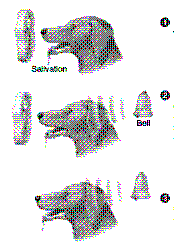
The first panel of the sequence in the accompanying figure reflects:
The first panel of the sequence in the accompanying figure reflects: (Multiple Choice)
4.7/5  (78)
(78) An animal must be physiologically ready before it can exhibit a behavior pattern. This is NOT illustrated by which of the following?
(Multiple Choice)
4.8/5 (80)
(80) A bird is born and raised in captivity. Immediately after release, the bird carries nesting materials underneath the feathers. After three years, the bird starts to consistently carry nesting materials in the bill. This is an example of which of the following?
(Multiple Choice)
5.0/5 (88)
(88) Imprinting is a type of social learning based on an early experience.
(True/False)
4.9/5 (78)
(78) Distinguish between diurnal, nocturnal, and crepuscular animals, and provide an example of each.
(Essay)
4.8/5 (77)
(77) A rat had one bad experience with a poisoned food that caused it to become sick. This rat will now avoid that food due to a behavior known as:
(Multiple Choice)
4.8/5 (76)
(76) The egg rolling behavior in the European graylag goose is an example of a motor program.
(True/False)
4.9/5 (74)
(74) Which of the following changes is an example of a proximate cause of animal migration?
(Multiple Choice)
4.8/5 (77)
(77) The study of behavior in natural environments from an evolutionary perspective is called:
(Multiple Choice)
4.7/5 (83)
(83) Match the sexual selection/mating terms with their definitions.
Premises:
One male mating with several females
Responses:
Pair bonds
Intersexual selection
Polygyny
Correct Answer: Verified
Premises:
Responses:
(Matching)
4.8/5 (78)
(78) When some birds mature, they migrate long distances to their breeding grounds or to escape harsh weather. A signal for this type of behavior is often:
(Multiple Choice)
4.8/5 (73)
(73) In some animals, such as the marsh wren, one male bird mates with several females. This is known as:
(Multiple Choice)
4.7/5 (76)
(76) The salivating response to a bell is what Pavlov called an unconditioned response.
(True/False)
4.8/5 (96)
(96) 
Filters
- Essay(0)
- Multiple Choice(0)
- Short Answer(0)
- True False(0)
- Matching(0)