



 Chat with AI
Exam 16: Human Genetics and the Human Genome

Exam 1: A View of Life72 Questions
Exam 2: Atoms and Molecules: the Chemical Basis of Life75 Questions
Exam 3: The Chemistry of Life: Organic Compounds75 Questions
Exam 4: Organization of the Cell76 Questions
Exam 5: Biological Membranes73 Questions
Exam 6: Cell Communication73 Questions
Exam 7: Energy and Metabolism73 Questions
Exam 8: How Cells Make Atp: Energy-Releasing Pathways75 Questions
Exam 9: Photosynthesis: Capturing Light Energy79 Questions
Exam 10: Chromosomes, Mitosis, and Meiosis78 Questions
Exam 11: The Basic Principles of Heredity87 Questions
Exam 12: DNA: The Carrier of Genetic Information83 Questions
Exam 13: Gene Expression92 Questions
Exam 14: Gene Regulation86 Questions
Exam 15: DNA Technology and Genomics98 Questions
Exam 16: Human Genetics and the Human Genome82 Questions
Exam 17: Developmental Genetics90 Questions
Exam 18: Introduction to Darwinian Evolution66 Questions
Exam 19: Evolutionary Change in Populations72 Questions
Exam 20: Speciation and Macroevolution72 Questions
Exam 21: The Origin and Evolutionary History of Life71 Questions
Exam 22: The Evolution of Primates73 Questions
Exam 23: Understanding Diversity: Systematics70 Questions
Exam 24: Viruses and Subviral Agents55 Questions
Exam 25: Bacteria and Archaea63 Questions
Exam 26: Protists76 Questions
Exam 27: Seedless Plants76 Questions
Exam 28: Seed Plants76 Questions
Exam 29: The Fungi78 Questions
Exam 30: An Introduction to Animal Diversity71 Questions
Exam 31: Sponges, Cnidarians, Ctenophores, and Protostomes114 Questions
Exam 32: The Deuterostomes79 Questions
Exam 33: Plant Structure, Growth, and Development94 Questions
Exam 34: Leaf Structure and Function90 Questions
Exam 35: Stem Structure and Transport91 Questions
Exam 36: Roots and Mineral Nutrition105 Questions
Exam 37: Reproduction in Flowering Plants107 Questions
Exam 38: Plant Developmental Responses to External and Internal Signals113 Questions
Exam 39: Animal Structure and Function: an Introduction106 Questions
Exam 40: Protection, Support, and Movement75 Questions
Exam 41: Neural Signaling76 Questions
Exam 42: Neural Regulation81 Questions
Exam 43: Sensory Systems83 Questions
Exam 44: Internal Transport119 Questions
Exam 45: The Immune System: Internal Defense93 Questions
Exam 46: Gas Exchange123 Questions
Exam 47: Processing Food and Nutrition127 Questions
Exam 48: Osmoregulation and Disposal of Metabolic Wastes111 Questions
Exam 49: Endocrine Regulation87 Questions
Exam 50: Reproduction121 Questions
Exam 51: Animal Development117 Questions
Exam 52: Animal Behavior91 Questions
Exam 53: Introduction to Ecology: Population Ecology99 Questions
Exam 54: Community Ecology91 Questions
Exam 55: Ecosystems and the Biosphere101 Questions
Exam 56: Ecology and the Geography of Life99 Questions
Exam 57: Biological Diversity and Conservation Biology82 Questions
Select questions type


Compare the benefits and risks associated with amniocentesis and chorionic villus sampling.
(Essay)
4.9/5  (82)
(82) Briefly illustrate how nondisjunction in meiosis can result in Down syndrome.
(Essay)
4.9/5 (81)
(81) Hemophilia A is an example of a(n) _____ disease and is characterized by a lack of blood-clotting factor ____.
(Multiple Choice)
4.8/5 (66)
(66) Discuss the necessity and benefits of the Genetic Information Nondiscrimination Act (GIN
A) of 2008.
(Essay)
4.7/5 (80)
(80) What are the predicted phenotypes of the children from a union of a woman who is heterozygous for hemophilia and a man who is normal? (Use the Punnett square to verify your answer.) 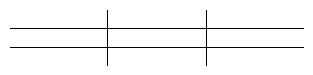
(Multiple Choice)
4.8/5 (96)
(96) Match the term with the corresponding condition.
Premises:
de la Chapelle syndrome, in which an unequal crossing over event between the X and Y chromosomes during spermatogenesis results in the transfer of part of the Y chromosome to the X chromosome, resulting in an XX male
Responses:
translocation
insertion
inversion
Correct Answer: Verified
Premises:
Responses:
(Matching)
4.8/5 (91)
(91) Figure 16-2
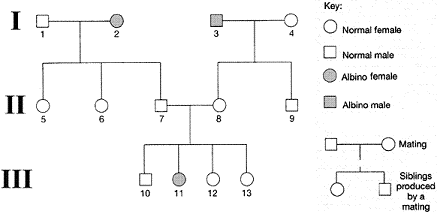 The genotypes of the normal females in the second generation in accompanying figure are:
 (Multiple Choice)
4.7/5 (70)
(70) The Human Genome Project was completed in 2012 and revealed a genomic map of 38 million SNPs.
(True/False)
4.9/5 (92)
(92) The position of a specific gene on a chromosome can be determined by:
(Multiple Choice)
4.8/5 (74)
(74) Match the term with the corresponding condition.
Premises:
Philadelphia chromosome, in which parts of chromosomes 9 and 22 switch places; strongly associated with chronic myelogenous leukemia
Responses:
inversion
deletion
genomic imprinting
Correct Answer:Verified
VerifiedPremises:
Responses:
(Matching)
4.8/5 (77)
(77) FISH distinguishes chromosomes by using more than one fluorescent-tagged RNA strand, which will bind to complementary DNA sequences on a specific chromosome.
(True/False)
4.8/5 (66)
(66) Sickle cell anemia and cystic fibrosis are examples of a homozygote advantage.
(True/False)
4.8/5 (87)
(87) What was revealed with the completion of the Human Genome Project?
(Multiple Choice)
5.0/5 (78)
(78) Nondisjunction of the XY pair during the first meiotic division can produce sperm with 2 X chromosomes and 2 Y chromosomes.
(True/False)
4.8/5 (68)
(68) Match the genetic disease with the molecular defect.
Premises:
defect in the protein that regulates chloride transport across cell membranes
Responses:
hemophilia A
sickle cell anemia
cystic fibrosis
Correct Answer:Verified
VerifiedPremises:
Responses:
(Matching)
4.9/5 (92)
(92) Genome-wide association scans compare the proteins of individuals with a disease to individuals without the disease.
(True/False)
4.7/5 (81)
(81) 
Filters
- Essay(0)
- Multiple Choice(0)
- Short Answer(0)
- True False(0)
- Matching(0)