



 Chat with AI
Exam 25: Microbial Pathogenesis

Exam 1: Microbial Life: Origin and Discovery70 Questions
Exam 2: Observing the Microbial Cell69 Questions
Exam 3: Cell Structure and Function72 Questions
Exam 4: Bacterial Culture, Growth, and Development70 Questions
Exam 5: Environmental Influences and Control of Microbial Growth70 Questions
Exam 6: Viruses70 Questions
Exam 7: Genomes and Chromosomes70 Questions
Exam 8: Transcription, Translation, and Bioinformatics76 Questions
Exam 9: Gene Transfer, Mutations, and Genome Evolution72 Questions
Exam 10: Molecular Regulation73 Questions
Exam 11: Viral Molecular Biology70 Questions
Exam 12: Biotechniques and Synthetic Biology72 Questions
Exam 13: Energetics and Catabolism77 Questions
Exam 14: Electron Flow in Organotrophy, Lithotrophy, and Phototrophy73 Questions
Exam 15: Biosynthesis73 Questions
Exam 16: Food and Industrial Microbiology73 Questions
Exam 17: Origins and Evolution70 Questions
Exam 18: Bacterial Diversity71 Questions
Exam 19: Archaeal Diversity70 Questions
Exam 20: Eukaryotic Diversity69 Questions
Exam 21: Microbial Ecology70 Questions
Exam 22: Microbes in Global Elemental Cycles70 Questions
Exam 23: Human Microbiota and Innate Immunity70 Questions
Exam 24: The Adaptive Immune Response70 Questions
Exam 25: Microbial Pathogenesis70 Questions
Exam 26: Microbial Diseases69 Questions
Exam 27: Antimicrobial Therapy72 Questions
Exam 28: Clinical Microbiology and Epidemiology75 Questions
Select questions type


The toxin gene in Corynebacterium diphtheriae is located on
(Multiple Choice)
4.9/5  (76)
(76) Which of the following is a nonproteinaceous, yet toxic, compound found in all Gram-negative bacteria?
(Multiple Choice)
4.9/5 (88)
(88) Briefly describe three classic modes of action of bacterial toxins. How are they similar? How are they different?
(Essay)
4.9/5 (64)
(64) The cholera and Escherichia coli (traveler's diarrhea) toxins ________, leading to high levels of cAMP in cells.
(Multiple Choice)
4.8/5 (87)
(87) Which of the following bacteria would you expect to cause the most severe blood disease in a susceptible host?
(Multiple Choice)
4.9/5 (71)
(71) The disease filariasis, commonly known as elephantiasis, is caused by a(n)
(Multiple Choice)
4.8/5 (85)
(85) The anthrax, Escherichia coli, cholera, and Bordetella toxins all
(Multiple Choice)
4.7/5 (71)
(71) The ability to survive in the harsh environment of the phagolysosome is a virulence factor produced by
(Multiple Choice)
4.7/5 (80)
(80) Consider two isolates, A and B. Microbe A had an LD₅₀ of 5 * 10⁴, while microbe B recorded an LD₅₀ of 5 *10⁷. Which isolate is more virulent?
(Multiple Choice)
4.8/5 (81)
(81) Which of the following is classified as an intracellular bacterial pathogen?
(Multiple Choice)
4.7/5 (87)
(87) A chef cut her finger accidentally. The next morning, she felt pain and warmth and had a little swelling and redness on that finger (which are signs of inflammation). By that night, she was just fine. Which of the following pertains to the chef?
(Multiple Choice)
4.8/5 (88)
(88) Tropheryma whipplei is the causative agent for Whipple's disease. It could not be cultured until recently, when the genomic data showed that it
(Multiple Choice)
4.8/5 (71)
(71) Why is a microbial agent that prevents phagosome-lysosome fusion more virulent as an intracellular pathogen than one that is not?
(Essay)
4.9/5 (84)
(84) Diphtheria toxin is a classic AB exotoxin. How does it cause host cell damage?
(Essay)
4.8/5 (77)
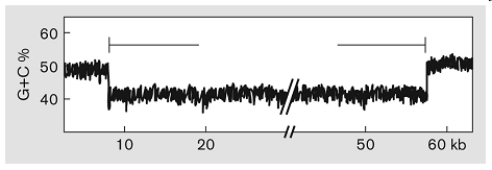
(77) 
Describe the use of digital gene expression (DGE) in host-pathogen relations. How does it work and what information can it tell us?
(Essay)
5.0/5 (80)
(80) Thick polysaccharide capsules are important virulence assets for
(Multiple Choice)
4.8/5 (68)
(68) What would be expected to happen to the Helicobacter pylori bacteria in a patient who has taken a large amount of antacids in the last month?
(Essay)
4.9/5 (66)
(66) 
Filters
- Essay(0)
- Multiple Choice(0)
- Short Answer(0)
- True False(0)
- Matching(0)