



 Chat with AI
Exam 19: Archaeal Diversity

Exam 1: Microbial Life: Origin and Discovery70 Questions
Exam 2: Observing the Microbial Cell69 Questions
Exam 3: Cell Structure and Function72 Questions
Exam 4: Bacterial Culture, Growth, and Development70 Questions
Exam 5: Environmental Influences and Control of Microbial Growth70 Questions
Exam 6: Viruses70 Questions
Exam 7: Genomes and Chromosomes70 Questions
Exam 8: Transcription, Translation, and Bioinformatics76 Questions
Exam 9: Gene Transfer, Mutations, and Genome Evolution72 Questions
Exam 10: Molecular Regulation73 Questions
Exam 11: Viral Molecular Biology70 Questions
Exam 12: Biotechniques and Synthetic Biology72 Questions
Exam 13: Energetics and Catabolism77 Questions
Exam 14: Electron Flow in Organotrophy, Lithotrophy, and Phototrophy73 Questions
Exam 15: Biosynthesis73 Questions
Exam 16: Food and Industrial Microbiology73 Questions
Exam 17: Origins and Evolution70 Questions
Exam 18: Bacterial Diversity71 Questions
Exam 19: Archaeal Diversity70 Questions
Exam 20: Eukaryotic Diversity69 Questions
Exam 21: Microbial Ecology70 Questions
Exam 22: Microbes in Global Elemental Cycles70 Questions
Exam 23: Human Microbiota and Innate Immunity70 Questions
Exam 24: The Adaptive Immune Response70 Questions
Exam 25: Microbial Pathogenesis70 Questions
Exam 26: Microbial Diseases69 Questions
Exam 27: Antimicrobial Therapy72 Questions
Exam 28: Clinical Microbiology and Epidemiology75 Questions
Select questions type


Members of order ________ in the human gut may couple with methanogens to provide the hydrogen gas for methanogenesis.
(Multiple Choice)
5.0/5  (95)
(95) The coupling of energy-spending electron transfer via CO₂ reduction to an energy-yielding electron transfer via CoM-S-S-CoB reduction is called
(Multiple Choice)
4.9/5 (78)
(78) What are "vent polymerases," why are they better than previously used polymerases, and from where are they acquired?
(Essay)
4.9/5 (84)
(84) Why has Sulfolobus been studied so much more extensively than many archaea, and what is known about it?
(Essay)
4.9/5 (72)
(72) In methanogenesis from CO₂ and H₂, ________ is hydrogenated and deoxygenated in a stepwise fashion.
(Multiple Choice)
4.9/5 (76)
(76) The Sulfolobales includes species that respire by oxidizing
(Multiple Choice)
4.9/5 (91)
(91) Which of the following is a glycerol diphytanyl diether containing a six-membered cyclic ring?
(Multiple Choice)
4.8/5 (73)
(73) Crenarchaeol is a biosignature for Thaumarchaeota. Describe its structure.
(Essay)
4.9/5 (76)
(76) What is the Ancient Archaeal Group and what is known about these organisms?
(Essay)
4.8/5 (63)
(63) If a species of Ferroplasma is cultured on pyrite ore, what will they do to their surrounding environment?
(Essay)
4.8/5 (80)
(80) Thermococcales can utilize elemental sulfur as a terminal electron acceptor for anaerobic respiration, yielding ________ as a by-product.
(Multiple Choice)
4.9/5 (77)
(77) Compare and contrast the supercoiling in hyperthermophilic archaeal species with bacteria and eukaryotes. What is responsible for this feature, and what does it accomplish for these archaea?
(Essay)
4.9/5 (86)
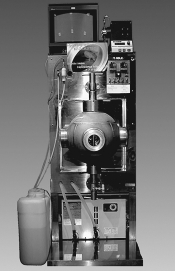
(86) What is the function of the device shown in the following figure? Describe what major challenges this instrument overcomes.
(Essay)
5.0/5 (89)
(89) The ________ have/has such divergent SSU rRNA that its/their sequence fails to amplify with "standard" PCR primers.
(Multiple Choice)
4.9/5 (85)
(85) Which of the following Crenarchaeota grows as disks linked by cannulae?
(Multiple Choice)
4.9/5 (75)
(75) If archaea are distinct from bacteria, why is the major haloarchaeal order called Halobacteriales, and why do most contain bacteriorhodopsin?
(Essay)
4.9/5 (79)
(79) The exceptionally small cell in the image shown below is an obligate symbiont to another archaeon and a member of the genus 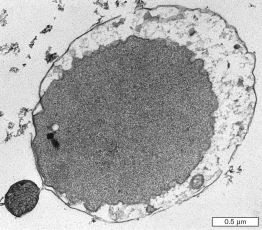
(Multiple Choice)
4.7/5 (74)
(74) 
Filters
- Essay(0)
- Multiple Choice(0)
- Short Answer(0)
- True False(0)
- Matching(0)