



 Chat with AI
Exam 1: Microbial Life: Origin and Discovery

Exam 1: Microbial Life: Origin and Discovery70 Questions
Exam 2: Observing the Microbial Cell69 Questions
Exam 3: Cell Structure and Function72 Questions
Exam 4: Bacterial Culture, Growth, and Development70 Questions
Exam 5: Environmental Influences and Control of Microbial Growth70 Questions
Exam 6: Viruses70 Questions
Exam 7: Genomes and Chromosomes70 Questions
Exam 8: Transcription, Translation, and Bioinformatics76 Questions
Exam 9: Gene Transfer, Mutations, and Genome Evolution72 Questions
Exam 10: Molecular Regulation73 Questions
Exam 11: Viral Molecular Biology70 Questions
Exam 12: Biotechniques and Synthetic Biology72 Questions
Exam 13: Energetics and Catabolism77 Questions
Exam 14: Electron Flow in Organotrophy, Lithotrophy, and Phototrophy73 Questions
Exam 15: Biosynthesis73 Questions
Exam 16: Food and Industrial Microbiology73 Questions
Exam 17: Origins and Evolution70 Questions
Exam 18: Bacterial Diversity71 Questions
Exam 19: Archaeal Diversity70 Questions
Exam 20: Eukaryotic Diversity69 Questions
Exam 21: Microbial Ecology70 Questions
Exam 22: Microbes in Global Elemental Cycles70 Questions
Exam 23: Human Microbiota and Innate Immunity70 Questions
Exam 24: The Adaptive Immune Response70 Questions
Exam 25: Microbial Pathogenesis70 Questions
Exam 26: Microbial Diseases69 Questions
Exam 27: Antimicrobial Therapy72 Questions
Exam 28: Clinical Microbiology and Epidemiology75 Questions
Select questions type


Organisms that live symbiotically inside a larger organism are known as
(Multiple Choice)
4.8/5  (83)
(83) What is the standard sterilization method for the controlled study of microbes?
(Multiple Choice)
4.8/5 (78)
(78) Suppose Pasteur's swan-necked flasks containing boiled broth became cloudy twenty-four hours after boiling. Which choice could best explain the turbidity or cloudiness in the broth without supporting spontaneous generation?
(Multiple Choice)
4.9/5 (83)
(83) A microbe is commonly defined as a ________ that requires a microscope to be seen.
(Multiple Choice)
4.9/5 (75)
(75) What is the MOST recent evidence suggesting that all life on Earth shares a common ancestry?
(Essay)
4.7/5 (72)
(72) Peter Mitchell and Jennifer Moyle discovered the ________ theory in the 1960s.
(Multiple Choice)
4.8/5 (84)
(84) This scientist first discovered the process of transformation.
(Multiple Choice)
4.8/5 (91)
(91) What was the major complaint about Lazzaro Spallanzani's experiment to disprove spontaneous generation, and how did Louis Pasteur's swan-neck flasks overcome this?
(Essay)
4.9/5 (82)
(82) Briefly describe how the ultracentrifuge is used to determine the sizes of cellular macromolecules.
(Essay)
4.8/5 (76)
(76) Which commonly used microbial classification advancement led to the tree by Carl Woese in 1977? 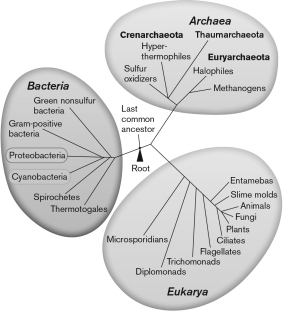
(Multiple Choice)
4.8/5 (82)
(82) Semmelweis and Lister noted that many of their patients' deaths were due to
(Multiple Choice)
4.8/5 (72)
(72) What were Rosalind Franklin's contributions toward discovering the structure of DNA, and why wasn't she one of the recipients of the Nobel Prize for this discovery?
(Essay)
4.9/5 (69)
(69) The environment of early Earth may have contained all of the following EXCEPT
(Multiple Choice)
4.9/5 (90)
(90) How did European invaders to North America kill much of the native population?
(Multiple Choice)
4.8/5 (68)
(68) In the three-domain model, the bacterial ancestor of chloroplasts derives from ancient
(Multiple Choice)
4.7/5 (72)
(72) The use of agar as a more robust gelling agent in solid media was suggested by
(Multiple Choice)
4.8/5 (85)
(85) 
Filters
- Essay(0)
- Multiple Choice(0)
- Short Answer(0)
- True False(0)
- Matching(0)