



 Chat with AI
Exam 14: The Autonomic Nervous System

Exam 1: The Human Body: an Orientation100 Questions
Exam 2: Chemistry Comes Alive120 Questions
Exam 3: Cells: the Living Units119 Questions
Exam 4: Tissue: the Living Fabric97 Questions
Exam 5: The Integumentary System107 Questions
Exam 6: Bones and Skeletal Tissues94 Questions
Exam 7: The Skeleton102 Questions
Exam 8: Joints105 Questions
Exam 9: Muscles and Muscle Tissue109 Questions
Exam 10: The Muscular System109 Questions
Exam 11: Fundamentals of the Nervous System and Nervous Tissue95 Questions
Exam 12: The Central Nervous System132 Questions
Exam 13: The Peripheral Nervous System and Reflex Activity97 Questions
Exam 14: The Autonomic Nervous System96 Questions
Exam 15: The Special Senses127 Questions
Exam 16: The Endocrine System119 Questions
Exam 17: Blood99 Questions
Exam 18: The Cardiovascular System: the Heart94 Questions
Exam 19: The Cardiovascular System: Blood Vessels107 Questions
Exam 20: The Lymphatic System and Lymphoid Organs and Tissues95 Questions
Exam 21: The Immune System: Innate and Adaptive Body Defensives118 Questions
Exam 22: The Respiratory System120 Questions
Exam 23: The Digestive System145 Questions
Exam 24: Nutrition, Metabolism, and Body Temperature Regulation114 Questions
Exam 25: The Urinary System116 Questions
Exam 26: Fluid, Electrolyte, and Acid-Base Balance94 Questions
Exam 27: The Reproductive System126 Questions
Exam 28: Pregnancy and Human Development97 Questions
Exam 29: Heredity90 Questions
Select questions type


The sympathetic and parasympathetic divisions of the ANS have the same effect on most body organ systems.
(True/False)
4.8/5  (70)
(70) Which of the following is not a result of parasympathetic stimulation?
(Multiple Choice)
4.9/5 (80)
(80) Once a sympathetic preganglionic axon reaches a trunk ganglion, it can do all but which one of the following?
(Multiple Choice)
4.9/5 (88)
(88) Events recorded in a lie detector examination are controlled by the sympathetic division.
(True/False)
4.9/5 (81)
(81) The route of major parasympathetic outflow from the head is via the .
(Multiple Choice)
4.7/5 (87)
(87) Because many of the same cardiac cells are innervated by both parasympathetic and sympathetic fibers, the influence of the two divisions on the heart is synergistic.
(True/False)
4.8/5 (83)
(83) Acetylcholine is the substance released by the axonal endings of the somatic efferent fibers and by the parasympathetic nerve fiber endings.
(True/False)
4.8/5 (89)
(89) 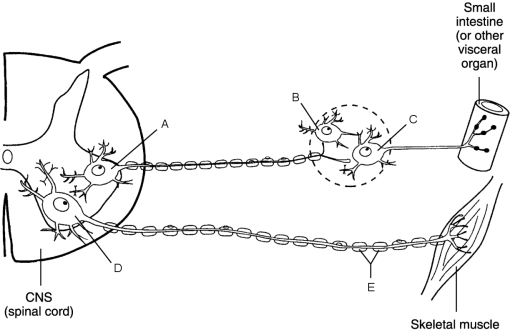 Figure 14.1Using Figure 14.1, match the following:
-Cell body of ANS postganglionic neuron.
Figure 14.1Using Figure 14.1, match the following:
-Cell body of ANS postganglionic neuron. (Short Answer)
4.8/5 (64)
(64) Cranial nerves VII, IX, and X contain postganglionic fibers of the parasympathetic nervous system.
(True/False)
4.9/5 (89)
(89) The secretions of the adrenal medulla act to supplement the effects of .
(Multiple Choice)
4.9/5 (63)
(63) All visceral organs receive dural innervation from both the sympathetic and parasympathetic divisions of the ANS.
(True/False)
4.7/5 (65)
(65) 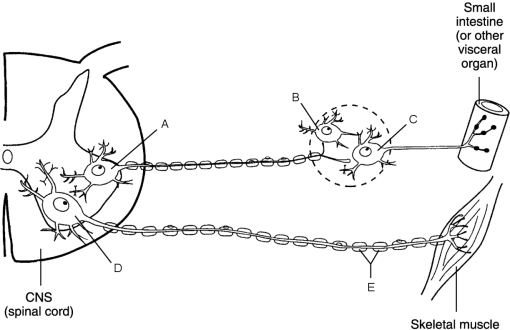 Figure 14.1Using Figure 14.1, match the following:
-Myelin sheath.
Figure 14.1Using Figure 14.1, match the following:
-Myelin sheath. (Short Answer)
5.0/5 (79)
(79) Figure 14.1Using Figure 14.1, match the following:
-Carla was startled by an extremely loud bang that sounded like a gunshot. Her heartbeat accelerated rapidly. When she found that the noise was only a car backfiring, she felt greatly relieved but her heart kept beating heavily for over half an hour. Why did this happen?
Figure 14.1Using Figure 14.1, match the following:
-Carla was startled by an extremely loud bang that sounded like a gunshot. Her heartbeat accelerated rapidly. When she found that the noise was only a car backfiring, she felt greatly relieved but her heart kept beating heavily for over half an hour. Why did this happen? (Essay)
4.8/5 (71)
(71) 
Filters
- Essay(0)
- Multiple Choice(0)
- Short Answer(0)
- True False(0)
- Matching(0)