



 Chat with AI
Exam 14: The Autonomic Nervous System

Exam 1: The Human Body: an Orientation100 Questions
Exam 2: Chemistry Comes Alive120 Questions
Exam 3: Cells: the Living Units119 Questions
Exam 4: Tissue: the Living Fabric97 Questions
Exam 5: The Integumentary System107 Questions
Exam 6: Bones and Skeletal Tissues94 Questions
Exam 7: The Skeleton102 Questions
Exam 8: Joints105 Questions
Exam 9: Muscles and Muscle Tissue109 Questions
Exam 10: The Muscular System109 Questions
Exam 11: Fundamentals of the Nervous System and Nervous Tissue95 Questions
Exam 12: The Central Nervous System132 Questions
Exam 13: The Peripheral Nervous System and Reflex Activity97 Questions
Exam 14: The Autonomic Nervous System96 Questions
Exam 15: The Special Senses127 Questions
Exam 16: The Endocrine System119 Questions
Exam 17: Blood99 Questions
Exam 18: The Cardiovascular System: the Heart94 Questions
Exam 19: The Cardiovascular System: Blood Vessels107 Questions
Exam 20: The Lymphatic System and Lymphoid Organs and Tissues95 Questions
Exam 21: The Immune System: Innate and Adaptive Body Defensives118 Questions
Exam 22: The Respiratory System120 Questions
Exam 23: The Digestive System145 Questions
Exam 24: Nutrition, Metabolism, and Body Temperature Regulation114 Questions
Exam 25: The Urinary System116 Questions
Exam 26: Fluid, Electrolyte, and Acid-Base Balance94 Questions
Exam 27: The Reproductive System126 Questions
Exam 28: Pregnancy and Human Development97 Questions
Exam 29: Heredity90 Questions
Select questions type


Thermoregulatory responses to increased heat are mediated by the sympathetic nervous division.
(True/False)
4.9/5  (85)
(85) The structures that specifically exhibit vasomotor tone are mostly under sympathetic control.
(True/False)
4.7/5 (90)
(90) fi- adrenergic receptors are the only receptors found on the heart.
(True/False)
4.9/5 (80)
(80) Sympathetic nerves may leave the spinal cord at which vertebra?
(Multiple Choice)
4.8/5 (78)
(78) Cardiovascular effects of the sympathetic division include all except .
(Multiple Choice)
5.0/5 (87)
(87) The division alone adapts the lens of the eye for close vision.
(Short Answer)
4.8/5 (75)
(75) 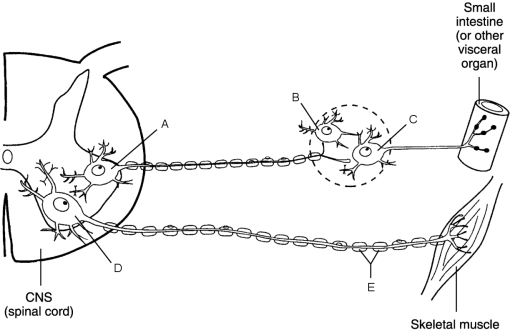 Figure 14.1Using Figure 14.1, match the following:
-The only sympathetic preganglionic neuron to go directly to an organ is one branch of the
splanchnic nerve.
Figure 14.1Using Figure 14.1, match the following:
-The only sympathetic preganglionic neuron to go directly to an organ is one branch of the
splanchnic nerve. (Short Answer)
4.8/5 (78)
(78) Emotions influence autonomic reactions primarily through integration in the .
(Multiple Choice)
4.7/5 (73)
(73) How are the sympathetic and parasympathetic divisions anatomically different?
(Essay)
4.9/5 (83)
(83) The rami communicantes are associated only with the sympathetic division of the ANS.
(True/False)
4.8/5 (75)
(75) The somatic and autonomic nervous systems differ in all of the following except .
(Multiple Choice)
4.9/5 (79)
(79) The parasympathetic fibers of the nerves innervate smooth muscles of the eye that cause the lenses to bulge to accommodate close vision.
(Multiple Choice)
4.7/5 (59)
(59) Rami communicantes are designated white or grey to indicate whether or not the fibers passing through them are myelinated.
(True/False)
4.9/5 (89)
(89) Preparing the body for the "fight- or- flight" response is the role of the .
(Multiple Choice)
4.8/5 (79)
(79) The ANS stimulates smooth muscles, skeletal muscles and glands, whereas the somatic nervous system innervates skeletal muscles only.
(True/False)
4.9/5 (75)
(75) The receptor type is used by the heart, and when activated increases heart rate.
(Short Answer)
4.9/5 (83)
(83) 
Filters
- Essay(0)
- Multiple Choice(0)
- Short Answer(0)
- True False(0)
- Matching(0)