



 Chat with AI
Exam 2: Chemistry Comes Alive

Exam 1: The Human Body: an Orientation100 Questions
Exam 2: Chemistry Comes Alive120 Questions
Exam 3: Cells: the Living Units119 Questions
Exam 4: Tissue: the Living Fabric97 Questions
Exam 5: The Integumentary System107 Questions
Exam 6: Bones and Skeletal Tissues94 Questions
Exam 7: The Skeleton102 Questions
Exam 8: Joints105 Questions
Exam 9: Muscles and Muscle Tissue109 Questions
Exam 10: The Muscular System109 Questions
Exam 11: Fundamentals of the Nervous System and Nervous Tissue95 Questions
Exam 12: The Central Nervous System132 Questions
Exam 13: The Peripheral Nervous System and Reflex Activity97 Questions
Exam 14: The Autonomic Nervous System96 Questions
Exam 15: The Special Senses127 Questions
Exam 16: The Endocrine System119 Questions
Exam 17: Blood99 Questions
Exam 18: The Cardiovascular System: the Heart94 Questions
Exam 19: The Cardiovascular System: Blood Vessels107 Questions
Exam 20: The Lymphatic System and Lymphoid Organs and Tissues95 Questions
Exam 21: The Immune System: Innate and Adaptive Body Defensives118 Questions
Exam 22: The Respiratory System120 Questions
Exam 23: The Digestive System145 Questions
Exam 24: Nutrition, Metabolism, and Body Temperature Regulation114 Questions
Exam 25: The Urinary System116 Questions
Exam 26: Fluid, Electrolyte, and Acid-Base Balance94 Questions
Exam 27: The Reproductive System126 Questions
Exam 28: Pregnancy and Human Development97 Questions
Exam 29: Heredity90 Questions
Select questions type


A chemical bond never occurs between components of a mixture. Discuss this.
(Essay)
4.9/5  (78)
(78) What is the major difference between polar and nonpolar covalent bonds?
(Essay)
4.8/5 (76)
(76) The fact that no chemical bonding occurs between the components of a mixture is the chief difference between mixtures and compounds.
(True/False)
4.9/5 (73)
(73) 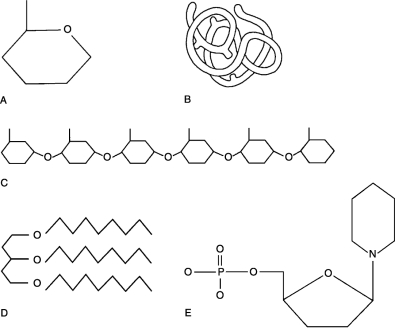 Figure 2.1Using Figure 2.1, match the following:
-have a bitter taste, feel slippery, and are proton acceptors.
Figure 2.1Using Figure 2.1, match the following:
-have a bitter taste, feel slippery, and are proton acceptors. (Short Answer)
4.9/5 (81)
(81) Isotopes differ from each other only in the number of electrons the atom contains.
(True/False)
5.0/5 (82)
(82) 31) You notice that you cannot read your book through a test tube of patient fluid held against the print, making it so blurred as to be unreadable. There is no precipitant in the bottom of the beaker, though it has been sitting for several days in a rack. What type of liquid is this?
(Multiple Choice)
4.7/5 (86)
(86) Which of the following elements is necessary for proper conduction of nervous impulses?
(Multiple Choice)
4.8/5 (80)
(80) A dipeptide can be broken into two amino acids by dehydration synthesis.
(True/False)
4.7/5 (84)
(84) A chemical reaction in which bonds are broken is usually associated with .
(Multiple Choice)
4.8/5 (68)
(68) Hydrogen bonds are more like a type of weak than correct bonds.
(Short Answer)
4.8/5 (74)
(74) 
Filters
- Essay(0)
- Multiple Choice(0)
- Short Answer(0)
- True False(0)
- Matching(0)