



 Chat with AI
Exam 25: The Urinary System

Exam 1: The Human Body: an Orientation100 Questions
Exam 2: Chemistry Comes Alive120 Questions
Exam 3: Cells: the Living Units119 Questions
Exam 4: Tissue: the Living Fabric97 Questions
Exam 5: The Integumentary System107 Questions
Exam 6: Bones and Skeletal Tissues94 Questions
Exam 7: The Skeleton102 Questions
Exam 8: Joints105 Questions
Exam 9: Muscles and Muscle Tissue109 Questions
Exam 10: The Muscular System109 Questions
Exam 11: Fundamentals of the Nervous System and Nervous Tissue95 Questions
Exam 12: The Central Nervous System132 Questions
Exam 13: The Peripheral Nervous System and Reflex Activity97 Questions
Exam 14: The Autonomic Nervous System96 Questions
Exam 15: The Special Senses127 Questions
Exam 16: The Endocrine System119 Questions
Exam 17: Blood99 Questions
Exam 18: The Cardiovascular System: the Heart94 Questions
Exam 19: The Cardiovascular System: Blood Vessels107 Questions
Exam 20: The Lymphatic System and Lymphoid Organs and Tissues95 Questions
Exam 21: The Immune System: Innate and Adaptive Body Defensives118 Questions
Exam 22: The Respiratory System120 Questions
Exam 23: The Digestive System145 Questions
Exam 24: Nutrition, Metabolism, and Body Temperature Regulation114 Questions
Exam 25: The Urinary System116 Questions
Exam 26: Fluid, Electrolyte, and Acid-Base Balance94 Questions
Exam 27: The Reproductive System126 Questions
Exam 28: Pregnancy and Human Development97 Questions
Exam 29: Heredity90 Questions
Select questions type


Water reabsorption through the proximal convoluted tubule is termed obligatory water reabsorption, whereas water reabsorption through the distal convoluted tubule is termed facultative water reabsorption.
(True/False)
4.9/5  (88)
(88) The chief force pushing water and solutes out of the blood across the filtration membrane is
)
(Multiple Choice)
4.8/5 (98)
(98) The fatty tissue surrounding the kidneys is important because it _.
(Multiple Choice)
4.9/5 (85)
(85) The mechanism that establishes the medullary osmotic gradient depends most on the permeability properties of the .
(Multiple Choice)
4.8/5 (86)
(86) Which of the hormones below is responsible for facultative water reabsorption?
(Multiple Choice)
4.8/5 (85)
(85) Which of the choices below is the least important role of tubular secretion?
(Multiple Choice)
4.8/5 (88)
(88) Which of the following best describes kidney function in older adults (70 years or older)?
(Multiple Choice)
4.8/5 (70)
(70) The path urine takes after it is formed until it leaves the body is the urethra, urinary bladder, and finally the ureter.
(True/False)
4.8/5 (85)
(85) 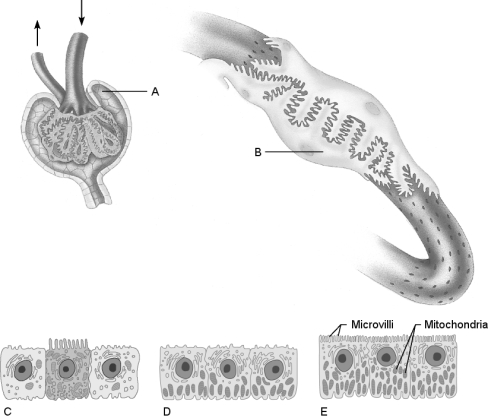 Figure 25.2Using Figure 25.2, match the following:
-Collecting duct cells.
Figure 25.2Using Figure 25.2, match the following:
-Collecting duct cells. (Short Answer)
4.9/5 (76)
(76) What is the most direct function of the juxtaglomerular apparatus?
(Multiple Choice)
4.8/5 (95)
(95) Blood pressure in the renal glomerulus is lower than in most parts of the body in order to conserve body water.
(True/False)
4.8/5 (71)
(71) Which of the choices below is a function of the nephron loop?
(Multiple Choice)
4.8/5 (73)
(73) 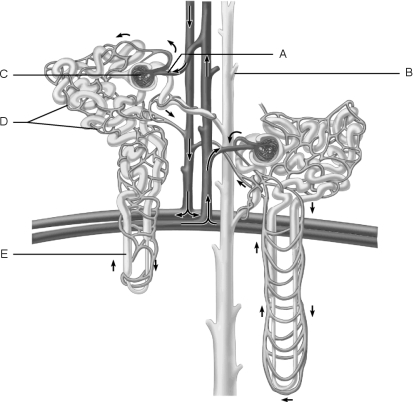 Figure 25.1Using Figure 25.1, match the following:
-Peritubular capillaries.
Figure 25.1Using Figure 25.1, match the following:
-Peritubular capillaries. (Short Answer)
4.9/5 (79)
(79) Which of the following acts as the trigger for the initiation of micturition (voiding)?
(Multiple Choice)
4.7/5 (87)
(87) 
Filters
- Essay(0)
- Multiple Choice(0)
- Short Answer(0)
- True False(0)
- Matching(0)