



 Chat with AI
Exam 25: The Urinary System

Exam 1: The Human Body: an Orientation100 Questions
Exam 2: Chemistry Comes Alive120 Questions
Exam 3: Cells: the Living Units119 Questions
Exam 4: Tissue: the Living Fabric97 Questions
Exam 5: The Integumentary System107 Questions
Exam 6: Bones and Skeletal Tissues94 Questions
Exam 7: The Skeleton102 Questions
Exam 8: Joints105 Questions
Exam 9: Muscles and Muscle Tissue109 Questions
Exam 10: The Muscular System109 Questions
Exam 11: Fundamentals of the Nervous System and Nervous Tissue95 Questions
Exam 12: The Central Nervous System132 Questions
Exam 13: The Peripheral Nervous System and Reflex Activity97 Questions
Exam 14: The Autonomic Nervous System96 Questions
Exam 15: The Special Senses127 Questions
Exam 16: The Endocrine System119 Questions
Exam 17: Blood99 Questions
Exam 18: The Cardiovascular System: the Heart94 Questions
Exam 19: The Cardiovascular System: Blood Vessels107 Questions
Exam 20: The Lymphatic System and Lymphoid Organs and Tissues95 Questions
Exam 21: The Immune System: Innate and Adaptive Body Defensives118 Questions
Exam 22: The Respiratory System120 Questions
Exam 23: The Digestive System145 Questions
Exam 24: Nutrition, Metabolism, and Body Temperature Regulation114 Questions
Exam 25: The Urinary System116 Questions
Exam 26: Fluid, Electrolyte, and Acid-Base Balance94 Questions
Exam 27: The Reproductive System126 Questions
Exam 28: Pregnancy and Human Development97 Questions
Exam 29: Heredity90 Questions
Select questions type


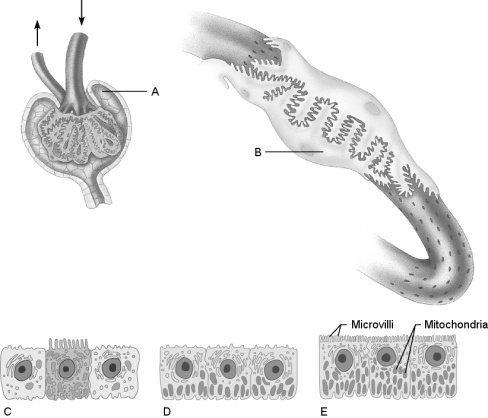 Figure 25.2Using Figure 25.2, match the following:
-Cells that reabsorb virtually all the nutrients.
Figure 25.2Using Figure 25.2, match the following:
-Cells that reabsorb virtually all the nutrients. (Short Answer)
4.9/5  (86)
(86) 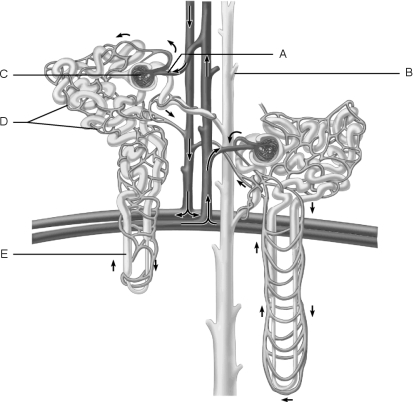 Figure 25.1Using Figure 25.1, match the following:
-Collecting duct.
Figure 25.1Using Figure 25.1, match the following:
-Collecting duct. (Short Answer)
4.9/5 (75)
(75) The entire responsibility for urine formation lies with the nephron.
(True/False)
4.7/5 (88)
(88) Fetal kidneys have the primary responsibility of clearing wastes from the fetal blood.
(True/False)
4.7/5 (90)
(90) In the absence of hormones, the distal tubule and collecting ducts are relatively impermeable to water.
(True/False)
4.8/5 (74)
(74) The collecting duct is impermeable to water in the presence of ADH.
(True/False)
4.8/5 (85)
(85) 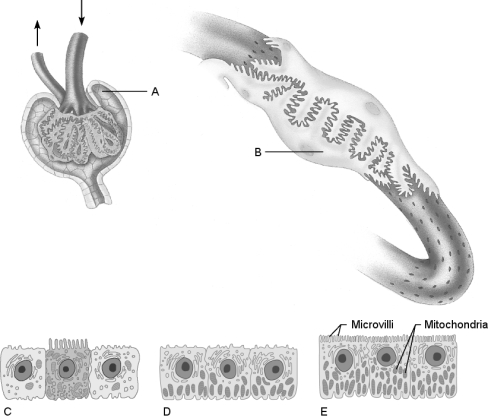 Figure 25.2Using Figure 25.2, match the following:
-Proximal convoluted tubule cells.
Figure 25.2Using Figure 25.2, match the following:
-Proximal convoluted tubule cells. (Short Answer)
4.9/5 (73)
(73) Which of the following is not associated with the renal corpuscle?
(Multiple Choice)
4.9/5 (84)
(84) Rachael has been complaining of frequent and burning urination. She also reported seeing some blood in her urine. Her physician suspects cystitis. What is cystitis, and how can it cause these symptoms?
(Essay)
4.8/5 (84)
(84) The myogenic mechanism reflects the tendency of vascular smooth muscle to stretch.
(True/False)
4.8/5 (81)
(81) Humans can survive for a period of time without water thanks to the ability of the kidneys to produce concentrated urine. Briefly explain the factors that allow this to happen.
(Essay)
4.8/5 (82)
(82) In the kidneys, the countercurrent mechanism involves the interaction between the flow of filtrate through the nephron loop of the juxtamedullary nephrons (the countercurrent multiplier) and the flow of blood through the limbs of adjacent blood vessels (the countercurrent exchanger). This relationship establishes and maintains an osmotic gradient extending from the cortex through the depths of the medulla that allows the kidneys to vary urine concentration dramatically.
(True/False)
4.9/5 (88)
(88) Sodium- linked water flow across a membrane not under hormonal control is called
water reabsorption.
(Short Answer)
5.0/5 (85)
(85) 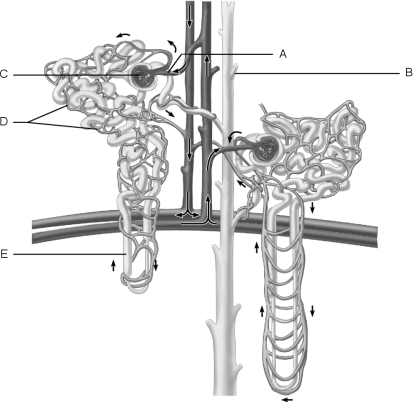 Figure 25.1Using Figure 25.1, match the following:
-Structure most closely associated with granular cells.
Figure 25.1Using Figure 25.1, match the following:
-Structure most closely associated with granular cells. (Short Answer)
4.9/5 (78)
(78) 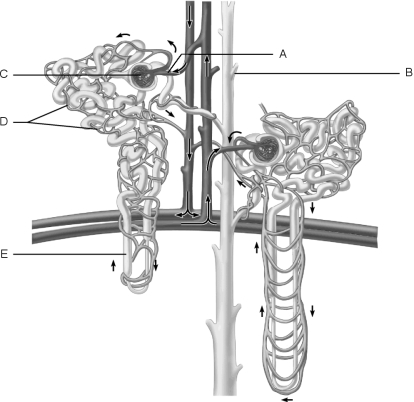 Figure 25.1Using Figure 25.1, match the following:
-Nephron loop.
Figure 25.1Using Figure 25.1, match the following:
-Nephron loop. (Short Answer)
4.8/5 (89)
(89) An older man sees his doctor for severe pain in his lower abdominal or flank area, elevated temperature, and nausea. Exhaustive tests rule out abdominal obstructions and infections. Plain X- rays indicate a radiopaque (whitish) spot in the area of his right ureter. Diagnose his problem. Give suggested treatment and prognosis.
(Essay)
4.7/5 (65)
(65) The glomerulus differs from other capillaries in the body in that it .
(Multiple Choice)
4.9/5 (73)
(73) 
Filters
- Essay(0)
- Multiple Choice(0)
- Short Answer(0)
- True False(0)
- Matching(0)