



 Chat with AI
Exam 31: Conserving Earths Biodiversity

Exam 1: An Introduction to Life on Earth85 Questions
Exam 2: Atoms, Molecules, and Life90 Questions
Exam 3: Biological Molecules98 Questions
Exam 4: Cell Structure and Function90 Questions
Exam 5: Cell Membrane Structure and Function95 Questions
Exam 6: Energy Flow in the Life of a Cell90 Questions
Exam 7: Capturing Solar Energy: Photosynthesis102 Questions
Exam 8: Harvesting Energy: Glycolysis and Cellular Respiration97 Questions
Exam 9: Cellular Reproduction133 Questions
Exam 10: Meiosis: the Basis of Sexual Reproduction103 Questions
Exam 11: Patterns of Inheritance98 Questions
Exam 12: Dna: the Molecule of Heredity97 Questions
Exam 13: Gene Expression and Regulation93 Questions
Exam 14: Biotechnology91 Questions
Exam 15: Principles of Evolution97 Questions
Exam 16: How Populations Evolve109 Questions
Exam 17: The Origin of Species89 Questions
Exam 18: The History of Life125 Questions
Exam 19: Systematics: Seeking Order Amid Diversity90 Questions
Exam 20: The Diversity of Prokaryotes and Viruses97 Questions
Exam 21: The Diversity of Protists102 Questions
Exam 22: The Diversity of Plants115 Questions
Exam 23: The Diversity of Fungi107 Questions
Exam 24: Animal Diversity I: Invertebrates101 Questions
Exam 25: Animal Diversity II: Vertebrates118 Questions
Exam 26: Animal Behavior116 Questions
Exam 27: Population Growth and Regulation114 Questions
Exam 28: Community Interactions125 Questions
Exam 29: Energy Flow and Nutrient Cycling in Ecosystems122 Questions
Exam 30: Earths Diverse Ecosystems126 Questions
Exam 31: Conserving Earths Biodiversity109 Questions
Exam 32: Homeostasis and the Organization of the Animal Body95 Questions
Exam 33: Circulation89 Questions
Exam 34: Respiration92 Questions
Exam 35: Nutrition and Digestion91 Questions
Exam 36: The Urinary System99 Questions
Exam 37: Defenses Against Disease104 Questions
Exam 38: Chemical Control of the Animal Body: the Endocrine System133 Questions
Exam 39: The Nervous System118 Questions
Exam 40: The Senses94 Questions
Exam 41: Action and Support: the Muscles and Skeleton90 Questions
Exam 42: Animal Reproduction120 Questions
Exam 43: Animal Development122 Questions
Exam 44: Plant Anatomy and Nutrient Transport95 Questions
Exam 45: Plant Reproduction and Development90 Questions
Exam 46: Plant Responses to the Environment87 Questions
Select questions type


An estimation of the area of the Earth's surface a human requires to produce the resources he or she needs and to remove the wastes he or she produces is called a(n) .
(Short Answer)
4.8/5  (74)
(74) The idea that several species in a community have functionally equivalent roles but vary in their ability to withstand environmental stressors is called the hypothesis.
(Multiple Choice)
5.0/5 (77)
(77) Natural areas that are protected from human development are called .
(Short Answer)
4.8/5 (93)
(93) Applying ecological economics, how would you decide whether to develop a wetland for vacation property or to preserve it?
(Essay)
4.7/5 (70)
(70)  -In an attempt to control aphids that are destroying his plums, a farmer in Iowa imports a colony of Asian ladybugs that feast on the aphids. The Asian ladybugs are not eaten by the local bird populations. The Asian ladybug population multiplies quickly, displaces the local ladybugs, eliminates the aphids, and begins to eat other local insects. The Asian ladybug
 (Multiple Choice)
4.8/5 (73)
(73) The mass extinction currently taking place is most likely due to human activities.
(True/False)
4.8/5 (85)
(85) One goal of conservation biology is to prevent extinction caused by
(Multiple Choice)
4.8/5 (95)
(95) In less- developed countries, many species are being harvested unsustainably because
(Multiple Choice)
5.0/5 (88)
(88) Sustainable agriculture depends on planting large tracts of high- profit crops.
(True/False)
4.8/5 (94)
(94) takes into account both the biotic (living) communities and the abiotic (nonliving) environments on which the communities depend.
(Multiple Choice)
4.7/5 (80)
(80) Much of the tropical rain- forest land that has been lost has been used for
(Multiple Choice)
4.8/5 (67)
(67) In heavily forested areas, the trees reduce evaporation and disrupt the normal water cycle.
(True/False)
4.8/5 (77)
(77) Removal of a keystone species from an ecosystem has minimal effect because other species compensate and take over its role.
(True/False)
4.9/5 (81)
(81) Trees alter runoff patterns, causing increased erosion and potential flooding.
(True/False)
4.7/5 (72)
(72) Cutting down rain forests may result in the local climate becoming
(Multiple Choice)
4.8/5 (97)
(97) The largest threat to global biodiversity, as identified by the International Union for Conservation of Nature (IUCN), is
(Multiple Choice)
4.9/5 (89)
(89) The variety and abundance of the different species that make up a community is the of a community.
(Multiple Choice)
4.8/5 (93)
(93) The leading cause of extinction by human activities worldwide is
(Multiple Choice)
4.9/5 (84)
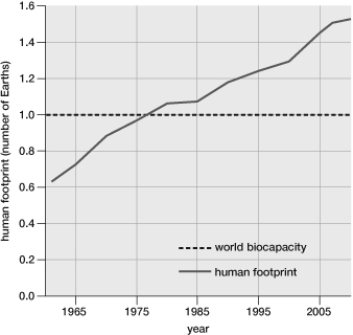
(84) 
Filters
- Essay(0)
- Multiple Choice(0)
- Short Answer(0)
- True False(0)
- Matching(0)