



 Chat with AI
Exam 10: Consumer Choice and Behavioral Economics

Exam 1: Economics: Foundations and Models447 Questions
Exam 2: Trade-Offs, comparative Advantage, and the Market System492 Questions
Exam 3: Where Prices Come From: the Interaction of Demand and Supply476 Questions
Exam 4: Economic Efficiency, government Price Setting, and Taxes420 Questions
Exam 5: Externalities, environmental Policy, and Public Goods263 Questions
Exam 6: Elasticity: the Responsiveness of Demand and Supply294 Questions
Exam 7: The Economics of Health Care338 Questions
Exam 8: Firms,the Stock Market,and Corporate Governance522 Questions
Exam 9: Comparative Advantage and the Gains From International Trade377 Questions
Exam 10: Consumer Choice and Behavioral Economics300 Questions
Exam 11: Technology,production,and Costs327 Questions
Exam 12: Firms in Perfectly Competitive Markets296 Questions
Exam 13: Monopolistic Competition: the Competitive Model in a More Realistic Setting272 Questions
Exam 14: Oligopoly: Firms in Less Competitive Markets258 Questions
Exam 15: Monopoly and Antitrust Policy279 Questions
Exam 16: Pricing Strategy261 Questions
Exam 17: The Markets for Labor and Other Factors of Production281 Questions
Exam 18: Public Choice, taxes, and the Distribution of Income258 Questions
Exam 19: Gdp: Measuring Total Production and Income261 Questions
Exam 20: Unemployment and Inflation291 Questions
Exam 21: Economic Growth, the Financial System, and Business Cycles253 Questions
Exam 22: Long-Run Economic Growth: Sources and Policies262 Questions
Exam 23: Aggregate Expenditure and Output in the Short Run301 Questions
Exam 24: Aggregate Demand and Aggregate Supply Analysis286 Questions
Exam 25: Money,banks,and the Federal Reserve System281 Questions
Exam 26: Monetary Policy275 Questions
Exam 27: Fiscal Policy306 Questions
Exam 28: Inflation, unemployment, and Federal Reserve Policy257 Questions
Exam 29: Macroeconomics in an Open Economy278 Questions
Exam 30: The International Financial System258 Questions
Select questions type


Identify the one statement that does not demonstrate how social effects influence consumer choice.
(Multiple Choice)
4.9/5  (73)
(73) If you received negative marginal utility from consuming the 4th slice of pizza,then your total utility from 4 slices of pizza must be less than your total utility from 3 slices of pizza.
(True/False)
4.8/5 (75)
(75) During its run on Broadway,the play The Producers regularly sold out all available tickets at the St.James Theater.The theater could have raised ticket prices from $75 to $125 and still sold all available tickets but chose not to do so.The best explanation for this decision is
(Multiple Choice)
4.7/5 (77)
(77) Firms pay famous individuals to endorse their products because
(Multiple Choice)
4.9/5 (74)
(74) Which of the following is used to explain why a consumer's willingness to buy a cell phone increases as the number of other people who own and use cell phones increases?
(Multiple Choice)
4.9/5 (85)
(85) Traditionally,economists have considered culture,customs,and religion as
(Multiple Choice)
4.8/5 (65)
(65) The only Giffen goods that have been identified so far in the real world are luxury goods.
(True/False)
4.7/5 (63)
(63) The Wong family consumes 3 pounds of fish and 5 pounds of chicken per month.The price of fish is $8 per pound and chicken is $4 per pound.
a.What is the amount of income allocated to fish and chicken consumption?
b.What is the price ratio (the price of fish relative to the price of chicken)?
c.Explain the meaning of the price ratio you computed.
d.If the Wongs maximize utility,what must the ratio of the marginal utility of fish to the marginal utility of chicken be equal to?
e.If the price of chicken rises,will the Wong family consume more chicken,less chicken,or the same amount of chicken? Explain your answer using the rule of equal marginal utility per dollar.
(Essay)
4.9/5 (73)
(73) Under J.C.Penney's everyday low pricing policy,the everyday low prices
(Multiple Choice)
4.7/5 (73)
(73) In the ultimatum game,allocators usually offer recipients at least a 40 percent share of the money,and recipients almost always reject offers of less than a 10 percent share.Which of the following does not explain why allocators offer recipients a relatively generous share and why recipients reject meager offers?
(Multiple Choice)
4.9/5 (83)
(83) Suppose you pre-ordered a non-refundable movie ticket to X-Men: Apocalypse.On the day of the movie you decide that you would rather not go to the movie.According to economists,what is the rational thing to do?
(Multiple Choice)
4.9/5 (81)
(81) The satisfaction a person receives from consuming goods and services is called
(Multiple Choice)
4.9/5 (73)
(73) 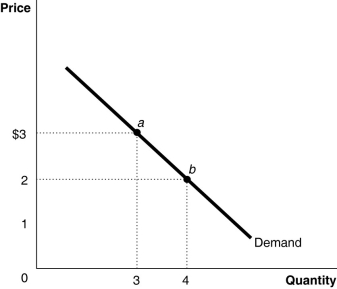 Figure 10-2 represents the demand for ice cream cones.
-Refer to Figure 10-2.When the price of ice cream cones increases from $2 to $3,quantity demanded decreases from 4 ice cream cones to 3 ice cream cones.This change in quantity demanded is due to
Figure 10-2 represents the demand for ice cream cones.
-Refer to Figure 10-2.When the price of ice cream cones increases from $2 to $3,quantity demanded decreases from 4 ice cream cones to 3 ice cream cones.This change in quantity demanded is due to (Multiple Choice)
4.9/5 (76)
(76) All but one of the following have been suggested by some economists as possible consequences of path dependency and switching costs.Which of the following is not a possible consequence of path dependency and switching costs?
(Multiple Choice)
4.9/5 (88)
(88) The income effect of an increase in the price of peaches is
(Multiple Choice)
4.8/5 (77)
(77) Alan Krueger conducted a survey of fans at the 2001 Super Bowl who purchased tickets to the game for $325 or $400.Krueger found that (a)94 percent of those surveyed would not have paid $3,000 for their tickets,and (b)92 percent of those surveyed would not have sold their tickets for $3,000.These results are an example of
(Multiple Choice)
4.8/5 (85)
(85) To maximize utility consumers should buy goods and services to the point where the marginal utility of each item consumed is maximized.
(True/False)
4.9/5 (78)
(78) 
Filters
- Essay(0)
- Multiple Choice(0)
- Short Answer(0)
- True False(0)
- Matching(0)