



 Chat with AI
Exam 17: Citric Acid Cycle

Exam 1: Introduction to the Chemistry of Life56 Questions
Exam 2: Water59 Questions
Exam 3: Nucleotides, Nucleic Acids, and Genetic Information68 Questions
Exam 4: Amino Acids68 Questions
Exam 5: Proteins: Primary Structure68 Questions
Exam 6: Proteins: Three-Dimensional Structure60 Questions
Exam 7: Protein Function Part I: Myoglobin and Hemoglobin74 Questions
Exam 8: Carbohydrates66 Questions
Exam 9: Lipids and Biological Membranes59 Questions
Exam 10: Membrane Transport50 Questions
Exam 11: Enzyme Catalysis53 Questions
Exam 12: Enzyme Kinetics, Inhibition and Control55 Questions
Exam 13: Biochemical Signaling50 Questions
Exam 14: Introduction to Metabolism52 Questions
Exam 15: Glycogen Metabolism and Gluconeogenesis50 Questions
Exam 16: Glucose Catabolism50 Questions
Exam 17: Citric Acid Cycle50 Questions
Exam 18: Electron Transport and Oxidative Phosphorylation50 Questions
Exam 19: Photosynthesis50 Questions
Exam 20: Lipid Metabolism51 Questions
Exam 21: Amino Acid Metabolism50 Questions
Exam 22: Mammalian Fuel Metabolism: Integration and Regulation50 Questions
Exam 23: Nucleotide Metabolism50 Questions
Exam 24: Nucleic Acid Structure50 Questions
Exam 25: Dna Replication, Repair and Recombination50 Questions
Exam 26: Transcription and Rna Processing50 Questions
Exam 27: Translation49 Questions
Exam 28: Regulation of Gene Expression50 Questions
Select questions type


During the oxidation of isocitrate, _____ is decarboxylated to form -ketoglutarate.
(Multiple Choice)
4.8/5  (71)
(71) Which of the following citric acid cycle intermediates can be converted to aspartate via transamination?
(Multiple Choice)
5.0/5 (89)
(89) Which of the following causes pyruvate dehydrogenase kinase to catalyze the phosphorylation and inactivation of E1 in the pyruvate dehydrogenase complex?
(Multiple Choice)
4.9/5 (95)
(95) Matching
Choose the correct answer from the list. Not all the answers will be used.
-_____ and pyruvate can be combined in an ATP dependent reaction that regenerates one of the key intermediates in the citric acid cycle.
(Multiple Choice)
4.9/5 (79)
(79) The figure at right represents an intermediate in the reaction catalyzed by which of the following enzymes? 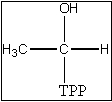
(Multiple Choice)
4.7/5 (78)
(78) Matching
Choose the correct answer from the list. Not all the answers will be used.
-______ is the first compound that is oxidized in the citric acid cycle.
(Multiple Choice)
4.9/5 (91)
(91) Which of the following statements correctly and most accurately describes the function of FAD in the pyruvate dehydrogenase enzyme complex?
(Multiple Choice)
4.8/5 (90)
(90) If acetyl-CoA labeled with 14C, as shown in the figure to the right, were used as the substrate for the citric acid cycle, which of the following intermediates would be produced during the first round of the cycle? 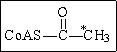
(Multiple Choice)
4.9/5 (67)
(67) Which reaction below produces GTP in the citric acid cycle?
(Multiple Choice)
4.8/5 (89)
(89) Which of the following best describes the importance of the citric acid cycle as a central pathway of metabolism?
(Multiple Choice)
4.7/5 (80)
(80) Which of the following amino acid residues facilitates the transfer of a phosphate group in the reaction producing succinate and GTP?
(Multiple Choice)
5.0/5 (76)
(76) Which of the following enzymes catalyzes a reaction with the pictured compound as an intermediate? 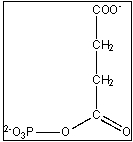
(Multiple Choice)
4.9/5 (82)
(82) Matching
Choose the correct answer from the list. Not all the answers will be used.
-The enzyme ______ is part of the glyoxylate cycle that occurs in plants, bacteria, and fungi.
(Multiple Choice)
4.8/5 (87)
(87) Germinating plant seeds can convert acetyl-CoA (obtained from fatty acids stored as oils)into carbohydrates, whereas animals are incapable of converting fatty acids into glucose.This difference is due to the fact that:
(Multiple Choice)
4.9/5 (78)
(78) How many NADH are produced when one acetyl group is oxidized in the citric acid cycle?
(Multiple Choice)
4.8/5 (89)
(89) Which of the following steps of the citric acid cycle conserves the energy of a high energy thioester bond?
(Multiple Choice)
4.9/5 (71)
(71) Which of the following utilizes intermediates of the citric acid cycle?
I.gluconeogenesis
II.amino acid biosynthesis
III.fatty acid oxidation
IV.glycolysis
(Multiple Choice)
4.8/5 (84)
(84) E2 of the pyruvate dehydrogenase complex contains a lipoyl group that is covalently attached via an amide linkage to a ______ residue on the enzyme?
(Multiple Choice)
4.9/5 (85)
(85) 
Filters
- Essay(0)
- Multiple Choice(0)
- Short Answer(0)
- True False(0)
- Matching(0)