



 Chat with AI
Exam 10: Membrane Transport

Exam 1: Introduction to the Chemistry of Life56 Questions
Exam 2: Water59 Questions
Exam 3: Nucleotides, Nucleic Acids, and Genetic Information68 Questions
Exam 4: Amino Acids68 Questions
Exam 5: Proteins: Primary Structure68 Questions
Exam 6: Proteins: Three-Dimensional Structure60 Questions
Exam 7: Protein Function Part I: Myoglobin and Hemoglobin74 Questions
Exam 8: Carbohydrates66 Questions
Exam 9: Lipids and Biological Membranes59 Questions
Exam 10: Membrane Transport50 Questions
Exam 11: Enzyme Catalysis53 Questions
Exam 12: Enzyme Kinetics, Inhibition and Control55 Questions
Exam 13: Biochemical Signaling50 Questions
Exam 14: Introduction to Metabolism52 Questions
Exam 15: Glycogen Metabolism and Gluconeogenesis50 Questions
Exam 16: Glucose Catabolism50 Questions
Exam 17: Citric Acid Cycle50 Questions
Exam 18: Electron Transport and Oxidative Phosphorylation50 Questions
Exam 19: Photosynthesis50 Questions
Exam 20: Lipid Metabolism51 Questions
Exam 21: Amino Acid Metabolism50 Questions
Exam 22: Mammalian Fuel Metabolism: Integration and Regulation50 Questions
Exam 23: Nucleotide Metabolism50 Questions
Exam 24: Nucleic Acid Structure50 Questions
Exam 25: Dna Replication, Repair and Recombination50 Questions
Exam 26: Transcription and Rna Processing50 Questions
Exam 27: Translation49 Questions
Exam 28: Regulation of Gene Expression50 Questions
Select questions type


Matching
-A transporter that moves two substances simultaneously in the same direction is an example of a(n)__________.

Free
(Multiple Choice)
4.8/5  (83)
(83) Correct Answer: Verified
C
D-glucose is added to cells and the rate of glucose transport is plotted against D-glucose concentration.In the presence of the D-galactose derivative 6-O-benzyl-D-galactose, the curve is shifted to the right, indicating that D-glucose and the D-galactose derivative both compete for a place in the binding site.Which of the following is true?
Free
(Multiple Choice)
4.9/5 (82)
(82) Correct Answer:Verified
VerifiedE
Matching
-The GLUT1 transporter functions via _____ transport.
Free
(Multiple Choice)
4.9/5 (91)
(91) Correct Answer:Verified
VerifiedI
Of the transport proteins discussed in the chapter, in general, which of the following do they have in common?
(Multiple Choice)
4.8/5 (78)
(78) Drug resistance is frequently traced to
I.the MDR transporter.
II.overexpression of P-glycoprotein.
III.increased number of specific ABC transporters.
IV.the evolution of selectivity filters.
(Multiple Choice)
4.7/5 (70)
(70) 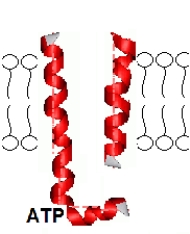
Which of the following is not an example of a passive-mediated transporter?
(Multiple Choice)
4.9/5 (75)
(75) Matching
-______ are bacterial proteins forming a barrel structure with a central aqueous channel.
(Multiple Choice)
4.9/5 (86)
(86) D-Glucose and D-mannitol are similarly soluble, but D-glucose is transported through the erythrocyte membrane four times as rapidly as D-mannitol.What is the most likely explanation?
(Multiple Choice)
5.0/5 (80)
(80) Which features allow the KcsA channel to selectively transport K+?
I.The entrance of the channel contains hydrophobic residues which forces the removal of waters of hydration.
II.It is attracted to the entrance of the channel via electrostatic interactions.
III.The "selectivity filter" involves a narrowing of the channel, allowing only dehydrated K+ access.
IV.As K+ is transported through the channel it interacts with −C=O groups from the protein.
(Multiple Choice)
4.9/5 (74)
(74) When the cardiac glycoside, digitoxin, is used for heart failure, the effects include:
I.inhibition of phosphate hydrolysis from E2 of the (Na+-K+)-ATPase pump
II.activation of the (Na+-K+)-ATPase pump
III.increase in intracellular Na+ concentration
IV.increase in Ca2+ concentration in the sarcoplasmic reticulum
(Multiple Choice)
4.7/5 (87)
(87) Which of the following is (are)characteristic of the (Na+-K+)-ATPase?
I.It binds Na+ and K+ simultaneously prior to binding ATP
II.It is covalently modified by phosphorylation at an Asp residue when Na+ is present.
III.Transport of Na+ and K+ occur in a 1:1 ratio, thus maintaining a balanced gradient until opening of the gated portion of the channel.
IV It is essential for excitation of nerve cells.
(Multiple Choice)
4.8/5 (78)
(78) The concentration of cytosolic Ca2+ is _________ the extracellular concentration of Ca2+.
(Multiple Choice)
4.8/5 (83)
(83) Matching
-The Ca2+-ATPase requires ATP directly and is therefore an example of ______ transport.
(Multiple Choice)
4.7/5 (79)
(79) A patient has low levels of potassium.Which of the following could be affected?
I.levels of calcium available for cardiac muscle
II.amount of glucose transported through the intestinal lumen
III.amount of lactose metabolized
IV.chloride ion transport may slow
(Multiple Choice)
4.8/5 (76)
(76) 
Filters
- Essay(0)
- Multiple Choice(0)
- Short Answer(0)
- True False(0)
- Matching(0)