



 Chat with AI
Exam 1: Anatomy

Exam 1: Anatomy265 Questions
Exam 2: Behavioral Sciences178 Questions
Exam 3: Biochemistry102 Questions
Exam 4: Embryology59 Questions
Exam 5: Epidemiology, Biostatistics, and Medical Informatics94 Questions
Exam 6: Genetics88 Questions
Exam 7: Histology46 Questions
Exam 8: Immunology147 Questions
Exam 9: Microbiology and Virology330 Questions
Exam 10: Pathology817 Questions
Exam 11: Pharmacology and Toxicology509 Questions
Exam 12: Physiology339 Questions
Exam 13: Psychiatry and Psychotherapy23 Questions
Select questions type


A 35-year-old man presented to the office due to recurrent chest pain. The patient describes pain that the pain extends from the neck down his chest. It has a special onset after fried food. It has no radiation. It does not relate to exercise, not being relieved with rest. The pain awakens him from sleep. Cardiac assessment is normal. A thoracic CT image near the level of the aortic arch is shown below. This patient's presentation is related to which of the following structures? 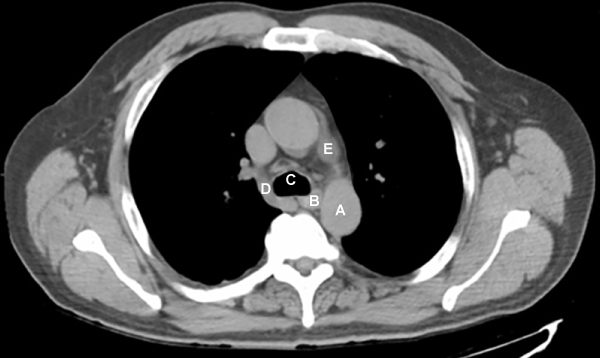
(Multiple Choice)
5.0/5  (87)
(87) After a fall, a 68-year-old woman is taken to the emergency department with significant right hip discomfort. She stumbled on a rug and crashed against a wall before falling on her right hip on the floor. There is a history of sadness and polymyalgia rheumatica in the patient. Sertraline and low-dose prednisone are among the medications used. She also has a smoking history of 40 packs per year. The blood pressure is 145/85 mm Hg, and the pulse rate is 96 beats per minute. The patient appeared to be in a lot of agony. She can't move her right hip, and her right leg looks to be shorter than her left. The picture below depicts a pelvic x-ray: 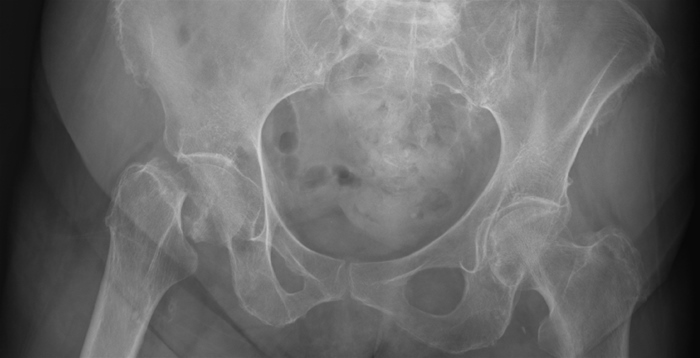 Injury involving which of the following arteries is most likely to lead to osteonecrosis in this patient?
 (Multiple Choice)
4.8/5 (83)
(83) A 25-year-old man is evaluated in the emergency department after a street fight. The patient's respiratory rate is 32/min, blood pressure is 80/58 mm Hg, and heart rate is 120/min. Physical examination shows a penetrating left-sided stab wound along the upper surface of the clavicle between the lateral border of the sternum and the midclavicular line. Which of the following structures was most likely injured?
(Multiple Choice)
4.9/5 (91)
(91) A 25-year-old woman presented to the office due to a fever of 3 days duration. The fever is associated with difficulty walking and left flank pain. A few days ago, the patient has received IV antibiotics for a skin abscess. She has IV substance drug abuse. The temperature is 38.9° C (102° F). Physical examination shows the resistance to extension of the hip due to exacerbation of the pain. This patient's presentation is due to the involvement of which of the following muscles?
(Multiple Choice)
4.9/5 (101)
(101) A 22-year-old soldier sustains a stab wound to his chest during a military attack. The soldier reports shortness of breath. He is alert and oriented to time, place, and person. His pulse is 99/min, respirations are 32/min, and blood pressure is 112/72 mm Hg. Examination shows a 2-cm wound at the left fourth intercostal space at the midclavicular line. Bubbling of blood is seen with each respiration at the wound site. There is no jugular venous distention. There is hyperresonance to percussion and decreased breath sounds on the left side. The trachea is at the midline. Which of the following changes have most likely occurred in this patient's left hemithorax and left lung compared to his preinjury state? 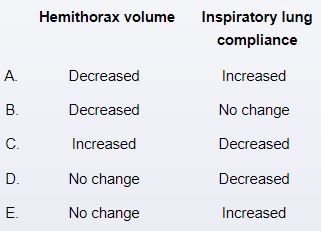
(Multiple Choice)
4.9/5 (72)
(72) A 23-year-old man is evaluated in the emergency department after a motor vehicle collision. He is complaining of pain in the left knee. Physical examination shows swelling and erythema in the left knee. X-ray shows a patellar fracture with no displacement. The patient is referred to the orthopedics center, where a leg cylinder cast is placed. two Weeks after cast placement, the patient has tingling in the dorsum of the left foot. He can not dorsiflex or evert the left foot. Which of the following is the most likely site of compression of the nerve?
(Multiple Choice)
4.8/5 (70)
(70) A 63-year-old man has undergone an abdominal CT scan, for vague abdominal pain. 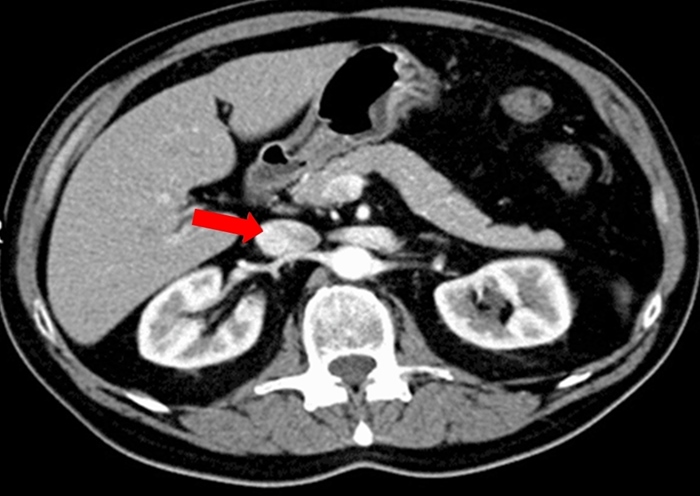 What is the structure indicated by the arrow?
 (Multiple Choice)
4.7/5 (91)
(91) A 23-year-old woman is evaluated for exercise intolerance for the past year. Blood pressure is 120/80 mm Hg and pulse is 88/min. On examination, a loud second heart sound was heard at the left second intercostal space. The patient was referred for evaluation with cardiac catheterization. A catheter with a balloon was inserted into the pulmonary circulation. It is advanced until it occludes a branch of the pulmonary system. The pressure is a measure beyond this point. What Does this pressure reading represent?
(Multiple Choice)
4.8/5 (84)
(84) A 26-year-old woman presented to the cardiology clinic due to recurrent episodes of supraventricular tachycardia. The electrophysiology study showed focal atrial tachycardia originating from the crista terminals of the right atrium. The patient is referred for radiofrequency ablation of the focus. Which of the following nerves is at risk of injury during the procedure?
(Multiple Choice)
4.9/5 (76)
(76) A 32-year-old man arrives in the ER complaining of acute heart palpitations. His blood pressure is 100/70 mmHg, and his heart rate is 160 beats per minute. To alleviate these symptoms, the doctor tells the patient to do the "Valsalva technique." Which of the following structures is most crucial in completing the Valsalva technique, as seen in the pelvic CT scan below? 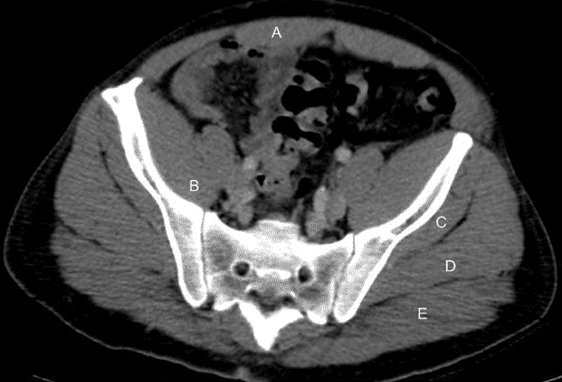
(Multiple Choice)
4.7/5 (96)
(96) A 32-year-old woman arrives at the clinic complaining of a worsening headache and double vision that has lasted two days. The patient discloses no chronic medical issues but has been experiencing nasal discharge for several days. Physical examination reveals weakness in the muscle seen on the CT scan below: 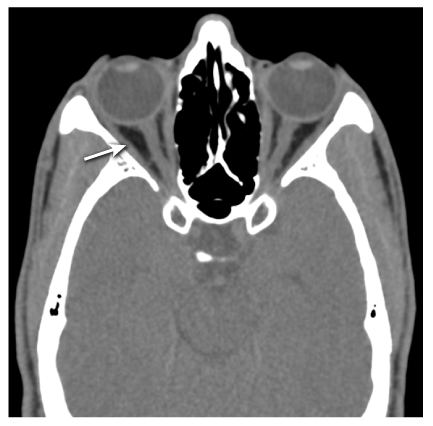 Purulent discharge from the sphenoethmoidal recess of the nasal cavity is also noted. Involvement of which of the following nerves best explains this patient's ocular findings?
 (Multiple Choice)
4.9/5 (69)
(69) A 23-year-old man is evaluated after being involved in a motor vehicle accident. The evaluation reveals a maxillofacial injury. The patient is stabilized and referred to surgery. In his recovery, the patient noticed abnormal mastication, he has difficulty with chewing food. When the patient is asked to open his mouth, the jaw deviates to the left. The injured nerve exits the skull through which of the following foramina?
(Multiple Choice)
4.8/5 (71)
(71) A 39-year-old woman comes to the emergency department due to fever, chills, cough, and shortness of breath over the last week. She had a dental procedure in the last two weeks. Her temperature is 39 C. Blood cultures grow streptococcus mutans. The valve most likely affected in this patient can be best evaluated by auscultation at which of the following sites? 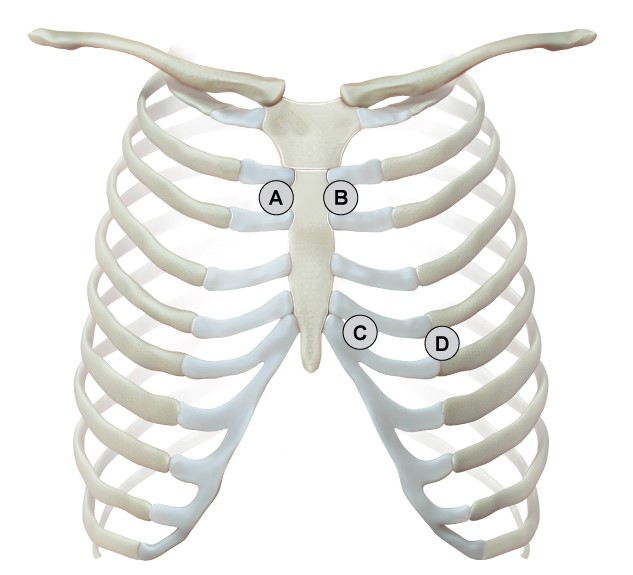
(Multiple Choice)
4.9/5 (75)
(75) A 17-year-old boy is sent to the emergency room with a lower extremities injury. When the patient was playing football with his pals, he was tackled and "felt something shatter" in his right leg. He avoids putting any weight on his right foot. A big contusion with point pain is seen on examination of the proximal lateral right leg. The exhibit includes an x-ray of the leg. 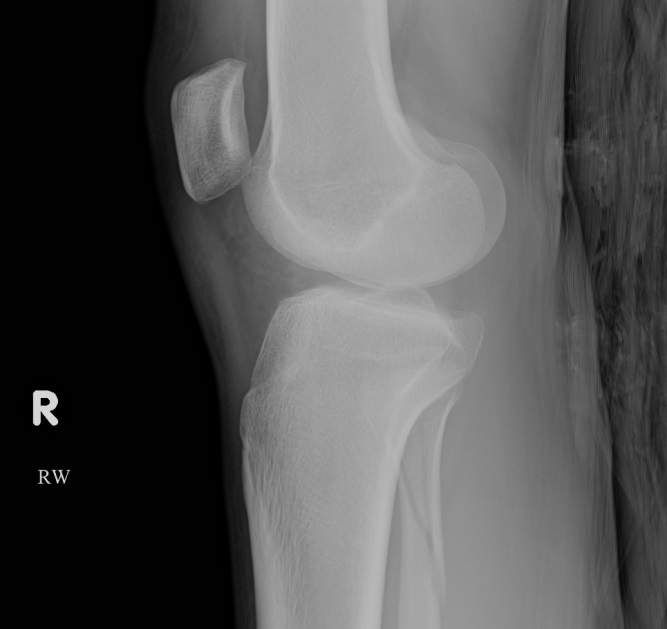 Which of the following would most likely be found on physical examination?
 (Multiple Choice)
4.9/5 (73)
(73) A 75-year-old man was admitted to the emergency department due to acute lower limb pain. The patient has a history of left leg pain induced by movement, the pain usually starts at 100 meters. The patient notices that in the previous two weeks, the pain was exacerbated even at short distances. His temperature is 37 C, blood pressure 130/80 and pulse is 90/min. On physical examination, the left lower leg is cold with shiny hairless skin. You suspected the diagnosis of acute lower limb ischemia, what is the site for palpation of the femoral artery?
(Multiple Choice)
4.9/5 (69)
(69) A 56-year-old woman arrives at the emergency department with a severe headache and partial visual loss. She has had atrial fibrillation for three years. The physical examination reveals a visual field impairment including the dark regions shown below. 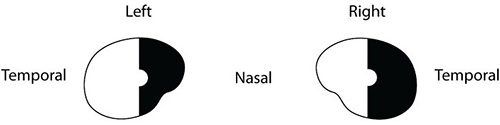 This patient most likely has occlusion of which of the following arteries?
 (Multiple Choice)
4.7/5 (66)
(66) A 65-year-old man was admitted to the surgery ward for laparoscopic hernia repair. Which of the following anatomical structures will aid in the identification of direct and indirect inguinal hernia?
(Multiple Choice)
4.9/5 (85)
(85) A 45-year-old woman presented to the office complaining of pelvic pain for the last two months. The patient has been complaining of pelvic pain every day, and it is not related to menstrual cycles. Additionally. the patient's waist size increased despite diminished appetite. Physical examination shows irregular adnexal mass. She is referred for pelvis surgery to remove the ovarian neoplasm. During the surgery, the surgeon would palpate the ureter anterior to which of the following structures?
(Multiple Choice)
5.0/5 (97)
(97) A 54-year-old woman arrives at the emergency department with a hand injury sustained in a fall. In the restroom, the patient stumbled and fell backwards onto her outstretched right hand. She was able to get up, but she has been experiencing right wrist discomfort and finger numbness since the incident. Obesity, hypertension, and type 2 diabetes mellitus are all present in his medical history. A tiny hump is detected immediately below the palm of her right hand, and there is diminished feeling in the palmar aspect of her first three digits. A dislocation of the lunate resulting in median nerve compression is suspected. On a normal x-ray, which of the following indicated bones is most likely displaced in this patient? 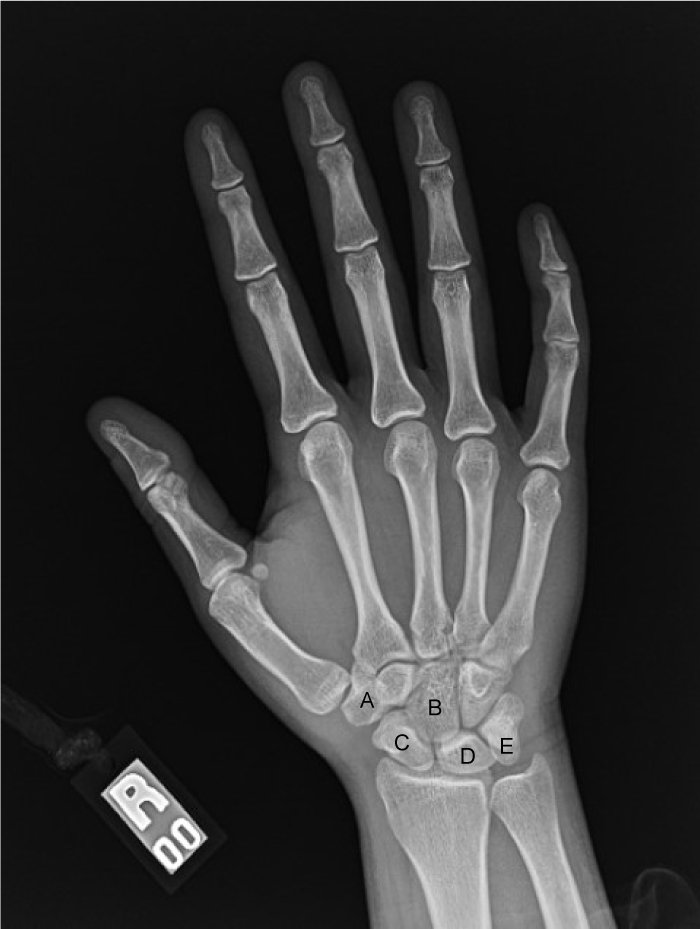
(Multiple Choice)
4.8/5 (80)
(80) A 12-year-old child is being assessed for severe headaches that have been bothering him for several months. He has also experienced paresthesia, weakness, and extremity rigidity. As illustrated in the figure below, an MRI of the brain reveals an expansile mass in the lower pons: 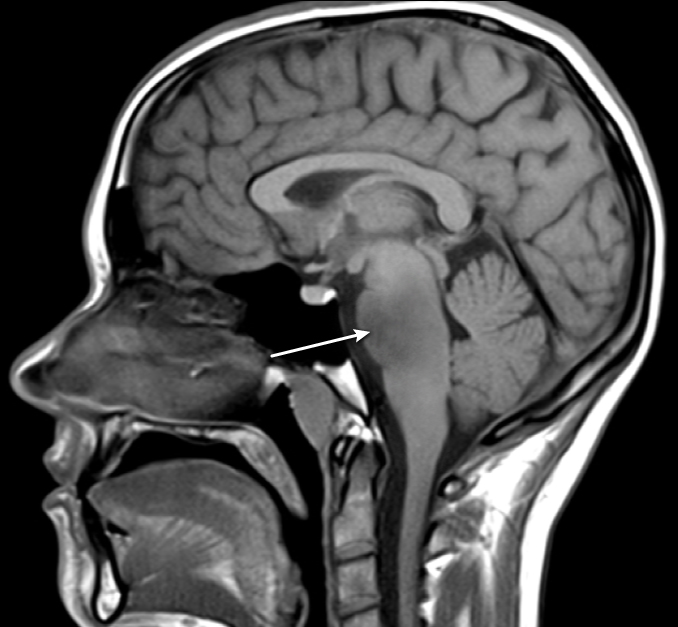 Which of the following is most likely to be noticed in this patient as a result of the brain lesion's direct involvement of nerve nuclei?
 (Multiple Choice)
4.9/5 (86)
(86) 
Filters
- Essay(0)
- Multiple Choice(0)
- Short Answer(0)
- True False(0)
- Matching(0)