



 Chat with AI
Exam 1: Anatomy

Exam 1: Anatomy265 Questions
Exam 2: Behavioral Sciences178 Questions
Exam 3: Biochemistry102 Questions
Exam 4: Embryology59 Questions
Exam 5: Epidemiology, Biostatistics, and Medical Informatics94 Questions
Exam 6: Genetics88 Questions
Exam 7: Histology46 Questions
Exam 8: Immunology147 Questions
Exam 9: Microbiology and Virology330 Questions
Exam 10: Pathology817 Questions
Exam 11: Pharmacology and Toxicology509 Questions
Exam 12: Physiology339 Questions
Exam 13: Psychiatry and Psychotherapy23 Questions
Select questions type


A 68-year-old woman arrives at the emergency room with rapid onset double vision that began shortly after she awoke. When she looks to the right, the patient's vision deteriorates. She does not have a headache, weakness, or numbness. The patient has a lengthy history of high blood pressure, hyperlipidemia, and type 2 diabetes. The blood pressure is 160/90 mm Hg, and the pulse rate is 86 beats per minute. Except for the ocular abnormalities depicted in the figure below, the neurologic evaluation, including visual acuity, is normal. 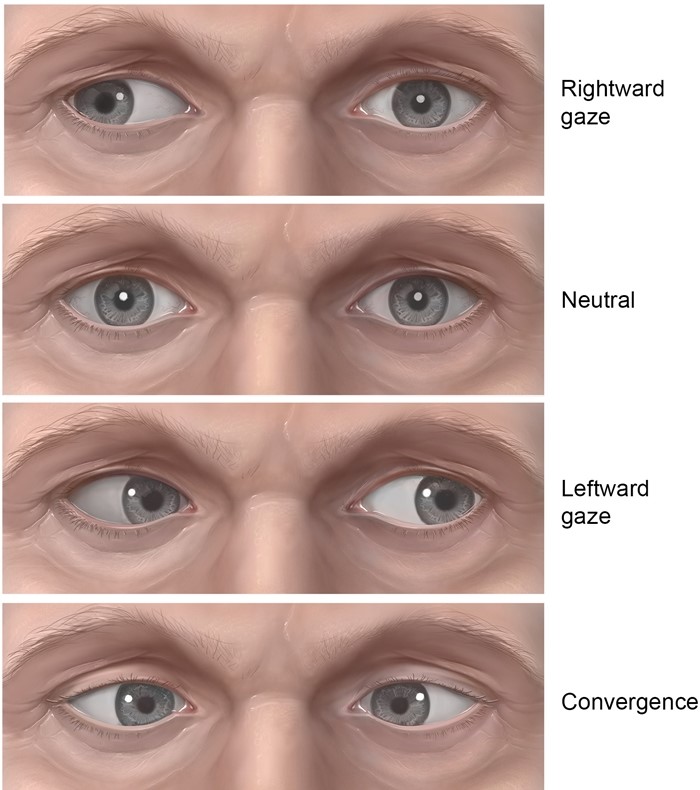 A lesion involving which of the following structures is most likely causing the observed ocular findings in this patient?
 (Multiple Choice)
4.8/5  (88)
(88) A 21-year-old man presented to the emergency department due to a motor vehicle collision. The patient was sitting on the side that receive the initial hit. The patient complains of severe abdominal pain associated with left shoulder pain. She has nausea, vomiting, and hiccups. The patient's blood pressure is 95/65 mm Hg and pulse is 125/min. Physical examination shows a bruise over the left lower chest. She has generalized abdominal tenderness and rigidity, with positive rebound tenderness. Which of the following is the most likely diagnosis?
(Multiple Choice)
4.7/5 (67)
(67) A 68-year-old woman comes to the office for a follow-up after a left hip arthroplasty. The patient has been complaining of difficult walking despite absent pain. Physical examination shows that the patient leans to the left side while walking. When he is asked to stand on his left leg, the patient's right hip moves downward. Injury involving which of the following nerves would explain the patient's presentation?
(Multiple Choice)
4.9/5 (80)
(80) The structure mentioned, traverses the diaphragm alongside which structure? 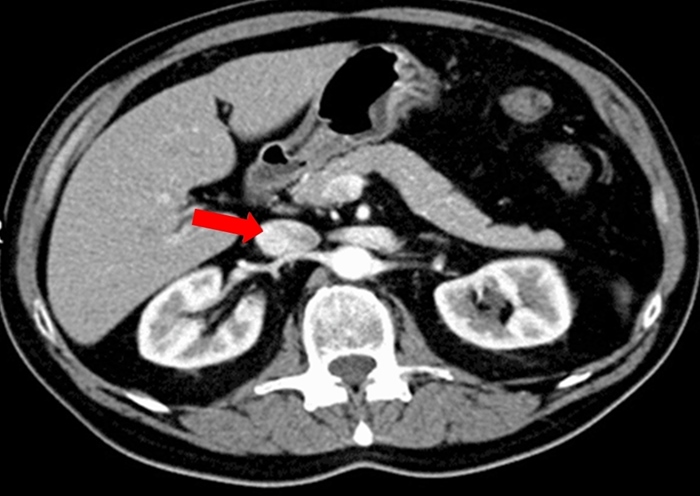
(Multiple Choice)
4.9/5 (76)
(76) A 27-year-old man presented to the office complaining of right-sided jaw pain that has been more severe in the past 3 months. The pain is dull and is associated with a right earache. The pain has been severe, especially when eating hard solid food. The pain is associated with a right ear ringing sensation. His wife has noticed that the patient grinds on his teeth each night. Which of the following nerves is the most likely origin of the patient's pain?
(Multiple Choice)
4.9/5 (85)
(85) A 54-year-old man presented to the office due to intermittent groin pain. The pain is exacerbated by coughing, straining, and heavyweights lifting. On examination, the patient has left-sided groin swelling found above the inguinal ligament. The swelling has a positive cough impulse. An ultrasound evaluation revealed the mass to be medial to the inferior epigastric vessel. Which of the following is the pathophysiology of the patient's presentation?
(Multiple Choice)
4.7/5 (78)
(78) A 57-year-old man is sent to the emergency room after having a widespread tonic-clonic seizure. According to his wife, he has no history of seizures. However, she claims that he has been complaining of sporadic headaches, memory loss, and visual issues for the previous two weeks. A single mass is seen on brain imaging in the right temporal lobe. Which of the following visual field problems does this patient most likely have? 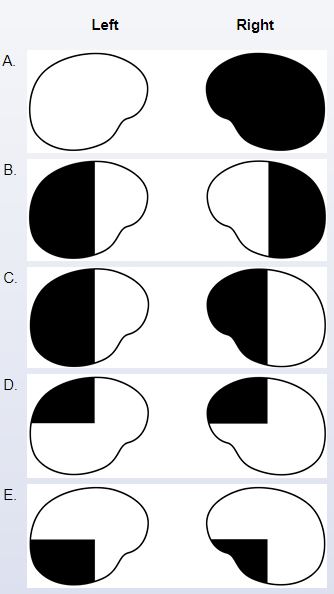
(Multiple Choice)
4.8/5 (82)
(82) A 6-year-old boy was evaluated in the pediatrics clinic due to obesity. His mother reports that her son does not feel satiety despite how much he eats. In the last month, his weight increased by more than 6.0 kg. He is complaining of morning headaches that were associated with several times vomiting. His physical examination is significant for a BMI of 37kg/m2. The patient was diagnosed with a central nervous system lesion. This patient's new-onset behavior is caused by a lesion in which of the following hypothalamic nuclei?
(Multiple Choice)
4.8/5 (62)
(62) Due to her easy fatigability, a 54-year-old woman is assessed at the clinic. There has been no weight gain or cold intolerance in the patient, and there is no history of thyroid disorders. Her medical history suggests that she should have a gastrectomy due to a nonhealing gastric ulcer. A glossy tongue and light palmar wrinkles are visible on physical examination. When her eyes are closed, her walking becomes unsteady, and her vibration awareness is significantly reduced in her lower limbs. There is modest symmetrical weakness in the proximal lower extremities muscles. The hemoglobin level in the blood is 7.2 g/dL, and the white blood cell count is 3,600/mm3. Stool tests for occult blood have always come out negative. Which of the following spinal cord lesions is this patient most likely to have?
(Multiple Choice)
5.0/5 (62)
(62) A 62-year-old woman presented to the office complaining of abnormal vision. The patient has been complaining of double vision for the last month. She has abnormality with walking downstairs, as she sees them duplicated. She used to read the newspaper every morning, but recently she can not read them due to the double vision exacerbated by reading. She has not had any recent trauma. She has a medical history of chronic hypertension and diabetes mellitus type 2. A lesion affecting which of the following structures would explain the patient's presentation?
(Multiple Choice)
4.8/5 (71)
(71) A 34-year-old man begins treatment for Hodgkin lymphoma with combined chemotherapy. Shortly later, he begins vomiting violently and requires IV fluid replacement. Which of the following brain regions is most likely to be to blame for his symptoms? 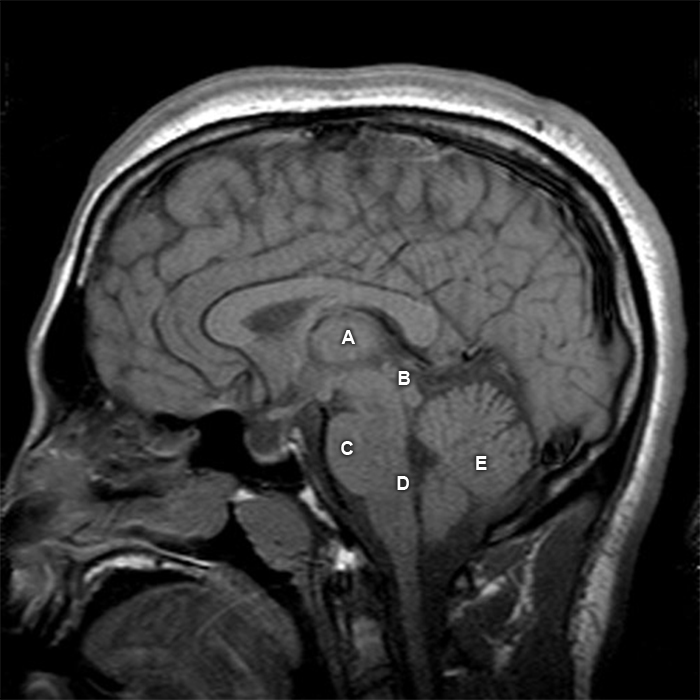
(Multiple Choice)
4.8/5 (77)
(77) A 3-week-old boy is brought to the clinic due to right-sided scrotal swelling. The boy has had right scrotal swelling since delivery, but there was no noticeable discomfort. The boy was delivered normally, at 38 weeks gestation, the delivery went well without any complications. He has normal eating, voiding, and stooling pattern. On examination, the testis is found bilaterally in the scrotum, with an enlarged right scrotum. Light transillumination tests are positive. No other abnormalities were noticed. Abdominal examination is normal. The patient's presentation is due to swelling in which of the following structures?
A)Caput of the epididymis
B)Cremasteric fascia
C)Pampiniform plexus
D)Tunica albuginea
E)Tunica vaginalis
(Short Answer)
4.8/5 (83)
(83) Following a car accident, a 37-year-old lady is taken to the emergency room. She lost control of her automobile as she round a bend and collided with a brick wall head on. Any movement causes considerable discomfort in the patient's right hip. The right lower extremity is adducted and internally rotated, and it appears shorter than the contralateral leg. Due to considerable discomfort, range of motion testing at the hip is limited in all directions. The display includes an X-ray of the hip. 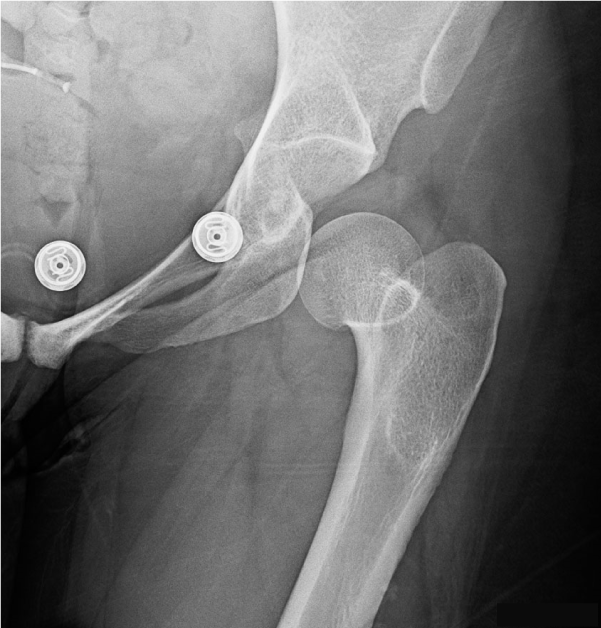 Which of the following structures is most vulnerable to involvement from this patient's injury?
 (Multiple Choice)
4.8/5 (80)
(80) A 37-year-old lady arrives at the clinic complaining of left elbow soreness and edema that has persisted for several days. The patient recalls no serious trauma but has lately begun a high-intensity training regimen. The presentation depicts the results of the physical examination. 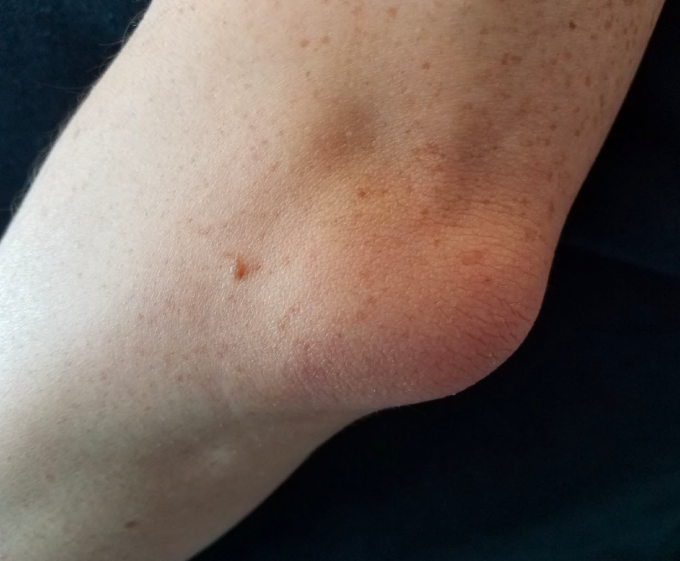 The patient is able to fully extend the elbow without increased pain. Pathology involving which of the following structures is the most likely cause of this patient's current condition?
 (Multiple Choice)
4.8/5 (89)
(89) A 65-year-old man arrives at the clinic complaining of right lower abdomen pain radiating to his groin and trouble walking for the last week. Climbing stairs has been very difficult for him, and he has fallen numerous times as a result of knee buckling. Diabetes, hypertension, and atrial fibrillation all have a medical history. The patient is taking warfarin for long-term anticoagulation. Physical examination reveals that the right patellar reflex is weaker than the left. The following is an abdominal CT scan: 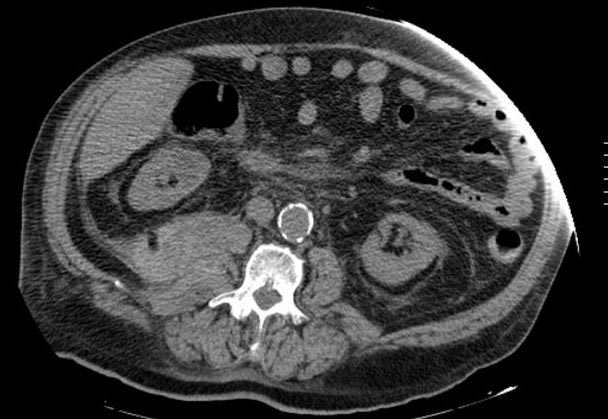 Which of the following additional findings is most likely to be seen in this patient?
 (Multiple Choice)
4.9/5 (69)
(69) A 14-year-old kid comes to the clinic with his mother because he has been experiencing worsening anterior knee discomfort in his left leg for the previous two months. The issue began as a little ache at the conclusion of a hiking expedition. The patient reports no fever, night sweats, or knee trauma. He has a normal walk, according to physical assessment. The hips, knees, and ankles all move freely. A slight swelling with palpable tenderness is positioned about 3 cm below the inferior border of the patella. The exhibit includes an x-ray of the left knee. 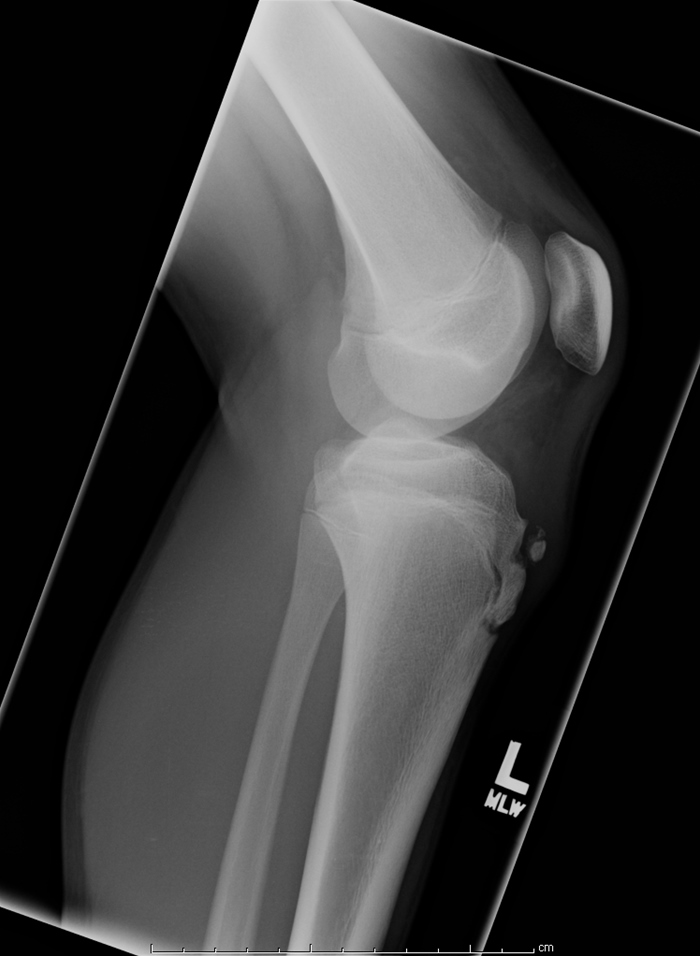 Overuse of which of the following muscles most likely contributed to this patient's condition?
 (Multiple Choice)
4.8/5 (85)
(85) A 58-year-old man presented to the emergency department due to severe anal pain. The patient has had constipation for the last 8 months, he has seen blood streaks over the stool. The patient does not report gastrointestinal symptoms like nausea, vomiting, or abdominal pain. He has no weight loss. Physical examination reveals multiple purplish-blue bulges seen in the anal canal below the pectinate line. Excision under local anesthesia is planned. Which of the following nerves should be targeted in the local anesthesia?
(Multiple Choice)
4.9/5 (81)
(81) A 38-year-old man comes to the office due to a new onset severe headache. The patient does not report any weakness, sensory changes, visual abnormalities, or seizures. The patient has chronic hypertension. He has been smoking two packs of cigarettes for the last 10 years. On examination, the patient has no focal neurological deficits. an MRI shows an aneurysm arising from the segment of the left internal carotid artery within the cavernous sinus. If this aneurysm enlarges, which of the following findings would be expected?
(Multiple Choice)
5.0/5 (60)
(60) A 38-year-old woman is evaluated for sudden onset of shortness of breath. On physical examination, the patient looks distressed. The blood pressure 130/80 mmHg, and the pulse is 88/min. ECG shows normal sinus rhythms, what is the site of the first electrical signal in the heart?
(Multiple Choice)
4.9/5 (79)
(79) A 52-year-old woman presented to the office complaining of low back pain that has been progressing for the last month. The pain is exacerbated by standing, but it is relieved by lying down. This pain radiates to the left leg. She has a long history of osteoarthritis. He has a history of hypertension and osteoarthritis. Radiological imaging shows osteophytes compressing the spinal nerves exiting the neural foramina between the L5 and S1 vertebral bodies. This lesion would lead to which of the following manifestations?
(Multiple Choice)
5.0/5 (90)
(90) 
Filters
- Essay(0)
- Multiple Choice(0)
- Short Answer(0)
- True False(0)
- Matching(0)