



 Chat with AI
Exam 7: Physics

Exam 1: Behavioral Sciences343 Questions
Exam 2: Biochemistry307 Questions
Exam 3: Biology319 Questions
Exam 4: Critical Analysis & Reasoning Skills358 Questions
Exam 5: General Chemistry317 Questions
Exam 6: Organic Chemistry191 Questions
Exam 7: Physics200 Questions
Select questions type


Passage
Sound waves propagate through many conducting structures in the ear before they are transduced into neuronal signals. When sound waves reach the fluid-filled cochlea, they are detected by hair cells lining the basilar membrane. The cochlear spiral can be modeled as a resonator system because each section of the basilar membrane is sensitive to a specific frequency (Figure 1).
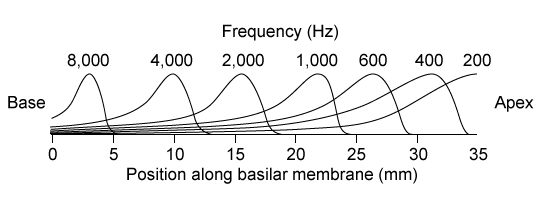 Figure 1 Amplitude pattern of the basilar membrane for different frequenciesPresbycusis (age-related hearing loss) results from a combination of factors that lessens an individual's mechanical and/or neurological sensitivity to sound. Pure tone audiometry (PTA) is used to determine an individual's ability to detect different sound frequencies and can be used to evaluate presbycusis. A "pure" tone is characterized by a single sinusoidal waveform. An audiogram plots the relative intensity required of a given frequency to be detected by the individual (Figure 2).
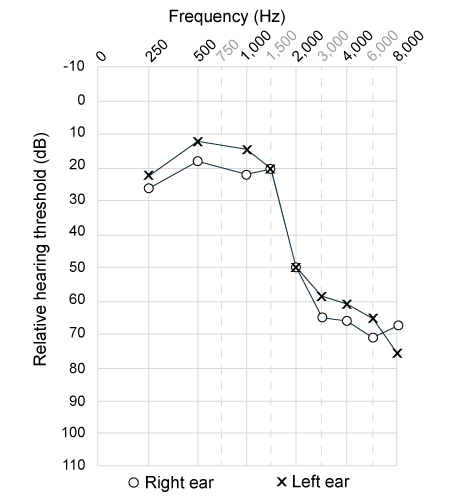 Figure 2 Audiogram of an elderly patient exhibiting presbycusis
-Audiometry can also be used to evaluate a subject's ability to localize a moving sound source. When the sound source is moving toward the subject, which of the following increases?
Figure 1 Amplitude pattern of the basilar membrane for different frequenciesPresbycusis (age-related hearing loss) results from a combination of factors that lessens an individual's mechanical and/or neurological sensitivity to sound. Pure tone audiometry (PTA) is used to determine an individual's ability to detect different sound frequencies and can be used to evaluate presbycusis. A "pure" tone is characterized by a single sinusoidal waveform. An audiogram plots the relative intensity required of a given frequency to be detected by the individual (Figure 2).
Figure 2 Audiogram of an elderly patient exhibiting presbycusis
-Audiometry can also be used to evaluate a subject's ability to localize a moving sound source. When the sound source is moving toward the subject, which of the following increases? (Multiple Choice)
4.9/5  (90)
(90) Passage
Ultrasound is a technique that uses the propagation properties of high-frequency sound waves to construct images of internal organs or to measure blood flow velocity. The shape and position of internal organs are resolved by measuring the return time of reflected ultrasound waves. Similarly, blood flow velocity is resolved by measuring the Doppler shift of reflected ultrasound waves. An ultrasound device consists of an array of piezoelectric crystals and an acoustic lens. The piezoelectric crystals generate sound when an alternating voltage is applied, and the acoustic lens increases the transmission efficiency from the device to the body by reducing sound reflection at the skin.Ultrasound is performed using frequencies in the range of 2-15 MHz. The lower ultrasound frequencies are used for deep abdomen and obstetric/gynecological imaging due to their greater penetrating ability. The higher ultrasound frequencies have less penetrating ability but provide higher resolution, and therefore are used for blood flow measurements and the imaging of more superficial structures. Detailed ultrasound penetration data is shown in Figure 1.
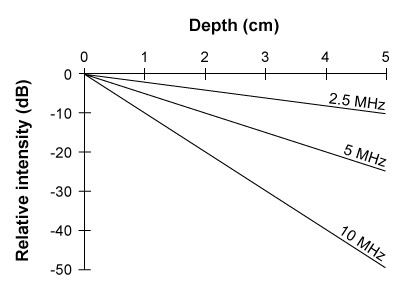 Figure 1 Penetration in soft tissue for three different ultrasound frequenciesSound waves propagate through soft tissue at an average speed of 1,500 m/s and through blood at 1,570 m/s.
-How much farther will a 5 MHz signal penetrate compared to a 10 MHz signal when the initial intensity of each signal decreases by a factor of 100?
Figure 1 Penetration in soft tissue for three different ultrasound frequenciesSound waves propagate through soft tissue at an average speed of 1,500 m/s and through blood at 1,570 m/s.
-How much farther will a 5 MHz signal penetrate compared to a 10 MHz signal when the initial intensity of each signal decreases by a factor of 100? (Multiple Choice)
4.7/5 (87)
(87) Passage
Black holes have played an important part in astrophysics for the last half-century. A black hole is a region of space where the force of gravity is especially strong and gravitational potential energy U is very large. Analogous to the electrostatic potential energy associated with electrical charges, U is defined as the work required to move an object of mass m from an infinite distance to a point at radial distance r within the gravitational field of a second mass M as given by
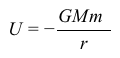 Equation 1where G is the gravitational constant. Near a black hole, the gravitational potential energy can become so negative that not even light has enough energy to escape the black hole's gravity.Escape velocity can be determined by launching an object of mass m with velocity v to an infinite radial distance from the surface of a central mass M (eg, a star or a planet) with radius R. For a black hole to exist, the escape velocity must be equal to the speed of light.Scientists have thoroughly studied the physics of black holes. Stars near the center of our galaxy have been observed to orbit an extremely massive, invisible object (millions of times more massive than our Sun) that is almost certainly a black hole. The orbital angular velocity ω of a star is defined as
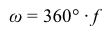 ω=360°⋅fEquation 2where f is the frequency of rotation in hertz (Hz). Likewise, black holes are not merely static masses but are often observed to rotate about their own axis. The interaction between the rotation of a black hole and matter falling into the hole is suspected to form powerful beams (jets) of ionized matter that project away from the black hole along its axis of rotation. Nevertheless, many aspects of how these jets are formed remains a mystery. Black holes will remain a fruitful area for research far into the future.
-Which of the following graphs best illustrates how the gravitational potential energy for a black hole varies with radial distance r ?
Equation 1where G is the gravitational constant. Near a black hole, the gravitational potential energy can become so negative that not even light has enough energy to escape the black hole's gravity.Escape velocity can be determined by launching an object of mass m with velocity v to an infinite radial distance from the surface of a central mass M (eg, a star or a planet) with radius R. For a black hole to exist, the escape velocity must be equal to the speed of light.Scientists have thoroughly studied the physics of black holes. Stars near the center of our galaxy have been observed to orbit an extremely massive, invisible object (millions of times more massive than our Sun) that is almost certainly a black hole. The orbital angular velocity ω of a star is defined as
ω=360°⋅fEquation 2where f is the frequency of rotation in hertz (Hz). Likewise, black holes are not merely static masses but are often observed to rotate about their own axis. The interaction between the rotation of a black hole and matter falling into the hole is suspected to form powerful beams (jets) of ionized matter that project away from the black hole along its axis of rotation. Nevertheless, many aspects of how these jets are formed remains a mystery. Black holes will remain a fruitful area for research far into the future.
-Which of the following graphs best illustrates how the gravitational potential energy for a black hole varies with radial distance r ? (Multiple Choice)
4.9/5 (71)
(71) Light from an incandescent lightbulb passes through an ideal linear polarizer. The intensity of the light is 100 lm before passing through the filter, but 50 lm immediately after. Which of the following explains this discrepancy?
(Multiple Choice)
5.0/5 (85)
(85) Compared to other diffraction techniques, the advantage of x-ray diffraction is that it enables:
(Multiple Choice)
4.8/5 (75)
(75) Passage
Black holes have played an important part in astrophysics for the last half-century. A black hole is a region of space where the force of gravity is especially strong and gravitational potential energy U is very large. Analogous to the electrostatic potential energy associated with electrical charges, U is defined as the work required to move an object of mass m from an infinite distance to a point at radial distance r within the gravitational field of a second mass M as given by
Equation 1where G is the gravitational constant. Near a black hole, the gravitational potential energy can become so negative that not even light has enough energy to escape the black hole's gravity.Escape velocity can be determined by launching an object of mass m with velocity v to an infinite radial distance from the surface of a central mass M (eg, a star or a planet) with radius R. For a black hole to exist, the escape velocity must be equal to the speed of light.Scientists have thoroughly studied the physics of black holes. Stars near the center of our galaxy have been observed to orbit an extremely massive, invisible object (millions of times more massive than our Sun) that is almost certainly a black hole. The orbital angular velocity ω of a star is defined as
ω=360°⋅fEquation 2where f is the frequency of rotation in hertz (Hz). Likewise, black holes are not merely static masses but are often observed to rotate about their own axis. The interaction between the rotation of a black hole and matter falling into the hole is suspected to form powerful beams (jets) of ionized matter that project away from the black hole along its axis of rotation. Nevertheless, many aspects of how these jets are formed remains a mystery. Black holes will remain a fruitful area for research far into the future.
-A black hole emits a jet with a power of 1044 W. If the black hole has a rotational period of 0.1 ms, what is the energy emitted by the jet during one rotation of the black hole?
Equation 1where G is the gravitational constant. Near a black hole, the gravitational potential energy can become so negative that not even light has enough energy to escape the black hole's gravity.Escape velocity can be determined by launching an object of mass m with velocity v to an infinite radial distance from the surface of a central mass M (eg, a star or a planet) with radius R. For a black hole to exist, the escape velocity must be equal to the speed of light.Scientists have thoroughly studied the physics of black holes. Stars near the center of our galaxy have been observed to orbit an extremely massive, invisible object (millions of times more massive than our Sun) that is almost certainly a black hole. The orbital angular velocity ω of a star is defined as
ω=360°⋅fEquation 2where f is the frequency of rotation in hertz (Hz). Likewise, black holes are not merely static masses but are often observed to rotate about their own axis. The interaction between the rotation of a black hole and matter falling into the hole is suspected to form powerful beams (jets) of ionized matter that project away from the black hole along its axis of rotation. Nevertheless, many aspects of how these jets are formed remains a mystery. Black holes will remain a fruitful area for research far into the future.
-A black hole emits a jet with a power of 1044 W. If the black hole has a rotational period of 0.1 ms, what is the energy emitted by the jet during one rotation of the black hole? (Multiple Choice)
4.8/5 (85)
(85) Passage
In hemodynamics, blood flow through the cardiovascular system can be modeled as an electric circuit in which the blood serves as electricity, the blood vessels as resistive wires, and the heart as a battery (see Figure 1).
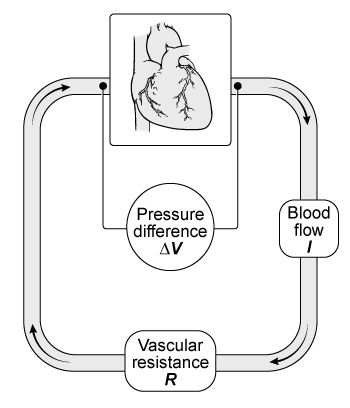 Figure 1 Cardiovascular circuit modelOhm's law states that the voltage drop ΔV across each element, the current I flowing through it, and its electrical resistance R are related by ΔV = IR. In a blood vessel, pressure difference between one vessel and the next ΔP replaces ΔV, volumetric blood flow Q replaces I, and vascular resistance R replaces electrical resistance. Therefore, Ohm's law for blood flow in a vessel isΔP = QREquation 1Vascular resistance is due to the blood's viscosity η and the dimensions of the vessel through which it flows. Assuming blood vessels are cylinders, R can be approximated as
 Equation 2where L is the length of the vessel, and r is its inner radius. If Equation 2 is combined with Equation 1, the resulting equation is Poiseuille law.In a study of the circulatory system in rats, researchers measured the intravascular blood pressure of the mesenteric blood vessels. The mesentery is the set of tissues that holds the intestines in place. Blood flows in the following order: aorta, superior mesenteric artery (SMA), arterial arcade, venous arcade, superior mesenteric vein (SMV).For the procedure, catheters with pressure transducers were inserted into each vessel via laparotomy. Laparotomy is an invasive procedure that involves a surgical incision into the abdominal cavity. Blood pressure measurements were taken simultaneously at the proximal end (beginning) of each blood vessel.
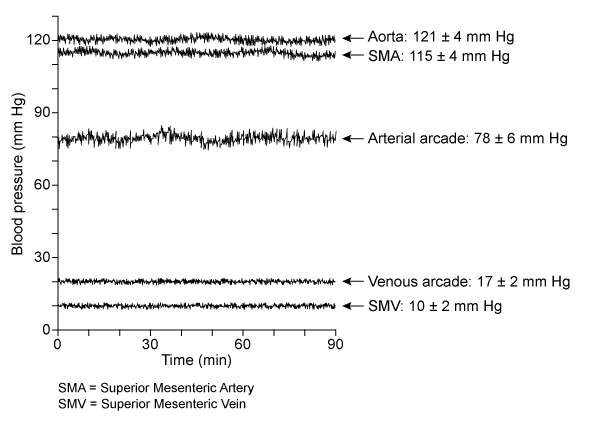 Figure 2 Mesenteric blood pressure profile of rats (Note: SMA = superior mesenteric artery; SMV = superior mesenteric vein.)
-Given the relationship between vascular resistance and blood pressure decay, which of the following blood vessel categories has the greatest total vascular resistance during systole? (Note: Vessel arcades are comprised of multiple individual blood vessels.)
Figure 1 Cardiovascular circuit modelOhm's law states that the voltage drop ΔV across each element, the current I flowing through it, and its electrical resistance R are related by ΔV = IR. In a blood vessel, pressure difference between one vessel and the next ΔP replaces ΔV, volumetric blood flow Q replaces I, and vascular resistance R replaces electrical resistance. Therefore, Ohm's law for blood flow in a vessel isΔP = QREquation 1Vascular resistance is due to the blood's viscosity η and the dimensions of the vessel through which it flows. Assuming blood vessels are cylinders, R can be approximated as
Equation 2where L is the length of the vessel, and r is its inner radius. If Equation 2 is combined with Equation 1, the resulting equation is Poiseuille law.In a study of the circulatory system in rats, researchers measured the intravascular blood pressure of the mesenteric blood vessels. The mesentery is the set of tissues that holds the intestines in place. Blood flows in the following order: aorta, superior mesenteric artery (SMA), arterial arcade, venous arcade, superior mesenteric vein (SMV).For the procedure, catheters with pressure transducers were inserted into each vessel via laparotomy. Laparotomy is an invasive procedure that involves a surgical incision into the abdominal cavity. Blood pressure measurements were taken simultaneously at the proximal end (beginning) of each blood vessel.
Figure 2 Mesenteric blood pressure profile of rats (Note: SMA = superior mesenteric artery; SMV = superior mesenteric vein.)
-Given the relationship between vascular resistance and blood pressure decay, which of the following blood vessel categories has the greatest total vascular resistance during systole? (Note: Vessel arcades are comprised of multiple individual blood vessels.) (Multiple Choice)
4.8/5 (72)
(72) The suspension of mass M within a two-pulley system requires a force F. 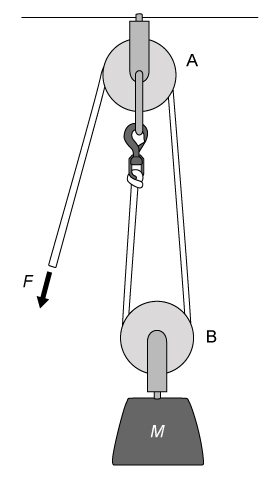 If pulley B is removed from the system, what is the ratio of the original value of the force with two pulleys to the new value of the force with one pulley?
 (Multiple Choice)
4.7/5 (87)
(87) A 30-year-old woman has an average bone tissue density of 1.8 g/cm3 with an estimated bone tissue volume of 5,000 cm3. Assuming her bone tissue volume remains the same, what will her bone tissue density be if she is expected to lose 1.5 kg of bone mass by age 70 due to osteoporosis?
(Multiple Choice)
4.9/5 (84)
(84) A stringed musical instrument produces sound through the vibrations of strings fixed at both ends. If the velocity at which waves propagate through each string is known, what information is needed in order to determine the fundamental frequency of each string?
(Multiple Choice)
4.9/5 (65)
(65) Passage
A traumatic brain injury (TBI) is a form of brain injury caused by an external physical force. In addition to direct injury at the site of an impact, the rapid acceleration-deceleration of the head may cause the brain to move within the skull and result in injury to the part of the brain opposite the impact site. This is known as a contrecoup injury.If an impact to the head also results in a skull fracture, the injury is classified as an open TBI. If there is no skull fracture, the injury is classified as a closed TBI. The type of TBI can be predicted from the collision duration and the average acceleration of the head. The thresholds for open and closed TBI are shown in Figure 1.
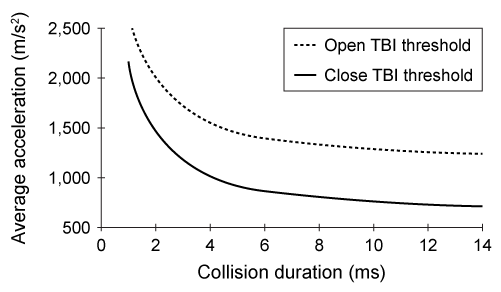 Figure 1 Thresholds for open and closed TBIIn an experiment to study head collisions with projectiles, researchers equipped the head of a crash test dummy with sensors that measured acceleration on multiple axes. The crash test dummy was stationary before its head was subjected to controlled collisions with incoming projectiles of varying mass and impact velocity. The linear acceleration of the crash test dummy's head was recorded during and after the impact. The results for a trial in which the impact lasted for 10 ms are shown in Figure 2.
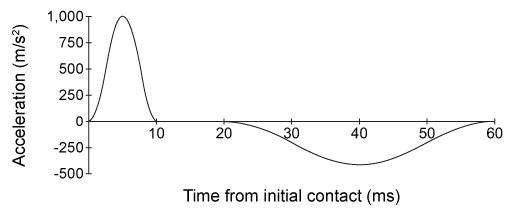 Figure 2 The acceleration of the head during and after a 10-ms collision
-If a baseball traveling at 20 m/s strikes a player running at 5 m/s, what is the difference between the minimum and maximum possible relative velocities between the ball and the player?
Figure 1 Thresholds for open and closed TBIIn an experiment to study head collisions with projectiles, researchers equipped the head of a crash test dummy with sensors that measured acceleration on multiple axes. The crash test dummy was stationary before its head was subjected to controlled collisions with incoming projectiles of varying mass and impact velocity. The linear acceleration of the crash test dummy's head was recorded during and after the impact. The results for a trial in which the impact lasted for 10 ms are shown in Figure 2.
Figure 2 The acceleration of the head during and after a 10-ms collision
-If a baseball traveling at 20 m/s strikes a player running at 5 m/s, what is the difference between the minimum and maximum possible relative velocities between the ball and the player? (Multiple Choice)
4.8/5 (64)
(64) A cable with a tension of 45 N is used to suspend a 5 kg mass M against a wall. 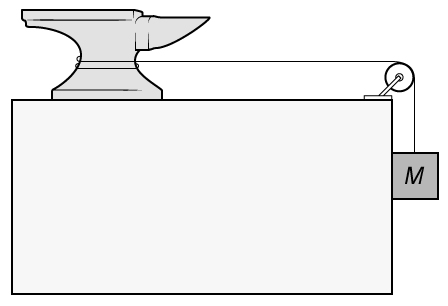 What is the magnitude and direction of the force of friction between the mass and the wall?
 (Multiple Choice)
4.9/5 (75)
(75) Passage
The flow of blood through the human body is typically laminar, but in certain conditions, as when blood flows through the aorta during a period of heightened physical activity, the flow can become turbulent. Blood flow can also become turbulent in abnormal cases in which the passage of blood is obstructed by constrictions within the blood vessel. The energy generated by blood turbulence creates sound vibrations that can be heard with a stethoscope.Using the technique of laser Doppler velocimetry, researchers recorded the blood velocity v at a point in the aorta of an experimental subject at different times during aerobic exercise. Table 1 shows the blood velocities observed over a 400 ms time interval.Table 1 Blood Velocity within the Aorta of an Experimental Subject (mean velocity v̅ = 101 cm/s)
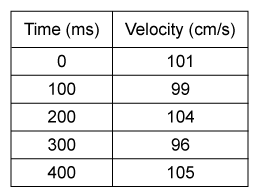 Turbulent kinetic energy (TKE) is the kinetic energy per unit mass associated with turbulence within flowing fluids and is defined as:
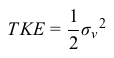 Equation 1where σv is the standard deviation of the fluctuating fluid velocities at a point within the turbulent flow.Reynolds number Re is the quantity that ultimately measures whether a flow is turbulent or laminar. Re is defined in terms of the fluid density ρ, mean velocity of the flow v̅, conduit diameter d, and dynamic viscosity η of the fluid, as given by:
 Equation 2In the context of blood flow, d is the diameter of the blood vessel, and blood has a fluid density of about 1,060 kg∙m−3 with a dynamic viscosity of about 0.003 kg∙m−1∙s−1.
-Which graph depicts the flow with the largest turbulent kinetic energy?
Turbulent kinetic energy (TKE) is the kinetic energy per unit mass associated with turbulence within flowing fluids and is defined as:
Equation 1where σv is the standard deviation of the fluctuating fluid velocities at a point within the turbulent flow.Reynolds number Re is the quantity that ultimately measures whether a flow is turbulent or laminar. Re is defined in terms of the fluid density ρ, mean velocity of the flow v̅, conduit diameter d, and dynamic viscosity η of the fluid, as given by:
Equation 2In the context of blood flow, d is the diameter of the blood vessel, and blood has a fluid density of about 1,060 kg∙m−3 with a dynamic viscosity of about 0.003 kg∙m−1∙s−1.
-Which graph depicts the flow with the largest turbulent kinetic energy? (Multiple Choice)
4.9/5 (79)
(79) Passage
Nitrogen is extremely cold in its liquid phase. It is used in the cryopreservation of small tissue samples and in cryosurgery to freeze and destroy diseased tissues. Liquid nitrogen can be produced from nitrogen gas using the Hampson-Linde cycle (Figure 1).
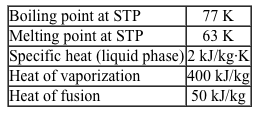
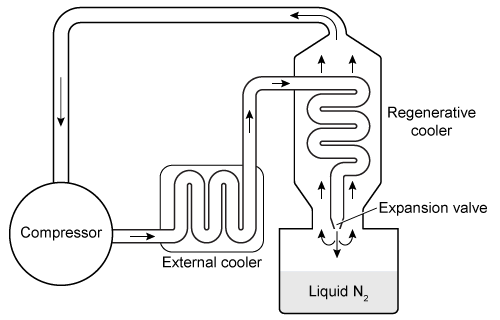 Figure 1 Hampson-Linde cycle apparatus used to liquefy nitrogenThe cycle begins by compressing nitrogen gas and forcing it through a coil in an external cooler that contains dry ice. The gas proceeds to a heat exchanger, where it cools further due to the countercurrent heat exchange with colder nitrogen gas returning from a later stage of the cycle; this process is known as regenerative cooling. The gas is subsequently forced through a narrow valve, where it expands and cools significantly upon exiting. As a result, a portion of the gas becomes liquefied.The temperature change of the gas exiting the valve is described by the Joule-Thomson effect, which occurs without heat transfer with the surroundings. Finally, the liquefied nitrogen is collected, and the remaining gas is sent through the regenerative cooler back to the compressor to reenter the cycle. The physical properties of nitrogen are given in Table 1.Table 1 Thermal Properties of Nitrogen
 -The compressor exerts a pressure of 400 Pa to compress nitrogen gas from 3 L to 1 L. If no heat transfer occurs, how much will the internal energy of the gas change? (Note: 1 m3 = 1000 L.)
Figure 1 Hampson-Linde cycle apparatus used to liquefy nitrogenThe cycle begins by compressing nitrogen gas and forcing it through a coil in an external cooler that contains dry ice. The gas proceeds to a heat exchanger, where it cools further due to the countercurrent heat exchange with colder nitrogen gas returning from a later stage of the cycle; this process is known as regenerative cooling. The gas is subsequently forced through a narrow valve, where it expands and cools significantly upon exiting. As a result, a portion of the gas becomes liquefied.The temperature change of the gas exiting the valve is described by the Joule-Thomson effect, which occurs without heat transfer with the surroundings. Finally, the liquefied nitrogen is collected, and the remaining gas is sent through the regenerative cooler back to the compressor to reenter the cycle. The physical properties of nitrogen are given in Table 1.Table 1 Thermal Properties of Nitrogen
-The compressor exerts a pressure of 400 Pa to compress nitrogen gas from 3 L to 1 L. If no heat transfer occurs, how much will the internal energy of the gas change? (Note: 1 m3 = 1000 L.) (Multiple Choice)
4.8/5 (89)
(89) A 100-g block of iron at 31°C is submerged in 50 g of water at 25°C in a thermally insulated container. If the temperature of the system reaches equilibrium at 26°C, what is the specific heat of iron? (Note: The specific heat of water is 4.2 J/(g⋅°C).)
(Multiple Choice)
4.9/5 (86)
(86) A cube with a side length of 5 cm floats on the surface of water. If 4/5 of the cube volume floats above the surface of the water, what is the density of the cube? (Note: Density of water = 1,000 kg/m3.)
(Multiple Choice)
4.8/5 (91)
(91) Passage
In the event of end-stage heart failure, a left ventricular assist device (LVAD) can be used as a heart transplant bridge to keep a patient alive. The first iterations of LVADs were pulsatile and mimicked the physiological pumping action of the heart (Figure 1).
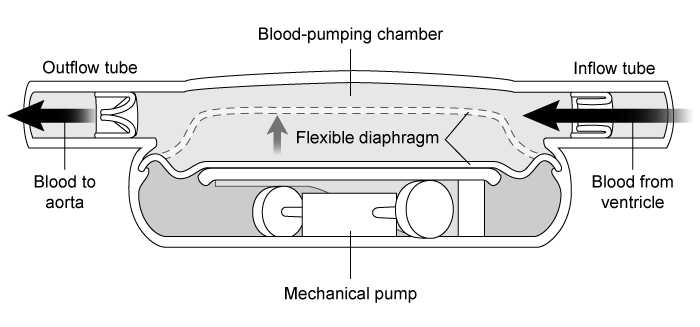 Figure 1 A pulsatile-flow LVAD schematicA pulsatile-flow LVAD assists ventricular systole by mechanically pumping blood from a weakened left ventricle into the aorta through a pair of one-way valves. The pressure differential ΔP generated by the pump is related to cardiac output (CO) and vascular resistance (VR):ΔP = CO × VREquation 1The efficiency and performance of the heart (or LVAD) can be determined by the patient's cardiac pressure-volume (PV) loop. A cardiac PV loop plots the pressure and volume of the blood in the left ventricle throughout a single cardiac cycle (Figure 2).
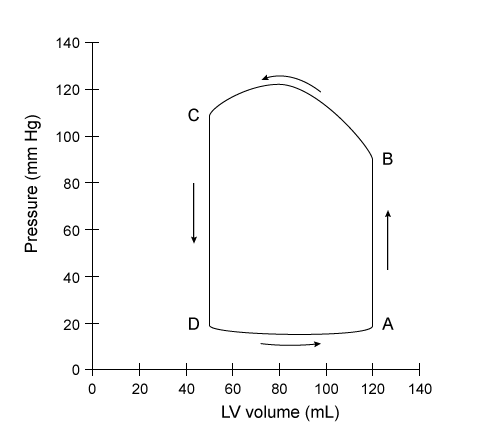 Figure 2 Cardiac PV Loop of a pulsatile-flow LVADBlood pressure is often represented by only two numbers: arterial systolic and diastolic pressures. A more detailed representation of blood pressures is shown in a blood pressure profile, which graphs the blood pressure throughout the length of the different vessel groups (Figure 3). Multiple pressure fluctuations are shown within a vessel because the pressure is traced across multiple cardiac cycles.
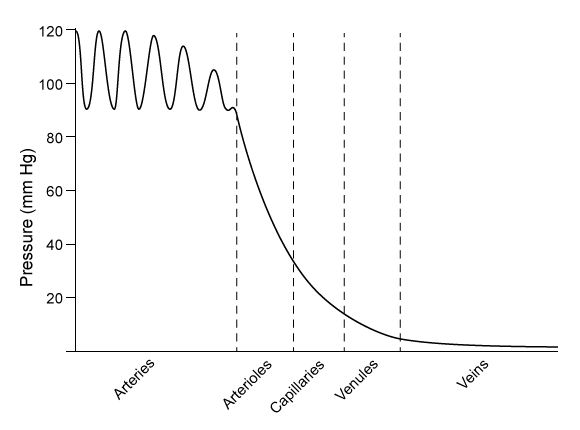 Figure 3 Blood pressure profile of the different vessels
-
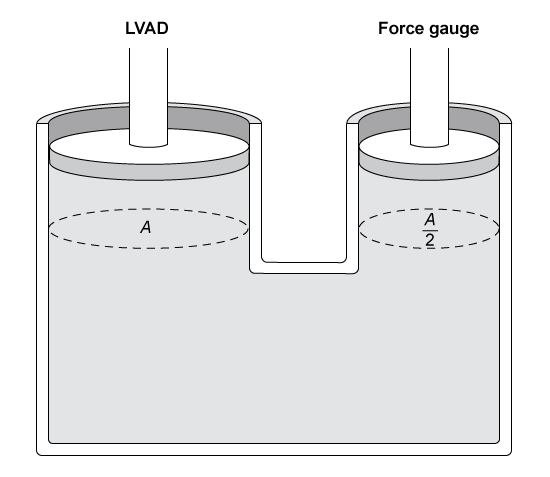 In the above figure, an LVAD pump is placed at one end of a "U"-shaped container, and a force gauge is placed at the other end. If the container is filled with an incompressible fluid, what is the ratio of the force measured by the force gauge to the force exerted by the LVAD?
Figure 1 A pulsatile-flow LVAD schematicA pulsatile-flow LVAD assists ventricular systole by mechanically pumping blood from a weakened left ventricle into the aorta through a pair of one-way valves. The pressure differential ΔP generated by the pump is related to cardiac output (CO) and vascular resistance (VR):ΔP = CO × VREquation 1The efficiency and performance of the heart (or LVAD) can be determined by the patient's cardiac pressure-volume (PV) loop. A cardiac PV loop plots the pressure and volume of the blood in the left ventricle throughout a single cardiac cycle (Figure 2).
Figure 2 Cardiac PV Loop of a pulsatile-flow LVADBlood pressure is often represented by only two numbers: arterial systolic and diastolic pressures. A more detailed representation of blood pressures is shown in a blood pressure profile, which graphs the blood pressure throughout the length of the different vessel groups (Figure 3). Multiple pressure fluctuations are shown within a vessel because the pressure is traced across multiple cardiac cycles.
Figure 3 Blood pressure profile of the different vessels
- In the above figure, an LVAD pump is placed at one end of a "U"-shaped container, and a force gauge is placed at the other end. If the container is filled with an incompressible fluid, what is the ratio of the force measured by the force gauge to the force exerted by the LVAD? (Multiple Choice)
4.7/5 (78)
(78) Passage
A student performed an experiment to determine the energy content of a sample of potato chips. The chips were blended and then freeze-dried to remove moisture from the sample. Freeze-drying, or lyophilisation, is the preferred dehydration process for food calorimetry due to its minimal impact on nutritional content. Lyophilisation removes water from frozen food samples at low pressure through sublimation. The water is later collected in a cooled condensation chamber to prevent damage to any electric components.After freeze-drying, the sample was ground into a dry homogenous powder. A 1-g sample of the powder was placed in a bomb cell, an enclosed steel-walled container, and pressurized to 25 atm with pure oxygen to ensure complete combustion. The bomb cell was submerged in 500 g of water at room temperature (25°C) in an enclosed and thermally insulated calorimetry device. The sample was combusted using an electric fuse. The temperature of the surrounding water was measured with a glass thermometer every 30 s for several minutes (Figure 1).
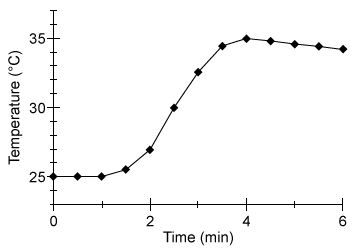 Figure 1 Temperature of the water in the bomb calorimeterThe energy content of food is given in units of dietary calories (Cal), which is equal to 4.185 kJ, or 1,000 gram calories (cal). A gram calorie is the amount of energy required to increase 1 g of water by 1°C.
Adapted from Jumpertz R, Venti CA, Le DS, et al., Food label accuracy of common snack foods. Obesity 2013 Wiley-Blackwell.
-For the combustion reaction of the sample into CO2 (g) and H2O (g) in the bomb cell:
Figure 1 Temperature of the water in the bomb calorimeterThe energy content of food is given in units of dietary calories (Cal), which is equal to 4.185 kJ, or 1,000 gram calories (cal). A gram calorie is the amount of energy required to increase 1 g of water by 1°C.
Adapted from Jumpertz R, Venti CA, Le DS, et al., Food label accuracy of common snack foods. Obesity 2013 Wiley-Blackwell.
-For the combustion reaction of the sample into CO2 (g) and H2O (g) in the bomb cell: (Multiple Choice)
4.7/5 (67)
(67) Passage
Black holes have played an important part in astrophysics for the last half-century. A black hole is a region of space where the force of gravity is especially strong and gravitational potential energy U is very large. Analogous to the electrostatic potential energy associated with electrical charges, U is defined as the work required to move an object of mass m from an infinite distance to a point at radial distance r within the gravitational field of a second mass M as given by
Equation 1where G is the gravitational constant. Near a black hole, the gravitational potential energy can become so negative that not even light has enough energy to escape the black hole's gravity.Escape velocity can be determined by launching an object of mass m with velocity v to an infinite radial distance from the surface of a central mass M (eg, a star or a planet) with radius R. For a black hole to exist, the escape velocity must be equal to the speed of light.Scientists have thoroughly studied the physics of black holes. Stars near the center of our galaxy have been observed to orbit an extremely massive, invisible object (millions of times more massive than our Sun) that is almost certainly a black hole. The orbital angular velocity ω of a star is defined as
ω=360°⋅fEquation 2where f is the frequency of rotation in hertz (Hz). Likewise, black holes are not merely static masses but are often observed to rotate about their own axis. The interaction between the rotation of a black hole and matter falling into the hole is suspected to form powerful beams (jets) of ionized matter that project away from the black hole along its axis of rotation. Nevertheless, many aspects of how these jets are formed remains a mystery. Black holes will remain a fruitful area for research far into the future.
-An object is launched with a one-time burst of propulsion away from the surface of a planet with no atmosphere. Which of the following best describes the changes that occur as the object moves away from the planet's surface?
Equation 1where G is the gravitational constant. Near a black hole, the gravitational potential energy can become so negative that not even light has enough energy to escape the black hole's gravity.Escape velocity can be determined by launching an object of mass m with velocity v to an infinite radial distance from the surface of a central mass M (eg, a star or a planet) with radius R. For a black hole to exist, the escape velocity must be equal to the speed of light.Scientists have thoroughly studied the physics of black holes. Stars near the center of our galaxy have been observed to orbit an extremely massive, invisible object (millions of times more massive than our Sun) that is almost certainly a black hole. The orbital angular velocity ω of a star is defined as
ω=360°⋅fEquation 2where f is the frequency of rotation in hertz (Hz). Likewise, black holes are not merely static masses but are often observed to rotate about their own axis. The interaction between the rotation of a black hole and matter falling into the hole is suspected to form powerful beams (jets) of ionized matter that project away from the black hole along its axis of rotation. Nevertheless, many aspects of how these jets are formed remains a mystery. Black holes will remain a fruitful area for research far into the future.
-An object is launched with a one-time burst of propulsion away from the surface of a planet with no atmosphere. Which of the following best describes the changes that occur as the object moves away from the planet's surface? (Multiple Choice)
4.9/5 (84)
(84) Passage
Sound waves propagate through many conducting structures in the ear before they are transduced into neuronal signals. When sound waves reach the fluid-filled cochlea, they are detected by hair cells lining the basilar membrane. The cochlear spiral can be modeled as a resonator system because each section of the basilar membrane is sensitive to a specific frequency (Figure 1).
Figure 1 Amplitude pattern of the basilar membrane for different frequenciesPresbycusis (age-related hearing loss) results from a combination of factors that lessens an individual's mechanical and/or neurological sensitivity to sound. Pure tone audiometry (PTA) is used to determine an individual's ability to detect different sound frequencies and can be used to evaluate presbycusis. A "pure" tone is characterized by a single sinusoidal waveform. An audiogram plots the relative intensity required of a given frequency to be detected by the individual (Figure 2).
Figure 2 Audiogram of an elderly patient exhibiting presbycusis
-When sound passes from air to the tympanic membrane, what changes occur to the sound's intensity and velocity?
Figure 1 Amplitude pattern of the basilar membrane for different frequenciesPresbycusis (age-related hearing loss) results from a combination of factors that lessens an individual's mechanical and/or neurological sensitivity to sound. Pure tone audiometry (PTA) is used to determine an individual's ability to detect different sound frequencies and can be used to evaluate presbycusis. A "pure" tone is characterized by a single sinusoidal waveform. An audiogram plots the relative intensity required of a given frequency to be detected by the individual (Figure 2).
Figure 2 Audiogram of an elderly patient exhibiting presbycusis
-When sound passes from air to the tympanic membrane, what changes occur to the sound's intensity and velocity? (Multiple Choice)
5.0/5 (72)
(72) 
Filters
- Essay(0)
- Multiple Choice(0)
- Short Answer(0)
- True False(0)
- Matching(0)