



 Chat with AI
Exam 35: Japan, 1333 to 1980

Exam 1: Art in the Stone Age50 Questions
Exam 2: Ancient Mesopotamia and Persia50 Questions
Exam 3: Egypt From Narmer to Cleopatra50 Questions
Exam 4: The Prehistoric Aegean50 Questions
Exam 5: Ancient Greece50 Questions
Exam 6: The Etruscans50 Questions
Exam 7: The Roman Empire50 Questions
Exam 8: Late Antiquity50 Questions
Exam 9: Byzantium50 Questions
Exam 10: The Islamic World50 Questions
Exam 11: Early Medieval Europe50 Questions
Exam 12: Romanesque Europe50 Questions
Exam 13: Gothic Europe North of the Alps50 Questions
Exam 14: Late Medieval Italy50 Questions
Exam 15: South and Southeast Asia Before 120050 Questions
Exam 16: China and Korea to 127950 Questions
Exam 17: Japan Before 133350 Questions
Exam 18: Native American Cultures Before 130049 Questions
Exam 19: Africa Before 180050 Questions
Exam 20: Late Medieval and Early Renaissance Northern Europe50 Questions
Exam 21: The Renaissance in Quattrocento Italy50 Questions
Exam 22: Renaissance and Mannerism in Cinquecento Italy50 Questions
Exam 23: High Renaissance and Mannerism in Northern Europe and Spain50 Questions
Exam 24: The Baroque in Italy and Spain50 Questions
Exam 25: The Baroque in Northern Europe50 Questions
Exam 26: Rococo to Neoclassicism: the 18th Century in Europe and America50 Questions
Exam 27: Romanticism, Realism, Photography: Europe and America, 1800 to 187050 Questions
Exam 28: Impressionism, Post-Impressionism, Symbolism: Europe and America, 1870 to 190050 Questions
Exam 29: Modernism in Europe, 1900 to 194550 Questions
Exam 30: Modernism in the United States and Mexico, 1900 to 194550 Questions
Exam 31: Modernism and Postmodernism in Europe and America, 1945 to 198050 Questions
Exam 32: Contemporary Art Worldwide50 Questions
Exam 33: South and Southeast Asia, 1200 to 198050 Questions
Exam 34: China and Korea, 1279 to 198050 Questions
Exam 35: Japan, 1333 to 198050 Questions
Exam 36: Native American Cultures, 1300 to 198050 Questions
Exam 37: Oceania Before 198050 Questions
Exam 38: Africa, 1800 to 198050 Questions
Select questions type


Who was the primary patron of Kano Masanobu, who founded the Kano style?
(Multiple Choice)
4.7/5  (74)
(74)
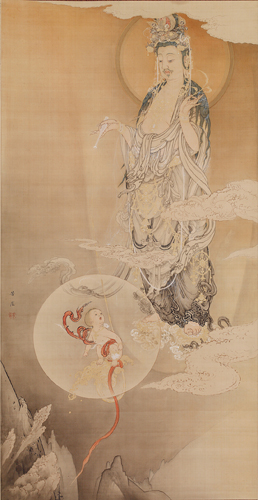 What is the subject of this nihonga painting by Kano Hogai?
 (Multiple Choice)
5.0/5 (82)
(82) What is the term for an alcove used to display prized objects or hang scrolls of painting or calligraphy?
(Multiple Choice)
4.8/5 (68)
(68) The aesthetic characteristics of wabi and sabi are most evident in which artistic genre?
(Multiple Choice)
4.8/5 (79)
(79) Which of the following would NOT be a subject of the works, referred to as ukiyo-e, produced by the urban counterculture of the Edo period?
(Multiple Choice)
4.8/5 (77)
(77)
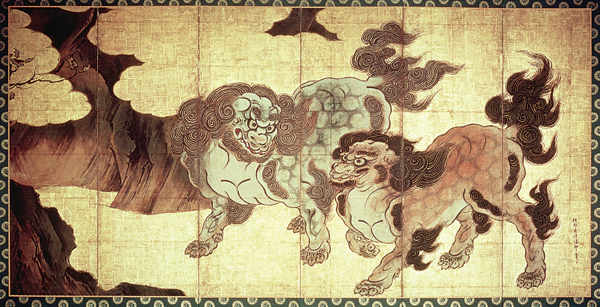 What animal is depicted on this Momoyama period six-panel screen?
 (Multiple Choice)
4.8/5 (81)
(81) Which school of painting style featured vivid color, extensive use of gold and silver, and decorative patterns?
(Multiple Choice)
4.9/5 (82)
(82) Which formative figure in Japan's folk art movement promoted an ideal of beauty in functional objects made of natural materials?
(Multiple Choice)
4.8/5 (87)
(87) Six-panel paintings used as sliding doors are referred to by which Japanese term?
(Multiple Choice)
4.9/5 (84)
(84)
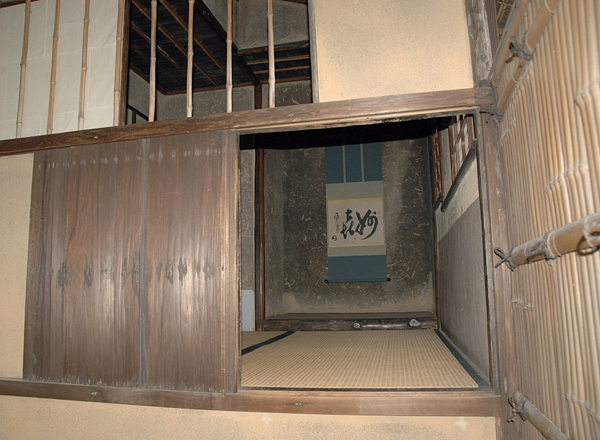 In which period was the Taian teahouse built at the Myokian temple in Kyoto?
 (Multiple Choice)
4.9/5 (86)
(86) Which two Japanese printmakers were acclaimed for landscapes?
(Multiple Choice)
4.8/5 (80)
(80) With the rise of the wabi aesthetic, the Chinese objects associated with the tea ceremony utensils were replaced by which of the following?
(Multiple Choice)
4.7/5 (84)
(84) What technique requires the painter to visualize the image, load the brush with ink, and then create the painting with rapid strokes and some dripping of the ink onto the paper?
(Multiple Choice)
4.9/5 (80)
(80) Which of the following describes a characteristic trait of Zen Buddhism?
(Multiple Choice)
4.7/5 (75)
(75) Which artist designed the print series entitled Eight Views of the Parlor ?
(Multiple Choice)
4.9/5 (97)
(97) Which of the following groups showed the greatest affinity for Zen teachings, which emphasized rigorous discipline and personal responsibility?
(Multiple Choice)
4.8/5 (77)
(77)
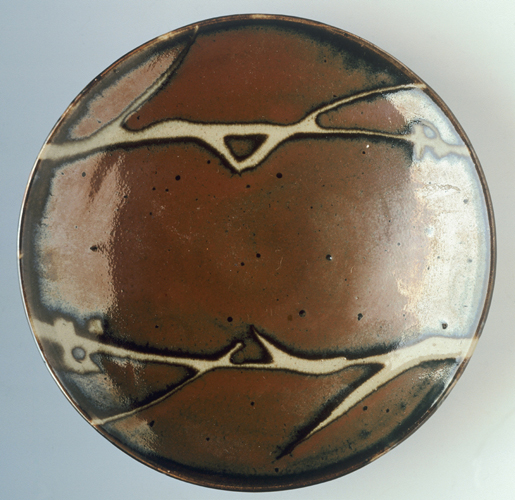 Which leading figure in the folk art movement of modern Japan created this work?
 (Multiple Choice)
4.8/5 (84)
(84) 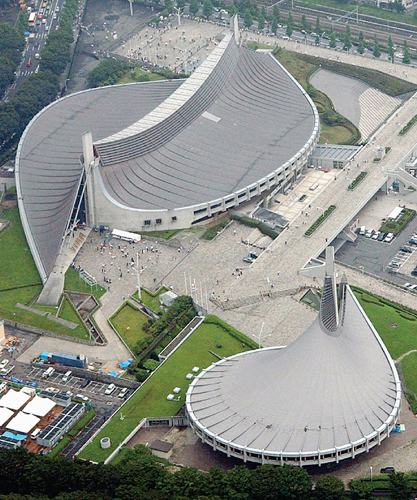 In what period were the Japanese Olympic stadiums built?
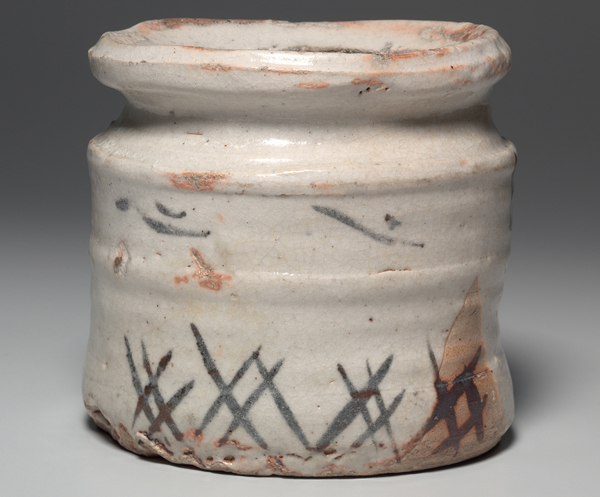 What term is used to describe this tea-ceremony water jar of the Momoyama period?
 (Multiple Choice)
4.7/5 (71)
(71)
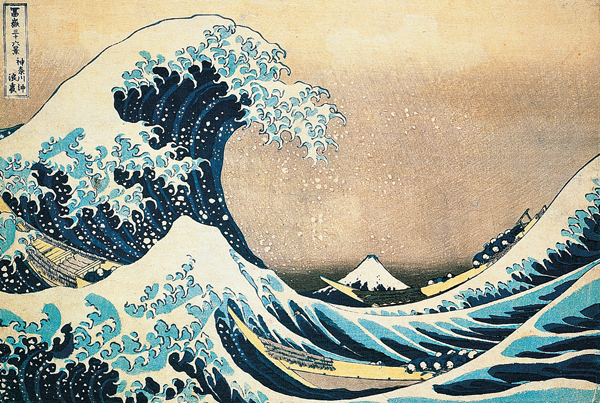 In what medium did Katsushika Hokusai create The Great Wave off Kanagawa ?
 (Multiple Choice)
4.8/5 (85)
(85) 
Filters
- Essay(0)
- Multiple Choice(0)
- Short Answer(0)
- True False(0)
- Matching(0)