



 Chat with AI
Exam 33: South and Southeast Asia, 1200 to 1980

Exam 1: Art in the Stone Age50 Questions
Exam 2: Ancient Mesopotamia and Persia50 Questions
Exam 3: Egypt From Narmer to Cleopatra50 Questions
Exam 4: The Prehistoric Aegean50 Questions
Exam 5: Ancient Greece50 Questions
Exam 6: The Etruscans50 Questions
Exam 7: The Roman Empire50 Questions
Exam 8: Late Antiquity50 Questions
Exam 9: Byzantium50 Questions
Exam 10: The Islamic World50 Questions
Exam 11: Early Medieval Europe50 Questions
Exam 12: Romanesque Europe50 Questions
Exam 13: Gothic Europe North of the Alps50 Questions
Exam 14: Late Medieval Italy50 Questions
Exam 15: South and Southeast Asia Before 120050 Questions
Exam 16: China and Korea to 127950 Questions
Exam 17: Japan Before 133350 Questions
Exam 18: Native American Cultures Before 130049 Questions
Exam 19: Africa Before 180050 Questions
Exam 20: Late Medieval and Early Renaissance Northern Europe50 Questions
Exam 21: The Renaissance in Quattrocento Italy50 Questions
Exam 22: Renaissance and Mannerism in Cinquecento Italy50 Questions
Exam 23: High Renaissance and Mannerism in Northern Europe and Spain50 Questions
Exam 24: The Baroque in Italy and Spain50 Questions
Exam 25: The Baroque in Northern Europe50 Questions
Exam 26: Rococo to Neoclassicism: the 18th Century in Europe and America50 Questions
Exam 27: Romanticism, Realism, Photography: Europe and America, 1800 to 187050 Questions
Exam 28: Impressionism, Post-Impressionism, Symbolism: Europe and America, 1870 to 190050 Questions
Exam 29: Modernism in Europe, 1900 to 194550 Questions
Exam 30: Modernism in the United States and Mexico, 1900 to 194550 Questions
Exam 31: Modernism and Postmodernism in Europe and America, 1945 to 198050 Questions
Exam 32: Contemporary Art Worldwide50 Questions
Exam 33: South and Southeast Asia, 1200 to 198050 Questions
Exam 34: China and Korea, 1279 to 198050 Questions
Exam 35: Japan, 1333 to 198050 Questions
Exam 36: Native American Cultures, 1300 to 198050 Questions
Exam 37: Oceania Before 198050 Questions
Exam 38: Africa, 1800 to 198050 Questions
Select questions type


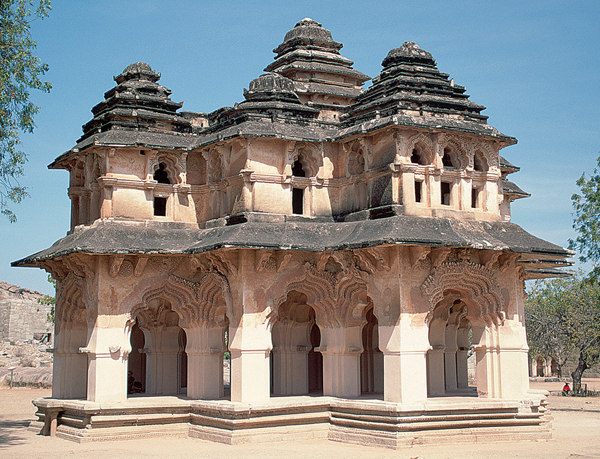 The Lotus Mahal was a sacred center for which group?

The architect of the Taj Mahal achieved a balance between verticality and horizontality by doing which of the following?
(Multiple Choice)
4.9/5  (61)
(61) What architectural component was NOT included in the architectural complex of Vijayanagara's sacred center?
(Multiple Choice)
4.8/5 (80)
(80) What process allowed the manuscript painter to transfer the preliminary sketch onto the paper?
(Multiple Choice)
4.7/5 (92)
(92) The Emerald Buddha from northern Thailand is probably made of what material?
(Multiple Choice)
4.8/5 (82)
(82)
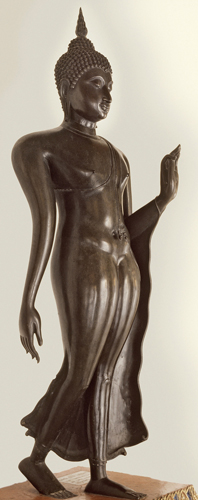 Which modern country developed the walking-Buddha type statue, with its distinctive approach to human anatomy?
 (Multiple Choice)
4.9/5 (71)
(71) In depicting the tale of Akbar and the wild elephant, which of the following devices did Basawan utilize to detail the chaos and danger?
(Multiple Choice)
4.9/5 (80)
(80) In Krishna and Radha in a Pavilion , which of the following was a setting for the lovers' tryst?
(Multiple Choice)
4.9/5 (82)
(82)
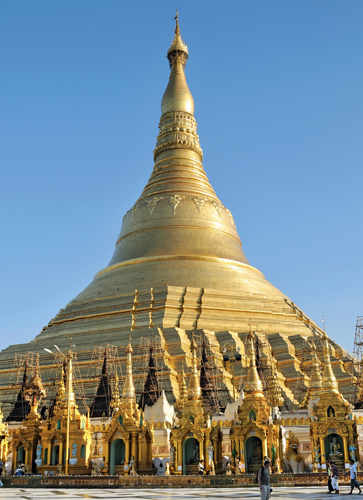 What is the name of this structure, which is said to hold several hairs of the Buddha that he gave to two Burmese brothers just after his enlightenment?
 (Multiple Choice)
4.9/5 (87)
(87) Which of the following describes the architectural design used for early Islamic mausoleums In India?
(Multiple Choice)
4.8/5 (77)
(77) Which literary work inspired the production of hundreds of miniature paintings by Rajput artists in the 15th century?
(Multiple Choice)
5.0/5 (74)
(74) Which of the following religions was growing as a political and religious force in 13th-century India?
(Multiple Choice)
4.8/5 (70)
(70)
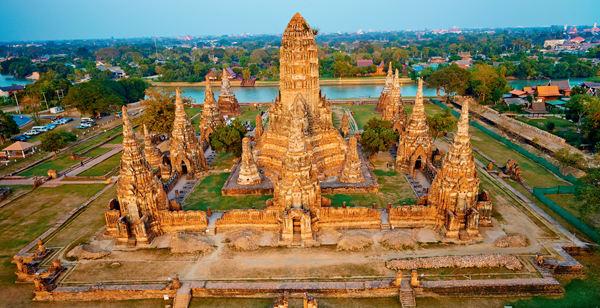 What term do art historian use for the stupa towers of Thai temple complexes such as the one at Wat Chai Wattanaram?
 (Multiple Choice)
4.7/5 (93)
(93) Who did the Hindu painter Bichitr include in his portrait of Jahangir?
(Multiple Choice)
4.8/5 (84)
(84)
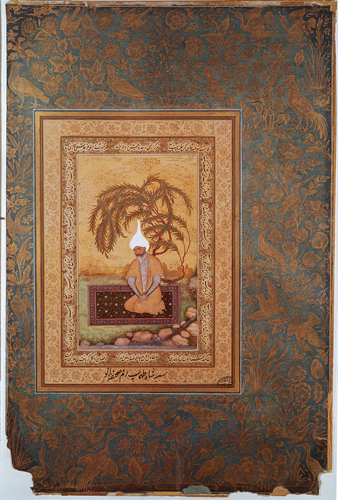 What makes the artist who painted Shah Tamasp unique among the trained Mughal artists of the time?
 (Multiple Choice)
4.7/5 (79)
(79) The Portuguese Jesuits presented the Royal Polyglot Bible to which ruler?
(Multiple Choice)
4.9/5 (77)
(77) Emperor Humayun persuaded two Persian masters to move to his imperial court and teach which of the following?
(Multiple Choice)
4.9/5 (82)
(82) 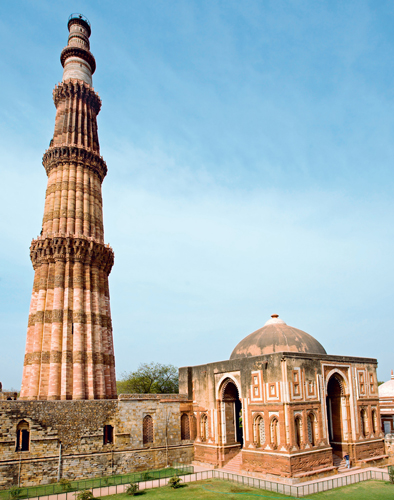 In what modern city is the Qutb Minar located?

Filters
- Essay(0)
- Multiple Choice(0)
- Short Answer(0)
- True False(0)
- Matching(0)