



 Chat with AI
Exam 3: Egypt From Narmer to Cleopatra

Exam 1: Art in the Stone Age50 Questions
Exam 2: Ancient Mesopotamia and Persia50 Questions
Exam 3: Egypt From Narmer to Cleopatra50 Questions
Exam 4: The Prehistoric Aegean50 Questions
Exam 5: Ancient Greece50 Questions
Exam 6: The Etruscans50 Questions
Exam 7: The Roman Empire50 Questions
Exam 8: Late Antiquity50 Questions
Exam 9: Byzantium50 Questions
Exam 10: The Islamic World50 Questions
Exam 11: Early Medieval Europe50 Questions
Exam 12: Romanesque Europe50 Questions
Exam 13: Gothic Europe North of the Alps50 Questions
Exam 14: Late Medieval Italy50 Questions
Exam 15: South and Southeast Asia Before 120050 Questions
Exam 16: China and Korea to 127950 Questions
Exam 17: Japan Before 133350 Questions
Exam 18: Native American Cultures Before 130049 Questions
Exam 19: Africa Before 180050 Questions
Exam 20: Late Medieval and Early Renaissance Northern Europe50 Questions
Exam 21: The Renaissance in Quattrocento Italy50 Questions
Exam 22: Renaissance and Mannerism in Cinquecento Italy50 Questions
Exam 23: High Renaissance and Mannerism in Northern Europe and Spain50 Questions
Exam 24: The Baroque in Italy and Spain50 Questions
Exam 25: The Baroque in Northern Europe50 Questions
Exam 26: Rococo to Neoclassicism: the 18th Century in Europe and America50 Questions
Exam 27: Romanticism, Realism, Photography: Europe and America, 1800 to 187050 Questions
Exam 28: Impressionism, Post-Impressionism, Symbolism: Europe and America, 1870 to 190050 Questions
Exam 29: Modernism in Europe, 1900 to 194550 Questions
Exam 30: Modernism in the United States and Mexico, 1900 to 194550 Questions
Exam 31: Modernism and Postmodernism in Europe and America, 1945 to 198050 Questions
Exam 32: Contemporary Art Worldwide50 Questions
Exam 33: South and Southeast Asia, 1200 to 198050 Questions
Exam 34: China and Korea, 1279 to 198050 Questions
Exam 35: Japan, 1333 to 198050 Questions
Exam 36: Native American Cultures, 1300 to 198050 Questions
Exam 37: Oceania Before 198050 Questions
Exam 38: Africa, 1800 to 198050 Questions
Select questions type


Many of the temples of the New Kingdom followed which sort of plan?
(Multiple Choice)
4.8/5  (67)
(67) Which of the following is a drawback of the fresco secco technique?
(Multiple Choice)
4.8/5 (93)
(93) What is the most likely explanation for the portrayal of Akhenaton's body type?
(Multiple Choice)
4.9/5 (90)
(90)
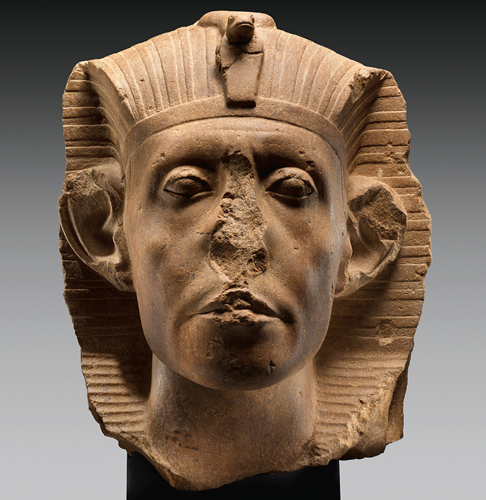 The slightly pessimistic expression of this figure is an indication that it was made during which period?
 (Multiple Choice)
4.9/5 (74)
(74) What substance fills most of the interior of the Great Pyramid at Gizeh?
(Multiple Choice)
4.8/5 (93)
(93) 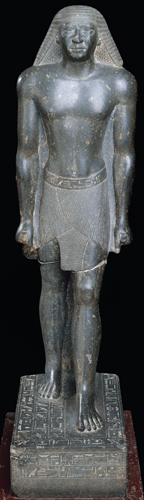 What is the name of the subject of this portrait?
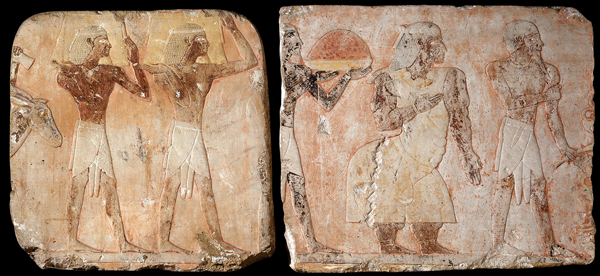 What is the subject of this painted relief?
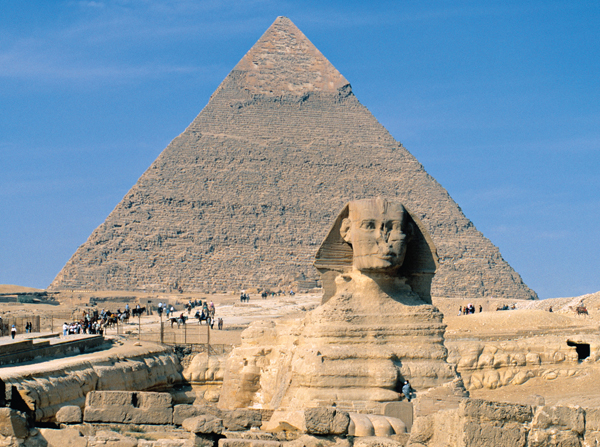 Where did the stone for this monument come from?
Aside from their funerary function, what was the intended message of the pyramids?
(Multiple Choice)
4.7/5 (80)
(80) Which terms best describe the majority of Egyptian art-with the exception of the Amarna period?
(Multiple Choice)
4.7/5 (76)
(76) What is the shape of the column capitals in the hypostyle hall at Karnak?
(Multiple Choice)
4.8/5 (68)
(68) What term describes the system of proportions used throughout the history of Egyptian art?
(Multiple Choice)
4.8/5 (79)
(79)
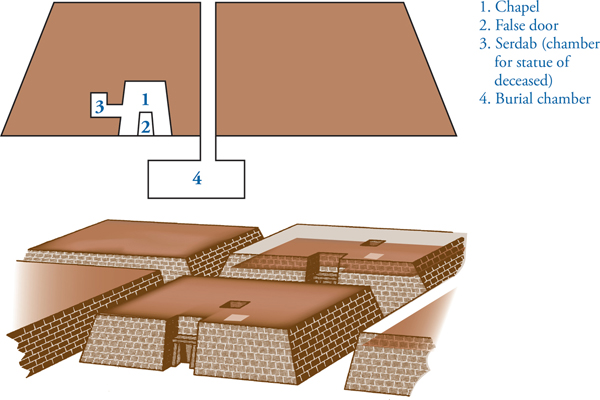 What architectural form most influenced the shape of the monument shown here?
 (Multiple Choice)
4.9/5 (77)
(77) What Old Kingdom structure adjoined the pyramid and was the site of ceremonies honoring the dead king?
(Multiple Choice)
4.7/5 (82)
(82) Which site has yielded significant evidence for Predynastic art?
(Multiple Choice)
4.8/5 (83)
(83) What detail of the kneeling statue of Hatshepsut indicates her status as pharaoh?
(Multiple Choice)
4.9/5 (69)
(69) Why is the palette of King Narmer unique among surviving early dynastic artworks?
(Multiple Choice)
4.9/5 (80)
(80) The new androgynous image of the pharaoh Akhenaton is considered by some art historians to be an attempt to make him the manifestation of what being?
(Multiple Choice)
4.9/5 (84)
(84) 
Filters
- Essay(0)
- Multiple Choice(0)
- Short Answer(0)
- True False(0)
- Matching(0)