



 Chat with AI
Exam 16: China and Korea to 1279

Exam 1: Art in the Stone Age50 Questions
Exam 2: Ancient Mesopotamia and Persia50 Questions
Exam 3: Egypt From Narmer to Cleopatra50 Questions
Exam 4: The Prehistoric Aegean50 Questions
Exam 5: Ancient Greece50 Questions
Exam 6: The Etruscans50 Questions
Exam 7: The Roman Empire50 Questions
Exam 8: Late Antiquity50 Questions
Exam 9: Byzantium50 Questions
Exam 10: The Islamic World50 Questions
Exam 11: Early Medieval Europe50 Questions
Exam 12: Romanesque Europe50 Questions
Exam 13: Gothic Europe North of the Alps50 Questions
Exam 14: Late Medieval Italy50 Questions
Exam 15: South and Southeast Asia Before 120050 Questions
Exam 16: China and Korea to 127950 Questions
Exam 17: Japan Before 133350 Questions
Exam 18: Native American Cultures Before 130049 Questions
Exam 19: Africa Before 180050 Questions
Exam 20: Late Medieval and Early Renaissance Northern Europe50 Questions
Exam 21: The Renaissance in Quattrocento Italy50 Questions
Exam 22: Renaissance and Mannerism in Cinquecento Italy50 Questions
Exam 23: High Renaissance and Mannerism in Northern Europe and Spain50 Questions
Exam 24: The Baroque in Italy and Spain50 Questions
Exam 25: The Baroque in Northern Europe50 Questions
Exam 26: Rococo to Neoclassicism: the 18th Century in Europe and America50 Questions
Exam 27: Romanticism, Realism, Photography: Europe and America, 1800 to 187050 Questions
Exam 28: Impressionism, Post-Impressionism, Symbolism: Europe and America, 1870 to 190050 Questions
Exam 29: Modernism in Europe, 1900 to 194550 Questions
Exam 30: Modernism in the United States and Mexico, 1900 to 194550 Questions
Exam 31: Modernism and Postmodernism in Europe and America, 1945 to 198050 Questions
Exam 32: Contemporary Art Worldwide50 Questions
Exam 33: South and Southeast Asia, 1200 to 198050 Questions
Exam 34: China and Korea, 1279 to 198050 Questions
Exam 35: Japan, 1333 to 198050 Questions
Exam 36: Native American Cultures, 1300 to 198050 Questions
Exam 37: Oceania Before 198050 Questions
Exam 38: Africa, 1800 to 198050 Questions
Select questions type


The accomplishments of the Korean Unified Sillan Kingdom are contemporaneous with which Chinese dynasty?
(Multiple Choice)
4.7/5  (70)
(70) Which style of 12th-century Korean pottery was recognized worldwide and highly sought after?
(Multiple Choice)
4.8/5 (87)
(87) 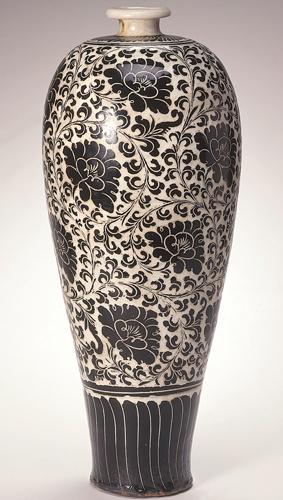 What technique was used to decorate this vase?
One of the most important goals of the Chinese artist was which of the following?
(Multiple Choice)
4.8/5 (87)
(87)
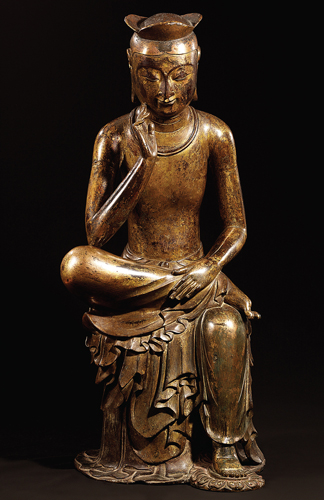 This meditating Bodhisattva was made at the time of the introduction of Buddhism to which country?
 (Multiple Choice)
4.9/5 (93)
(93) Which of the following would explain the artist's decision to depict an exemplar moral and political virtue in Yan Liben's The Thirteen Emperors ?
(Multiple Choice)
4.9/5 (79)
(79) What is the function of the silk textile found in the tomb of the Marquise of Dai?
(Multiple Choice)
4.7/5 (89)
(89)
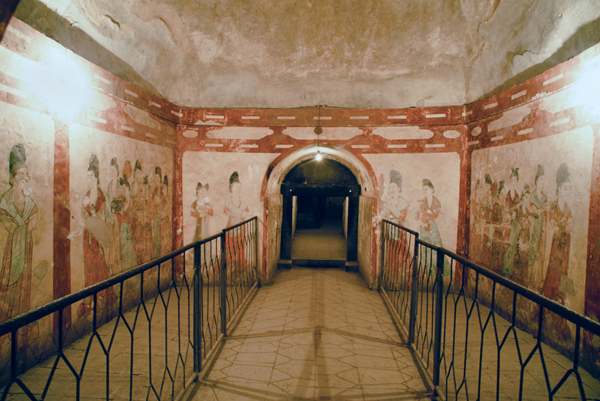 During which dynasty were the tomb of Princess Yongtai and its paintings created?
 (Multiple Choice)
4.8/5 (70)
(70) Ethnically, the Koreans are related to which of the following peoples?
(Multiple Choice)
4.7/5 (76)
(76) Which complex in China was the site of hundreds of rock-cut shrines and sculptures during the Northern Wei and the Tang dynasties?
(Multiple Choice)
4.9/5 (72)
(72) In the Vairocana Buddha, the Tang sculptors have repressed and replaced surface detail with which of the following?
(Multiple Choice)
4.9/5 (70)
(70) A broad range of subject matter, such as musicians on camel or Semitic traders, can be found in the ceramic figural tradition of which of the following?
(Multiple Choice)
4.9/5 (72)
(72) Which of the following statements best describes Shang bronze vessel work?
(Multiple Choice)
4.7/5 (74)
(74) Which Bronze Age dynasty did the 1928 excavations at Anyang reveal as a warlike and stratified society?
(Multiple Choice)
4.9/5 (85)
(85) 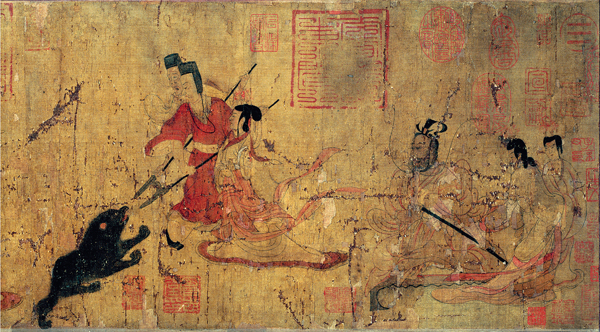 What is the title of this scene?
Which of the following would have been included in the reorganized curriculum for court artists set up by Emperor Huizong?
(Multiple Choice)
4.9/5 (70)
(70) The Chinese interest in landscape painting was most strongly influenced by which of the following?
(Multiple Choice)
5.0/5 (82)
(82) 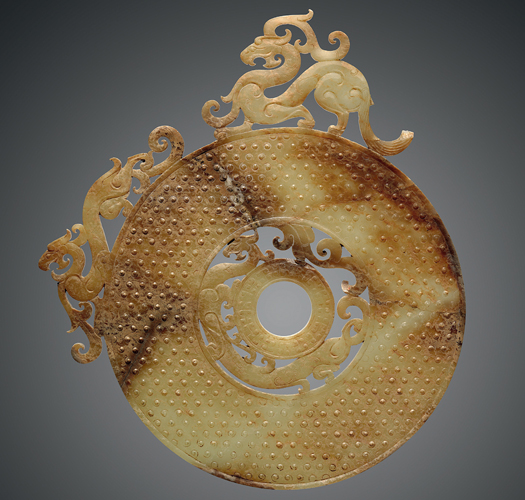 What material makes up this Chinese bi disk with dragon?
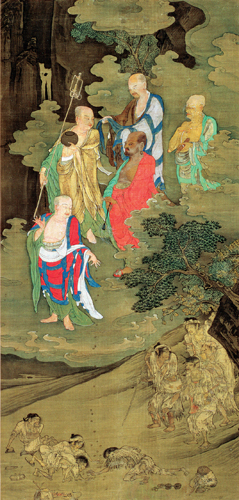 Zhou Jichang uses color in this painting for symbolic purposes, in accordance with the writings of which individual?
 (Multiple Choice)
4.8/5 (71)
(71) Which of the following Chinese works is closest in function to an Indian stupa?
(Multiple Choice)
4.8/5 (83)
(83) 
Filters
- Essay(0)
- Multiple Choice(0)
- Short Answer(0)
- True False(0)
- Matching(0)