



 Chat with AI
Exam 11: Early Medieval Europe

Exam 1: Art in the Stone Age50 Questions
Exam 2: Ancient Mesopotamia and Persia50 Questions
Exam 3: Egypt From Narmer to Cleopatra50 Questions
Exam 4: The Prehistoric Aegean50 Questions
Exam 5: Ancient Greece50 Questions
Exam 6: The Etruscans50 Questions
Exam 7: The Roman Empire50 Questions
Exam 8: Late Antiquity50 Questions
Exam 9: Byzantium50 Questions
Exam 10: The Islamic World50 Questions
Exam 11: Early Medieval Europe50 Questions
Exam 12: Romanesque Europe50 Questions
Exam 13: Gothic Europe North of the Alps50 Questions
Exam 14: Late Medieval Italy50 Questions
Exam 15: South and Southeast Asia Before 120050 Questions
Exam 16: China and Korea to 127950 Questions
Exam 17: Japan Before 133350 Questions
Exam 18: Native American Cultures Before 130049 Questions
Exam 19: Africa Before 180050 Questions
Exam 20: Late Medieval and Early Renaissance Northern Europe50 Questions
Exam 21: The Renaissance in Quattrocento Italy50 Questions
Exam 22: Renaissance and Mannerism in Cinquecento Italy50 Questions
Exam 23: High Renaissance and Mannerism in Northern Europe and Spain50 Questions
Exam 24: The Baroque in Italy and Spain50 Questions
Exam 25: The Baroque in Northern Europe50 Questions
Exam 26: Rococo to Neoclassicism: the 18th Century in Europe and America50 Questions
Exam 27: Romanticism, Realism, Photography: Europe and America, 1800 to 187050 Questions
Exam 28: Impressionism, Post-Impressionism, Symbolism: Europe and America, 1870 to 190050 Questions
Exam 29: Modernism in Europe, 1900 to 194550 Questions
Exam 30: Modernism in the United States and Mexico, 1900 to 194550 Questions
Exam 31: Modernism and Postmodernism in Europe and America, 1945 to 198050 Questions
Exam 32: Contemporary Art Worldwide50 Questions
Exam 33: South and Southeast Asia, 1200 to 198050 Questions
Exam 34: China and Korea, 1279 to 198050 Questions
Exam 35: Japan, 1333 to 198050 Questions
Exam 36: Native American Cultures, 1300 to 198050 Questions
Exam 37: Oceania Before 198050 Questions
Exam 38: Africa, 1800 to 198050 Questions
Select questions type


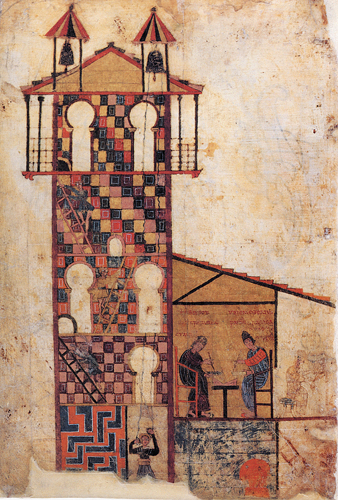 Which component of a monastic building complex is depicted in this image?
 (Multiple Choice)
4.7/5  (70)
(70)
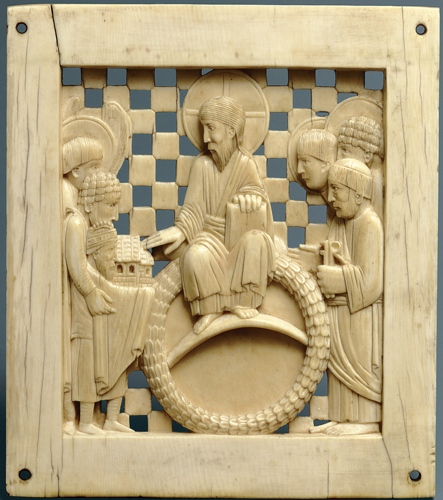 What are the technique and material of the Ottonian plaques from Magdeburg, Germany?
 (Multiple Choice)
4.9/5 (101)
(101) Two silver spoons inscribed "Saulos" and "Paulos," Paul's names before and after baptism, were discovered as part of the Sutton Hoo burial. What might be inferred from these spoons?
(Multiple Choice)
4.7/5 (74)
(74) Equestrian statues were reminders of Rome's glory. Charlemagne returned to Rome after his coronation with an equestrian statue of Theodoric. Whose statue served as the ultimate model for such equestrian portraits?
(Multiple Choice)
4.8/5 (78)
(78) The Ottonian church of Saint Cyriakus at Gernrode adds what new architectural component to the basilica form?
(Multiple Choice)
4.9/5 (80)
(80) The burial group recovered from which English site epitomizes the early medieval tradition of burying great lords with rich furnishings?
(Multiple Choice)
4.9/5 (76)
(76) In which way did the three-aisled basilica planned for the monastery of Saint Gall differ from its early Christian prototypes?
(Multiple Choice)
5.0/5 (90)
(90)
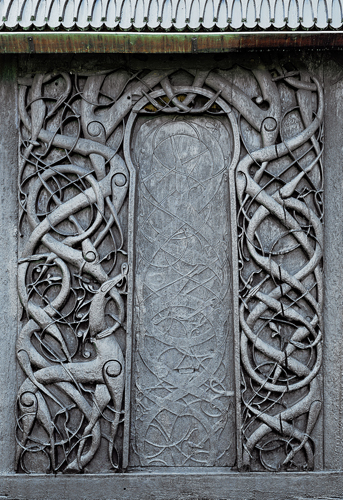 The persistence of the artistic tradition of which people is evident in the intertwining animal and plant motifs of this object?
 (Multiple Choice)
4.9/5 (73)
(73) Which best describes the color scheme and technique of the Coronation Gospels ?
(Multiple Choice)
4.9/5 (74)
(74) In the later Middle Ages, religious books were created for the private devotions of the laity. What term is given to books that contained prayers to be read at specific times during the day?
(Multiple Choice)
4.9/5 (78)
(78)
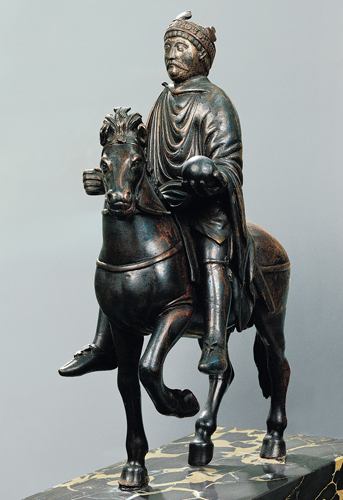 Who is depicted in this ninth-century equestrian portrait?
 (Multiple Choice)
4.9/5 (80)
(80) The plan for what church was used as the model for the palace chapel at Aachen?
(Multiple Choice)
4.7/5 (87)
(87) The art of medieval monasteries in Ireland is described by which adjective?
(Multiple Choice)
4.9/5 (83)
(83) Which of the following pairs of manuscripts are products of the monasteries of the Ottonian Empire?
(Multiple Choice)
4.7/5 (72)
(72) Which Ottonian church utilizes an alternate-support system but lacks an upper gallery?
(Multiple Choice)
4.8/5 (85)
(85)
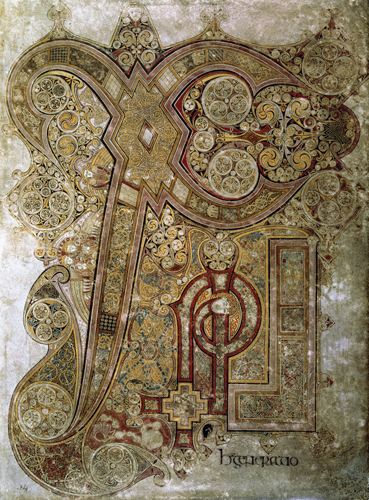 In this page from the Book of Kells, what Insular manuscript tradition is evident?
 (Multiple Choice)
4.8/5 (93)
(93) What was the most typical object of prestige adornment in the medieval period?
(Multiple Choice)
4.8/5 (86)
(86) Which of the following buildings does not have the monumental facade type referred to as a westwork?
(Multiple Choice)
4.9/5 (65)
(65)
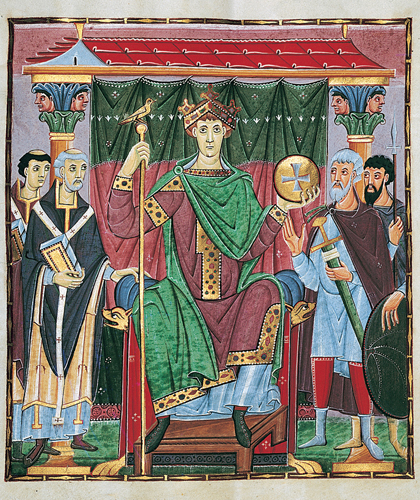 In this image of Otto III enthroned, what component symbolizes his universal authority and conforms to a Christian imperial iconographic tradition?
 (Multiple Choice)
4.8/5 (89)
(89) The alternate-support system is first found in the architecture of which period?
(Multiple Choice)
4.9/5 (74)
(74) 
Filters
- Essay(0)
- Multiple Choice(0)
- Short Answer(0)
- True False(0)
- Matching(0)