



 Chat with AI
Exam 18: International Trade and Finance

Exam 1: Introducing the Economic Way of Thinking176 Questions
Exam 2: Production Possibilities, Opportunity Cost, and Economic Growth200 Questions
Exam 3: Market Demand and Supply348 Questions
Exam 4: Markets in Action261 Questions
Exam 5: Gross Domestic Product223 Questions
Exam 6: Business Cycles and Unemployment194 Questions
Exam 7: Inflation126 Questions
Exam 8: The Keynesian Model235 Questions
Exam 9: The Keynesian Model in Action202 Questions
Exam 10: Aggregate Demand and Supply187 Questions
Exam 11: Fiscal Policy223 Questions
Exam 12: The Public Sector127 Questions
Exam 13: Federal Deficits, Surpluses, and the National Debt99 Questions
Exam 14: Money and the Federal Reserve System154 Questions
Exam 15: Money Creation243 Questions
Exam 16: Monetary Policy213 Questions
Exam 17: The Phillips Curve and Expectations Theory120 Questions
Exam 18: International Trade and Finance248 Questions
Exam 19: Economies in Transition104 Questions
Exam 20: Growth and the Less-Developed Countries117 Questions
Exam 21: Applying Graphs to Economics68 Questions
Exam 22: Consumer Surplus, Producer Surplus, and Market Efficiency68 Questions
Exam 23: the Self-Correcting Aggregate Demand and Supply Model83 Questions
Exam 24: Policy Disputes Using the Self-Correcting Aggregate Demand and Supply Model36 Questions
Select questions type


A country that has a lower opportunity cost of producing a good:
(Multiple Choice)
4.8/5  (87)
(87) The balance of trade is the value of a nation's ____________.
(Multiple Choice)
4.7/5 (86)
(86) If Dana can paint his house faster than Luke, a professional house painter, then:
(Multiple Choice)
4.8/5 (78)
(78) It is possible for a nation to have an absolute advantage in the production of a product, but not a comparative advantage in the production of the same product.
(True/False)
4.7/5 (73)
(73) An increase in the equilibrium price of Japanese yen per dollar could be caused by a(n):
(Multiple Choice)
4.8/5 (93)
(93) An appreciation in the U.S. dollar benefits which of the following groups of people?
(Multiple Choice)
4.8/5 (83)
(83) Exhibit 15-7 Foreign exchange market for U.S. dollars and British pounds 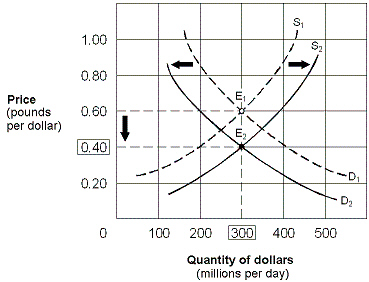 Exhibit 15-7 shows a situation in which:
 (Multiple Choice)
4.9/5 (75)
(75) Suppose a quota on foreign-made automobiles is proposed in Congress. Which of the following groups is most likely to oppose the bill?
(Multiple Choice)
4.9/5 (75)
(75) If U.S. buyers purchased $500 billion of foreign goods and foreign buyers purchased $400 billion of U.S. goods, the U.S. balance of trade would be:
(Multiple Choice)
4.7/5 (80)
(80) A shift of the U.S. demand curve for Mexican pesos to the left and a decrease in the pesos price per dollar would likely result from:
(Multiple Choice)
5.0/5 (75)
(75) One reason why we might want to impose restrictions on free trade is to protect infant domestic industry in the formative stages of development and thus unable to compete yet on world markets.
(True/False)
4.9/5 (101)
(101) A country has a comparative advantage in producing a good when it has the lowest opportunity cost of producing that good.
(True/False)
4.8/5 (87)
(87) If free trade is opened between two countries, then one country must gain at the other country's expense.
(True/False)
4.7/5 (72)
(72) Exhibit 15-6 Dollars per British pound
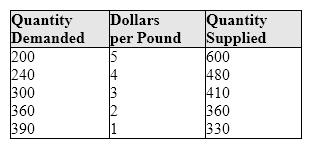 In Exhibit 15-6, when the exchange rate is 1 dollar per pound,
 (Multiple Choice)
4.9/5 (73)
(73) If nation A has a comparative advantage over nation B in the production of a product, this implies:
(Multiple Choice)
4.9/5 (74)
(74) If one U.S. dollar can be exchanged for 5 Swiss francs, then 1 franc can be exchanged for:
(Multiple Choice)
4.8/5 (80)
(80) 
Filters
- Essay(0)
- Multiple Choice(0)
- Short Answer(0)
- True False(0)
- Matching(0)