



 Chat with AI
Exam 2: The Chemical Basis of Life

Exam 1: The Human Organism120 Questions
Exam 2: The Chemical Basis of Life168 Questions
Exam 3: Cell Biology227 Questions
Exam 4: Tissues174 Questions
Exam 5: Integumentary System152 Questions
Exam 6: Skeletal System: Bones and Bone Tissue176 Questions
Exam 7: Skeletal System: Gross Anatomy173 Questions
Exam 8: Joints and Movement126 Questions
Exam 9: Muscular System: Histology and Physiology200 Questions
Exam 10: Muscular System: Gross Anatomy140 Questions
Exam 11: Functional Organization of Nervous Tissue171 Questions
Exam 12: Spinal Cord and Spinal Nerves124 Questions
Exam 13: Brain and Cranial Nerves158 Questions
Exam 14: Integration of Nervous System Functions142 Questions
Exam 15: The Special Senses198 Questions
Exam 16: Autonomic Nervous System109 Questions
Exam 17: Functional Organization of the Endocrine System83 Questions
Exam 18: Endocrine Glands167 Questions
Exam 19: Cardiovascular System: Blood148 Questions
Exam 20: Cardiovascular System: the Heart139 Questions
Exam 21: Cardiovascular System: Blood Vessels and Circulation234 Questions
Exam 22: Lymphatic System and Immunity174 Questions
Exam 23: Respiratory System175 Questions
Exam 24: Digestive System253 Questions
Exam 25: Nutrition, Metabolism, and Temperature Regulation168 Questions
Exam 26: Urinary System159 Questions
Exam 27: Water, Electrolyte, and Acid-Based Balance108 Questions
Exam 28: Reproductive System160 Questions
Exam 29: Development, Growth, Aging, and Genetics187 Questions
Select questions type


Which of the following is determined by sequence of amino acids bound by peptide bonds?
(Multiple Choice)
4.8/5  (79)
(79) Enzymes are proteins that increase the rate of chemical reactions by
(Multiple Choice)
4.9/5 (81)
(81) Hydrogen bonds form between molecules containing _________ bonds; the hydrogen bond is between a hydrogen atom of one molecule and a partially _________ charged atom of another.
(Multiple Choice)
4.9/5 (76)
(76) 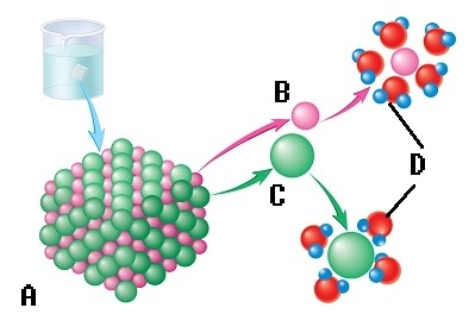 -The sodium chloride molecule breaks apart in water. What does "D" represent?
 (Multiple Choice)
4.8/5 (88)
(88) A solution that contains one osmole of solute in one kilogram (kg) of water is called a
(Multiple Choice)
4.9/5 (82)
(82) An atom has an atomic number of 19 and a mass number of 39. This atom will have
(Multiple Choice)
4.7/5 (74)
(74) 
Filters
- Essay(0)
- Multiple Choice(0)
- Short Answer(0)
- True False(0)
- Matching(0)