



 Chat with AI
Exam 11: Fundamentals of the Nervous System and Nervous Tissue

Exam 1: The Human Body: an Orientation100 Questions
Exam 2: Chemistry Comes Alive120 Questions
Exam 3: Cells: the Living Units119 Questions
Exam 4: Tissue: the Living Fabric97 Questions
Exam 5: The Integumentary System107 Questions
Exam 6: Bones and Skeletal Tissues94 Questions
Exam 7: The Skeleton102 Questions
Exam 8: Joints105 Questions
Exam 9: Muscles and Muscle Tissue109 Questions
Exam 10: The Muscular System109 Questions
Exam 11: Fundamentals of the Nervous System and Nervous Tissue95 Questions
Exam 12: The Central Nervous System132 Questions
Exam 13: The Peripheral Nervous System and Reflex Activity97 Questions
Exam 14: The Autonomic Nervous System96 Questions
Exam 15: The Special Senses127 Questions
Exam 16: The Endocrine System119 Questions
Exam 17: Blood99 Questions
Exam 18: The Cardiovascular System: the Heart94 Questions
Exam 19: The Cardiovascular System: Blood Vessels107 Questions
Exam 20: The Lymphatic System and Lymphoid Organs and Tissues95 Questions
Exam 21: The Immune System: Innate and Adaptive Body Defensives118 Questions
Exam 22: The Respiratory System120 Questions
Exam 23: The Digestive System145 Questions
Exam 24: Nutrition, Metabolism, and Body Temperature Regulation114 Questions
Exam 25: The Urinary System116 Questions
Exam 26: Fluid, Electrolyte, and Acid-Base Balance94 Questions
Exam 27: The Reproductive System126 Questions
Exam 28: Pregnancy and Human Development97 Questions
Exam 29: Heredity90 Questions
Select questions type


A patient is admitted to the hospital with exacerbation of multiple sclerosis (MS). She asks the nurse, "Why did this have to happen to me again? I was doing so well." Explain why some forms of MS are characterized by periods of remission and exacerbation.
(Essay)
4.8/5  (70)
(70) Strong stimuli cause the amplitude of action potentials generated to increase.
(True/False)
4.8/5 (73)
(73) 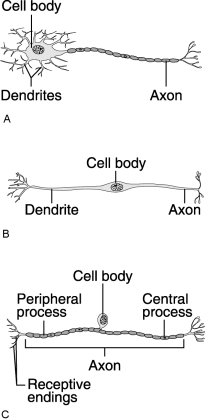 Figure 11.1Using Figure 11.1, match the following:
-What is the role of microglial cells and why are they so important in the CNS?
Figure 11.1Using Figure 11.1, match the following:
-What is the role of microglial cells and why are they so important in the CNS? (Essay)
4.9/5 (79)
(79) 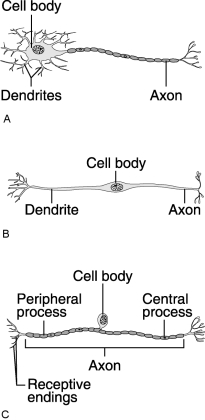 Figure 11.1Using Figure 11.1, match the following:
-What is the difference between a direct acting neurotransmitter and an indirect acting neurotransmitter?
Figure 11.1Using Figure 11.1, match the following:
-What is the difference between a direct acting neurotransmitter and an indirect acting neurotransmitter? (Essay)
4.9/5 (75)
(75) Which of the following is not a function of the autonomic nervous system?
(Multiple Choice)
4.9/5 (76)
(76) A patient was admitted for depression. What should the nurse explain to the patient regarding the role of serotonin and depression?
(Essay)
4.7/5 (88)
(88) An inhibitory postsynaptic potential (IPSP) is associated with .
(Multiple Choice)
4.8/5 (88)
(88) 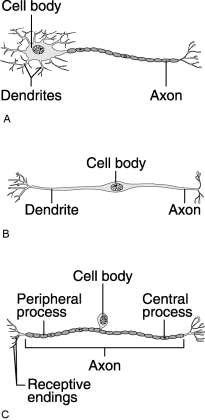 Figure 11.1Using Figure 11.1, match the following:
-Imagine a neuron that has several hundred axonal knobs impinging on it. The majority of these axonal knobs are shown to be "firing." However, the neuron in question does not transmit an impulse. Give a valid explanation of why this could occur.
Figure 11.1Using Figure 11.1, match the following:
-Imagine a neuron that has several hundred axonal knobs impinging on it. The majority of these axonal knobs are shown to be "firing." However, the neuron in question does not transmit an impulse. Give a valid explanation of why this could occur. (Essay)
4.9/5 (89)
(89) Figure 11.1Using Figure 11.1, match the following:
-Which neuron is never myelinated?
Figure 11.1Using Figure 11.1, match the following:
-Which neuron is never myelinated? (Short Answer)
4.8/5 (79)
(79) In myelinated axons the voltage- regulated sodium channels are concentrated at the nodes of Ranvier.
(True/False)
4.8/5 (76)
(76) Which of the following is true about the movement of ions across excitable living membranes?
(Multiple Choice)
4.9/5 (79)
(79) The period after an initial stimulus when a neuron is not sensitive to another stimulus is the
)
(Multiple Choice)
4.9/5 (95)
(95) Which of the following neurotransmitters inhibits pain and is mimicked by morphine, heroin, and methadone?
(Multiple Choice)
4.8/5 (78)
(78) Figure 11.1Using Figure 11.1, match the following:
-Which neuron is a sensory neuron found in a reflex arc?
Figure 11.1Using Figure 11.1, match the following:
-Which neuron is a sensory neuron found in a reflex arc? (Short Answer)
4.9/5 (77)
(77) The substance released at axon terminals to propagate a nervous impulse is called a(n) .
(Multiple Choice)
5.0/5 (77)
(77) A stimulus traveling toward a synapse appears to open calcium ion channels at the presynaptic end, which in turn promotes fusion of synaptic vesicles to the axonal membrane.
(True/False)
4.9/5 (85)
(85) 
Filters
- Essay(0)
- Multiple Choice(0)
- Short Answer(0)
- True False(0)
- Matching(0)