



 Chat with AI
Exam 4: Interpersonal Communication

Exam 1: Introduction to Medical Assisting76 Questions
Exam 2: Healthcare and the Healthcare Team80 Questions
Exam 3: Professionalism and Success75 Questions
Exam 4: Interpersonal Communication97 Questions
Exam 5: Legal and Ethical Issues85 Questions
Exam 6: Infection Control Fundamentals74 Questions
Exam 7: Safety and Patient Reception73 Questions
Exam 8: Office Equipment and Supplies155 Questions
Exam 9: Examination and Treatment Areas97 Questions
Exam 10: Written and Electronic Communication84 Questions
Exam 11: Medical Records and Documentation75 Questions
Exam 12: Electronic Health Records72 Questions
Exam 13: Managing Medical Records74 Questions
Exam 14: Telephone Techniques89 Questions
Exam 15: Patient Education75 Questions
Exam 16: Schedule Management80 Questions
Exam 17: Insurance Billing80 Questions
Exam 18: Diagnostic Coding74 Questions
Exam 19: Procedure Coding75 Questions
Exam 20: Patient Collections and Financial Management142 Questions
Exam 21: Organization of the Body145 Questions
Exam 22: The Integumentary System100 Questions
Exam 23: The Skeletal System154 Questions
Exam 24: The Muscular System100 Questions
Exam 25: The Cardiovascular System89 Questions
Exam 26: The Blood74 Questions
Exam 27: The Lymphatic and Immune Systems78 Questions
Exam 28: The Respiratory System91 Questions
Exam 29: The Nervous System130 Questions
Exam 30: The Urinary System91 Questions
Exam 31: The Reproductive Systems124 Questions
Exam 32: The Digestive System112 Questions
Exam 33: The Endocrine System80 Questions
Exam 34: Special Senses92 Questions
Exam 35: Infection Control Practices105 Questions
Exam 36: Patient Interview and History96 Questions
Exam 37: Vital Signs and Measurements93 Questions
Exam 38: Assisting With a General Physical Exam75 Questions
Exam 39: Assisting in Reproductive and Urinary Specialties74 Questions
Exam 40: Assisting in Pediatrics75 Questions
Exam 41: Assisting in Geriatrics75 Questions
Exam 42: Assisting in Other Medical Specialties75 Questions
Exam 43: Assisting in Eye and Ear Care75 Questions
Exam 44: Assisting in Minor Surgery92 Questions
Exam 45: Orientation to the Lab85 Questions
Exam 46: Microbiology and Disease117 Questions
Exam 47: Processing and Testing Urine and Stool Samples95 Questions
Exam 48: Collecting, Processing, and Testing Blood Specimens75 Questions
Exam 49: Electrocardiography and Pulmonary Function Testing94 Questions
Exam 50: Diagnostic Imaging79 Questions
Exam 51: Principles of Pharmacology104 Questions
Exam 52: Math and Dosage Calculations74 Questions
Exam 53: Medication Administration76 Questions
Exam 54: Physical Therapy and Rehabilitation78 Questions
Exam 55: Nutrition and Health90 Questions
Exam 56: Practice Management76 Questions
Exam 57: Emergency Preparedness105 Questions
Exam 58: Preparing for the World of Work76 Questions
Select questions type


What element is missing from the communication circle in the figure? 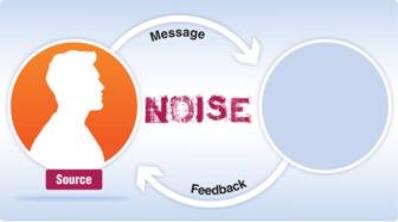
(Multiple Choice)
4.9/5  (80)
(80) Humans have a great need to belong to groups, according to Maslow's belonging or _________ needs.
(Short Answer)
4.8/5 (79)
(79) You have reached ________ when you find self-fulfillment and realize your own potential.
(Short Answer)
4.8/5 (91)
(91) Mrs. Underwood is in your office for a follow-up on injuries she received in an automobile accident in which her husband was killed. She is visibly upset and sits on the edge of the examination table, crying quietly. You need to find out how her physical wounds are healing and how much pain she is in. Which of the following statements would be your best choice for opening the conversation?
(Multiple Choice)
4.8/5 (84)
(84) Which is the following is the best policy when communicating with your direct supervisor?
(Multiple Choice)
4.7/5 (85)
(85) The best way to deal with a coworker you are having trouble getting along with is to ____.
(Multiple Choice)
4.9/5 (82)
(82) During the communication process, posture can usually be described as either _______________.
(Multiple Choice)
4.9/5 (82)
(82) In which of the following examples does the medical assistant demonstrate positive communication?
(Multiple Choice)
4.9/5 (80)
(80) When you protect yourself or the institution you work for from verbal attack, the patient may feel the need to stop communicating. This is an example of the ineffective communication technique called ________.
(Short Answer)
4.8/5 (63)
(63) When communicating with a patient who cannot speak or understand English, ____.
(Multiple Choice)
4.9/5 (84)
(84) What is a common reaction of patients who have acquired immunodeficiency syndrome (AIDS)?
(Multiple Choice)
4.9/5 (81)
(81) Body language includes facial expressions, eye contact, posture, attention to personal space, and ____.
(Multiple Choice)
4.8/5 (76)
(76) A medical assistant sees a patient looking uneasy and responds, "You look concerned. How can I help you feel more comfortable?" This is an example of which type of skill?
(Multiple Choice)
4.9/5 (72)
(72) Which of the following is an example of positive communication?
(Multiple Choice)
4.9/5 (81)
(81) How much personal space do people typically use in a personal conversation?
(Multiple Choice)
4.7/5 (58)
(58) Anything that changes a message in any way or interferes with communication is considered to be ________.
(Short Answer)
4.8/5 (72)
(72) Indicating that you heard the patient and follow the train of thought is the communication technique of ________.
(Short Answer)
4.8/5 (79)
(79) 
Filters
- Essay(0)
- Multiple Choice(0)
- Short Answer(0)
- True False(0)
- Matching(0)