



 Chat with AI
Exam 22: The Integumentary System

Exam 1: Introduction to Medical Assisting76 Questions
Exam 2: Healthcare and the Healthcare Team80 Questions
Exam 3: Professionalism and Success75 Questions
Exam 4: Interpersonal Communication97 Questions
Exam 5: Legal and Ethical Issues85 Questions
Exam 6: Infection Control Fundamentals74 Questions
Exam 7: Safety and Patient Reception73 Questions
Exam 8: Office Equipment and Supplies155 Questions
Exam 9: Examination and Treatment Areas97 Questions
Exam 10: Written and Electronic Communication84 Questions
Exam 11: Medical Records and Documentation75 Questions
Exam 12: Electronic Health Records72 Questions
Exam 13: Managing Medical Records74 Questions
Exam 14: Telephone Techniques89 Questions
Exam 15: Patient Education75 Questions
Exam 16: Schedule Management80 Questions
Exam 17: Insurance Billing80 Questions
Exam 18: Diagnostic Coding74 Questions
Exam 19: Procedure Coding75 Questions
Exam 20: Patient Collections and Financial Management142 Questions
Exam 21: Organization of the Body145 Questions
Exam 22: The Integumentary System100 Questions
Exam 23: The Skeletal System154 Questions
Exam 24: The Muscular System100 Questions
Exam 25: The Cardiovascular System89 Questions
Exam 26: The Blood74 Questions
Exam 27: The Lymphatic and Immune Systems78 Questions
Exam 28: The Respiratory System91 Questions
Exam 29: The Nervous System130 Questions
Exam 30: The Urinary System91 Questions
Exam 31: The Reproductive Systems124 Questions
Exam 32: The Digestive System112 Questions
Exam 33: The Endocrine System80 Questions
Exam 34: Special Senses92 Questions
Exam 35: Infection Control Practices105 Questions
Exam 36: Patient Interview and History96 Questions
Exam 37: Vital Signs and Measurements93 Questions
Exam 38: Assisting With a General Physical Exam75 Questions
Exam 39: Assisting in Reproductive and Urinary Specialties74 Questions
Exam 40: Assisting in Pediatrics75 Questions
Exam 41: Assisting in Geriatrics75 Questions
Exam 42: Assisting in Other Medical Specialties75 Questions
Exam 43: Assisting in Eye and Ear Care75 Questions
Exam 44: Assisting in Minor Surgery92 Questions
Exam 45: Orientation to the Lab85 Questions
Exam 46: Microbiology and Disease117 Questions
Exam 47: Processing and Testing Urine and Stool Samples95 Questions
Exam 48: Collecting, Processing, and Testing Blood Specimens75 Questions
Exam 49: Electrocardiography and Pulmonary Function Testing94 Questions
Exam 50: Diagnostic Imaging79 Questions
Exam 51: Principles of Pharmacology104 Questions
Exam 52: Math and Dosage Calculations74 Questions
Exam 53: Medication Administration76 Questions
Exam 54: Physical Therapy and Rehabilitation78 Questions
Exam 55: Nutrition and Health90 Questions
Exam 56: Practice Management76 Questions
Exam 57: Emergency Preparedness105 Questions
Exam 58: Preparing for the World of Work76 Questions
Select questions type


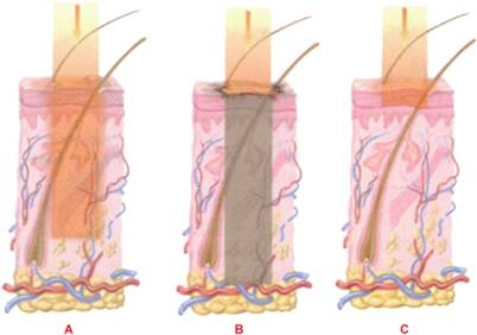 -A first-degree burn is shown at letter ________ in the figure.
Free
(Short Answer)
4.9/5  (84)
(84) Correct Answer: Verified
C
Receptors in the skin that detect touch, heat, cold, and pain are called _____ receptors.
Free
(Short Answer)
4.8/5 (80)
(80) Correct Answer:Verified
Verifiedsensory
Which letter indicates the dermis?
Free
(Multiple Choice)
4.9/5 (81)
(81) Correct Answer:Verified
VerifiedB
"Swimmer's rash," or ________, is an inflammation of hair follicles resulting from shaving or excess rubbing of skin areas or from bacteria and fungi that develop from prolonged wearing of wet swimwear or undertreated hot tubs.
(Short Answer)
4.8/5 (85)
(85) You are working at a walk-in urgent care center. Kenneth is an auto mechanic and was brought in by a co-worker after his arm accidentally came in contact with the hot motor of a car he was working on. His long-sleeved shirt appears to be sticking to a burned area that extends from the upper arm to the mid-forearm. Your best response is to ____.
(Multiple Choice)
4.8/5 (84)
(84) The ________ is the most superficial layer of skin and is made up of many layers of tightly packed cells.
(Short Answer)
4.9/5 (76)
(76) The ________ muscles are attached to hair follicles and cause goose bumps.
(Short Answer)
5.0/5 (77)
(77) Which characteristic is associated with apocrine sweat glands?
(Multiple Choice)
4.8/5 (68)
(68) An inflammation of connective tissues in skin that primarily occurs on the face and legs and is caused by staphylococcal and streptococcal bacteria is _______.
(Short Answer)
4.9/5 (65)
(65)
-A third-degree burn is shown at letter ________ in the figure.
-A third-degree burn is shown at letter ________ in the figure. (Short Answer)
4.8/5 (81)
(81)
-A partial-thickness burn involves the epidermis and dermis. This is shown at letter ________ in the figure.
-A partial-thickness burn involves the epidermis and dermis. This is shown at letter ________ in the figure. (Short Answer)
4.8/5 (72)
(72) The most superficial layer of the epidermis is the stratum______. Most of the cells in this layer are dead and very flat and form an impermeable layer for skin.
(Short Answer)
4.8/5 (70)
(70) Most likely an inherited autoimmune disorder, ________ causes recurring episodes of itching and redness with outbreaks of distinctive silvery, scaly skin lesions.
(Short Answer)
4.8/5 (84)
(84) Which of the following diseases or disorders has five stages?
(Multiple Choice)
4.8/5 (82)
(82) Skin lesions that originate from disease or body changes are called ________ lesions.
(Short Answer)
4.9/5 (90)
(90) Which skin layer contains all of the major tissue types, including epithelial tissue, connective tissues, muscle tissue, and nervous tissue?
(Multiple Choice)
4.9/5 (83)
(83) All people have about the same number of ________, regardless of skin color. What varies from person to person is how active the cells are in producing melanin.
(Short Answer)
4.9/5 (93)
(93) Most of the time, ________ is inherited and results in hair loss. Other common causes include hormonal changes, chemotherapy, stress, burns, and fungal infections of the skin.
(Short Answer)
4.7/5 (93)
(93) Signs and symptoms listed in the ABCDE rule would apply to which condition?
(Multiple Choice)
5.0/5 (95)
(95) 
Filters
- Essay(0)
- Multiple Choice(0)
- Short Answer(0)
- True False(0)
- Matching(0)